Your First Day at the Gym: How to Choose the Right Type of Training for Your Goal

Written by Coach. Asiya Darwish
Fitness & Exercise Program Design Specialist
Fact-checked by HealthNato Scientific Team
on August 6, 2026 at 3:30 PM
Walking into a gym for the first time can feel overwhelming. There are countless machines, endless workout routines, and everyone seems to have a different opinion about the "best" way to train.
The truth is that the best workout program isn't the hardest one—it's the one that matches your goals, your current fitness level, and your overall health.
Before you begin, ask yourself one simple question:
What do I want to achieve?
Are you aiming to build muscle, lose body fat, improve your fitness, or simply stay healthy?
Your answer should determine the type of training you choose.
It's also important to consider your health status. If you have an injury, chronic joint or back pain, or any medical condition, choose exercises that suit your situation and seek advice from a qualified healthcare professional or certified trainer when necessary.
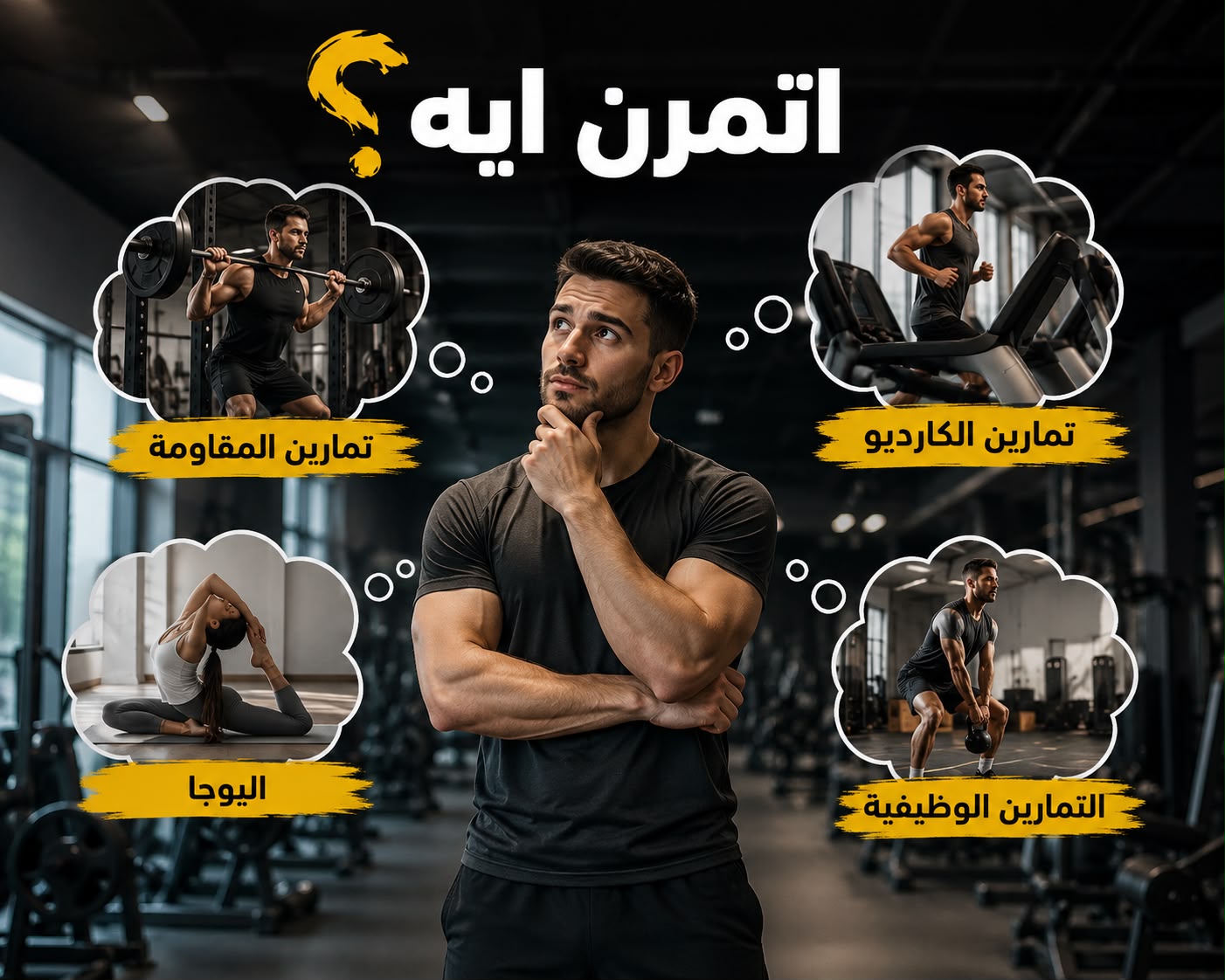
1. Resistance Training
When many people hear the term resistance training, they immediately think of bodybuilders. In reality, it's one of the most beneficial forms of exercise for almost everyone, regardless of age or fitness goal.
Resistance training involves making your muscles work against a form of resistance, such as free weights, gym machines, resistance bands, or even your own body weight.
With consistent training, muscles become stronger, may increase in size, and develop greater endurance, depending on the training program.
If your goal is to build muscle, increase strength, or improve your physique, resistance training should be the foundation of your workout routine.
Beginners can safely start with either machines or free weights, provided they learn proper exercise technique. Good form is far more important than lifting heavy weights.
For optimal progress, aim to train each major muscle group twice per week, while gradually increasing the training load over time.
2. Cardio Training
Cardiovascular exercise isn't limited to running. It includes brisk walking, cycling, swimming, jump rope, rowing, and cardio machines such as treadmills and elliptical trainers.
The primary goal of cardio is to raise your heart rate and improve the efficiency of your heart and lungs, enhancing both physical fitness and overall health.
If your goal is to improve cardiovascular fitness or increase energy expenditure, adding cardio sessions to your weekly routine is an excellent choice. When combined with an appropriate nutrition plan, cardio can also support body fat loss.
3. Functional Training
Functional training focuses on improving your ability to perform everyday movements more efficiently, such as lifting objects, climbing stairs, bending, pushing, and pulling.
These exercises recruit multiple muscles and joints simultaneously, helping improve balance, coordination, core strength, and overall movement quality.
Functional training is suitable for both beginners and experienced athletes.
4. Flexibility and Mobility Training
Flexibility exercises help maintain healthy muscles and joints by improving range of motion and reducing muscle tightness.
Mobility exercises are best performed before your workout as part of your warm-up, while static stretching is generally recommended after training to promote muscle relaxation.
Although flexibility training may help reduce the risk of certain injuries and improve movement quality, it should not be considered a guarantee against injury.
How Many Days Should You Train?
If you're just getting started, three to four training sessions per week are more than enough to achieve excellent results, provided you allow adequate time for recovery.
During your first few weeks, don't focus on lifting the heaviest weight possible. Instead, concentrate on mastering proper technique, as good movement mechanics form the foundation for long-term progress.
The Bottom Line
There is no single workout program that works for everyone.
The ideal fitness plan combines resistance training, cardiovascular exercise, functional training, and flexibility work, with the balance depending on your goals, fitness level, and health condition.
Long-term results don't come from the most intense workout—they come from a program you can consistently follow, supported by proper nutrition, adequate recovery, and gradual progression.
If you have an injury or an underlying medical condition, consult a qualified healthcare professional or certified trainer before starting a new exercise program to ensure you choose the safest and most effective approach.
Written by Coach. Asiya Darwish
Fitness & Exercise Program Design Specialist
Fact-checked by HealthNato Scientific Team
on August 6, 2026 at 3:30 PM
Get new articles in your inbox
One short email a week, no spam.
Your privacy is important to us.
Related Articles
 Fitness & Wellness
Exercise Is Not Just About Losing Weight… It’s About Living Better
 Fitness & Wellness
Why Do You Start with Enthusiasm, Then Stop? 10 Science-Based Steps to Turn Exercise into a Sustainable Lifestyle
 Fitness & Wellness
Your First Steps at the Gym: How to Start Training Safely and Effectively
 Fitness