Caffeine in Children’s Drinks Without Parents’ Knowledge: Could Its Effects Go Beyond Sleep Disruption ?

Written by Dr. Mona Saeed
Family Medicine Physician & Clinical Nutrition and Weight Management Specialist | Scientific Development Team,
HealthNato
Information reviewed by HealthNato Scientific Team
on October 26, 2026 at 12:30 PM
What Did the Researchers Discover?
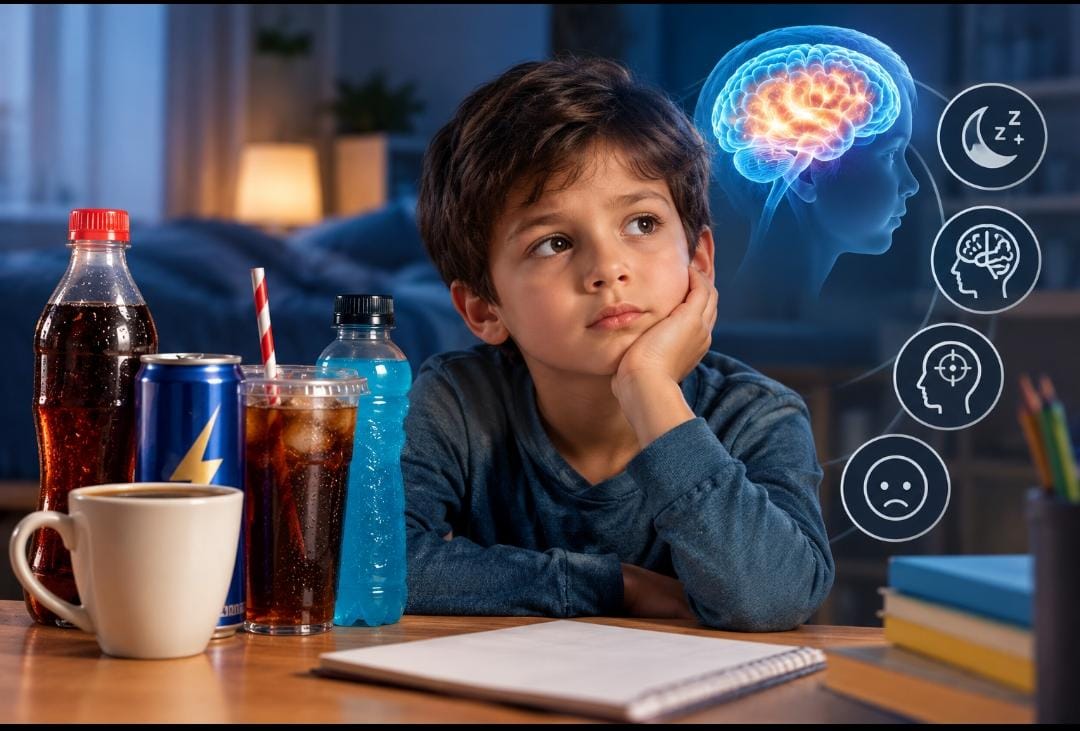
Researchers from King’s College London analyzed data from 9,632 children aged 9–11 years, using information on the consumption of caffeinated beverages, sleep assessments, and brain MRI scans.
The researchers found that higher caffeine consumption was associated with shorter sleep duration and differences in the surface area of the cerebral cortex, the outer layer of the brain responsible for important aspects of attention, thinking, and decision-making.
Higher consumption was also associated with an increase in certain attention, mood, and behavioral problems reported by the children during a subsequent follow-up. Soft drinks were the largest contributor to these findings, with some associations also observed among children who reported consuming a caffeinated drink once a week.
Does Caffeine Alter Brain Development in Children?
Here, it is important to distinguish between what the study observed and what it did not establish.
The findings do not mean that caffeine consumption causes brain damage, nor that drinking one caffeinated beverage per week inevitably leads to health problems.
It is also difficult to separate the effects of caffeine from other factors, such as the sugar found in soft drinks, dietary habits, and lifestyle.
Nevertheless, the relationship between caffeine and insufficient sleep remains a practical concern, as adequate sleep is essential for learning, attention, and emotional regulation during the developmental years.
How Can Parents Protect Their Children’s Sleep?
- Check beverage ingredients: Caffeine is not found only in coffee; it may also be present in energy drinks, some soft drinks, and tea.
- Do not make caffeinated beverages part of the daily routine: It is best to avoid energy drinks for children and adolescents.
- Monitor sleep and behavior: If persistent difficulties with sleep, concentration, or mood arise, do not assume that caffeine is the only cause. Consult a specialist when necessary.
In Conclusion
The study does not establish that caffeine necessarily harms every child’s brain, but it adds another reason to be cautious about caffeine consumption during development.
The most important message for parents is to pay attention to hidden sources of caffeine, particularly soft drinks, and not to underestimate its potential effects on sleep.
Written by Dr. Mona Saeed
Family Medicine Physician & Clinical Nutrition and Weight Management Specialist | Scientific Development Team,
HealthNato
Information reviewed by HealthNato Scientific Team
on October 26, 2026 at 12:30 PM
Related articles
 General Health
The Hidden Battle After Abdominal Surgery: Understanding Postoperative Peritoneal Adhesions
 General Health
The Revolution in New Obesity Medications vs. Bariatric Surgery... Has the Era of the Scalpel Come to an End?
 General Health
7 Simple Habits That Could be Time Bombs in Your Daily Life !
 General Health