Crohn's Disease or Ulcerative Colitis? Two Similar Conditions, but the Difference Can Change Treatment

Written by Prof. Dr. Fatma Younis
Scientific Development Director at HealthNato | Professor of Hepatology and Gastroenterology
Information reviewed by HealthNato Scientific Team
on November 1, 2026 at 12:30 PM
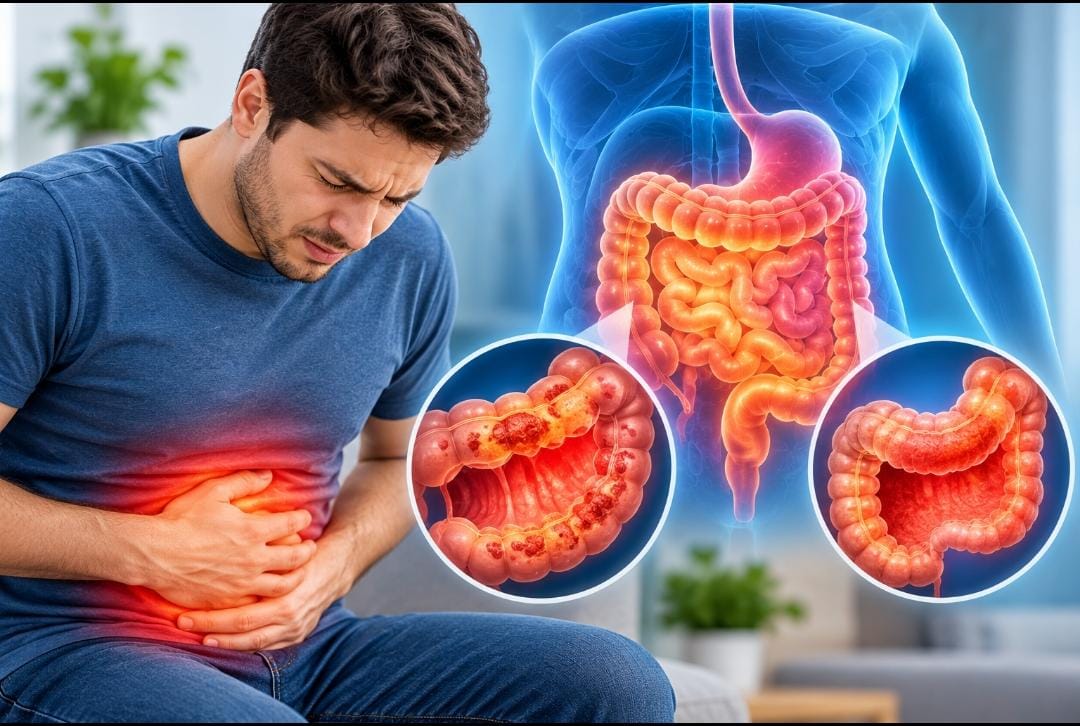
These symptoms may appear similar in people with Crohn's disease and ulcerative colitis, but the similarities do not mean they are the same condition.
Both fall under the umbrella of inflammatory bowel diseases (IBD), which are chronic disorders associated with an abnormal immune response that leads to inflammation in the digestive tract.
However, important differences determine the nature of each disease, its potential complications, and how it is treated.
First: Crohn's Disease.. Inflammation Can Affect the Entire Digestive Tract
Crohn's disease can occur anywhere in the digestive tract, from the mouth to the anus, but it most commonly affects the end of the small intestine and the beginning of the colon.
One of its key characteristics is that inflammation can extend through the entire thickness of the intestinal wall, and affected areas may be scattered between healthy sections.
The problem is not limited to diarrhea and abdominal pain. Chronic inflammation can lead to narrowing of the intestines and bowel obstruction, or the formation of abnormal passages known as fistulas, which can connect the intestines to other organs or tissues.
The disease may also affect nutrient absorption and cause weight loss and malnutrition.
Second: Ulcerative Colitis.. The Problem Is Limited to the Colon
Unlike Crohn's disease, ulcerative colitis is limited to the large intestine (the colon). It usually begins in the rectum and may extend continuously to other parts of the colon or involve the entire colon.
The inflammation primarily affects the superficial layers lining the intestine, rather than the entire thickness of the intestinal wall as may occur in Crohn's disease.
Its most common symptoms include diarrhea with blood or mucus, frequent urgency to use the bathroom, and a feeling of incomplete bowel emptying, along with abdominal pain and fatigue.
In severe or uncontrolled cases, complications such as severe bleeding, toxic megacolon, or perforation of the intestinal wall may occur.
The Difference That Can Change Treatment
Although both conditions share some treatments, including anti-inflammatory medications, immunomodulatory therapies, and biologic treatments, differences in the nature of the disease can affect treatment choices and the need for surgery.
In Crohn's disease, surgery may be needed to remove a damaged section of the intestine or treat an obstruction or fistula. However, surgery does not mean a permanent cure, as the disease can return in other areas.
In ulcerative colitis, removing the entire colon may be a treatment option in certain cases because it removes the organ affected by the disease, although it is a major surgery with its own consequences.
How Does a Doctor Determine Which Disease Is Present?
Symptoms alone are not enough to distinguish between the two conditions. Diagnosis therefore relies on a range of tests, which may include:
- Colonoscopy with biopsies: To assess inflammation and examine the tissue. - Blood and stool tests: To detect signs of inflammation and anemia and help rule out infection. - Medical imaging: Such as MRI or CT scans to evaluate the small intestine and potential complications.
Important note: Inflammatory bowel diseases (IBD) should not be confused with irritable bowel syndrome (IBS). IBS is a functional disorder and does not cause the chronic inflammation and damage to the intestinal wall seen in Crohn's disease and ulcerative colitis.
In the End
Crohn's disease and ulcerative colitis are not the same disease with two different names. The former can affect any part of the digestive tract and extend deep into the intestinal wall, while the latter is limited to the colon and primarily affects its superficial layers.
Both are chronic conditions for which there is currently no definitive cure. However, modern treatments can help achieve disease remission, reduce inflammation, and prevent complications, allowing many patients to live relatively normal lives.
Written by Prof. Dr. Fatma Younis
Scientific Development Director at HealthNato | Professor of Hepatology and Gastroenterology
Information reviewed by HealthNato Scientific Team
on November 1, 2026 at 12:30 PM
Related articles
 General Health
The Hidden Battle After Abdominal Surgery: Understanding Postoperative Peritoneal Adhesions
 General Health
The Revolution in New Obesity Medications vs. Bariatric Surgery... Has the Era of the Scalpel Come to an End?
 General Health
7 Simple Habits That Could be Time Bombs in Your Daily Life !
 General Health