Why Might You Feel Weak After Eating Following Bariatric Surgery? Dumping Syndrome Could Be the Reason

Written by Prof. Dr. Mohamed Henaish
Professor and Consultant of General Surgery | Laparoscopy | Bariatric | Cosmetic and Oncologic Surgery
Information reviewed by HealthNato Scientific Team
on August 11, 2026 at 12:30 PM
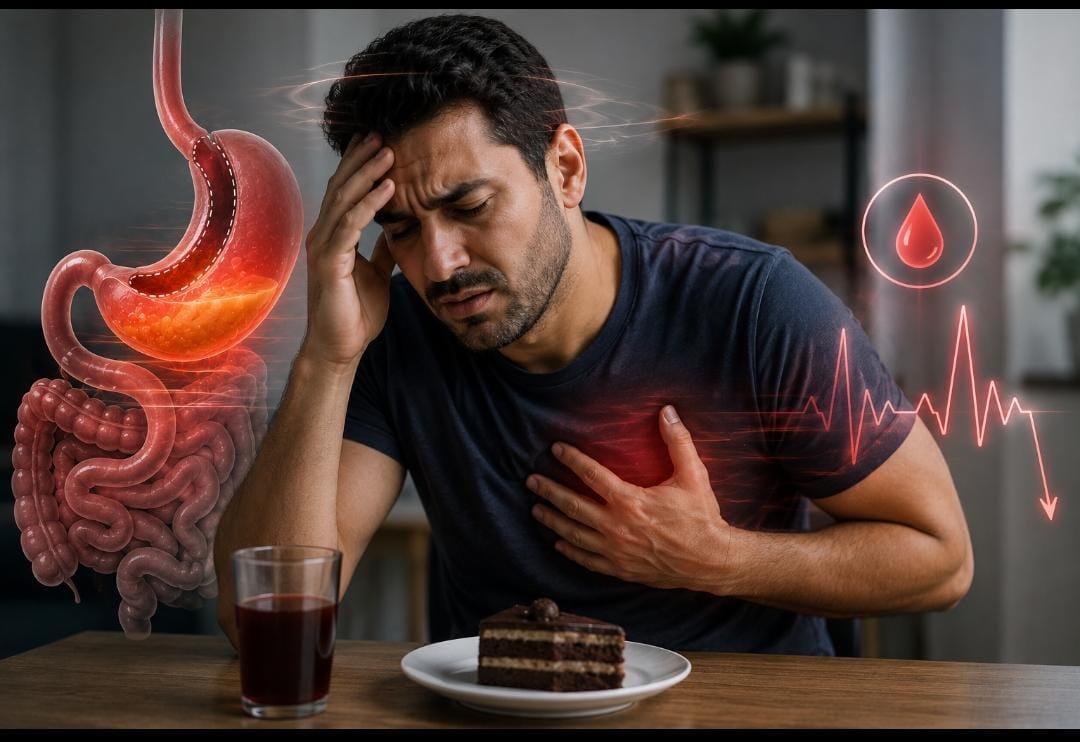
“Just a few bites of dessert or a glass of juice, and suddenly you feel severely weak, dizzy, sweaty, and your heart starts racing.”
For some people after bariatric surgery, this frightening experience may be related to Dumping Syndrome—a condition caused by food moving too rapidly from the stomach into the small intestine.
While much of the discussion surrounding bariatric surgery focuses on weight loss and the type of procedure performed, there is another important physiological change worth understanding: how surgery can alter the normal movement of food through the digestive system.
What happens after bariatric surgery?
Normally, the stomach stores and gradually processes food before releasing it in controlled amounts into the small intestine through the pyloric sphincter, the stomach outlet valve.
After some bariatric procedures, particularly gastric bypass, this controlled passage can be significantly altered. Food may therefore reach the small intestine more rapidly than it normally would.
This rapid movement is the basis of Dumping Syndrome.
Two forms: Early and Late Dumping
1. Early Dumping — usually within 10–30 minutes
When a large amount of concentrated food—particularly meals rich in simple sugars—enters the small intestine rapidly, fluid can shift from the bloodstream into the intestine because of the high osmotic load.
This may lead to:
Abdominal cramps
Bloating
Diarrhea
Dizziness
Palpitations
Weakness and a feeling of faintness
The symptoms are not simply caused by “low blood sugar.” In early dumping, rapid fluid shifts and intestinal responses play a major role.
2. Late Dumping — usually 1–3 hours after eating
Late dumping has a different mechanism.
Rapid absorption of carbohydrates can cause a sharp rise in blood glucose, followed by an exaggerated insulin response in some patients. Blood glucose may then fall below normal, causing reactive hypoglycemia.
Typical symptoms include:
Shaking
Sweating
Intense hunger
Palpitations
Blurred vision
Difficulty concentrating
Weakness or dizziness
This is the form that many patients describe as a sudden “crash” after eating.
How can you reduce the risk?
The good news is that Dumping Syndrome can often be controlled significantly through dietary and behavioral changes.
1. Separate fluids from meals
Avoid drinking large amounts of fluid with meals. Many bariatric programs recommend separating drinking from eating—often by around 30 minutes, according to the individual postoperative plan.
2. Limit simple sugars
Sweets, sugary drinks, juices, and other rapidly absorbed carbohydrates can trigger symptoms, particularly late dumping.
Choose balanced meals containing protein, fiber, and nutrient-dense carbohydrates instead.
3. Prioritize protein
Include an appropriate protein source in your meals, such as eggs, fish, poultry, or other suitable protein foods recommended by your bariatric team.
4. Eat slowly and chew thoroughly
Small bites, slow eating, and thorough chewing can help improve tolerance and reduce the rapid delivery of large amounts of food to the intestine.
The HealthNato Takeaway
Dumping Syndrome is not simply a sign that your surgery has “gone wrong.” It is a physiological response that can occur when food moves too rapidly through the altered digestive system.
Understanding when the symptoms occur—and whether they resemble early or late dumping—can help identify the trigger and guide appropriate dietary management.
And if episodes of severe weakness, confusion, fainting, or suspected hypoglycemia occur repeatedly, they should not simply be dismissed as a normal consequence of surgery. Medical evaluation and individualized nutritional guidance are important.
Written by Prof. Dr. Mohamed Henaish
Professor and Consultant of General Surgery | Laparoscopy | Bariatric | Cosmetic and Oncologic Surgery
Information reviewed by HealthNato Scientific Team
on August 11, 2026 at 12:30 PM
Related articles
 General Health
The Hidden Battle After Abdominal Surgery: Understanding Postoperative Peritoneal Adhesions
 General Health
The Revolution in New Obesity Medications vs. Bariatric Surgery... Has the Era of the Scalpel Come to an End?
 General Health
7 Simple Habits That Could be Time Bombs in Your Daily Life !
 General Health