5 Drinks That May Harm Your Kidneys and Why They Deserve a Second Look.

Designed and published by HealthNato medical editorial team.
Fact-checked by HealthNato Scientific Team
on August 14, 2026 at 12:30 PM
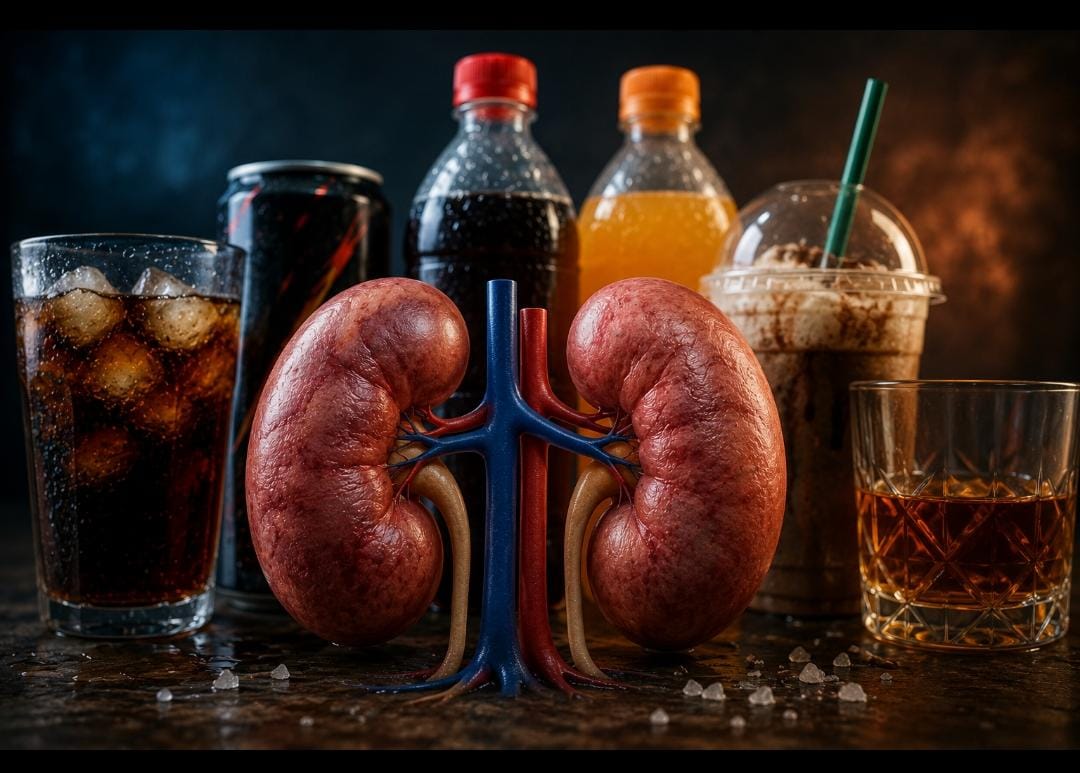
We pay close attention to what we eat, but we sometimes forget that what we drink every day can also affect kidney health.
The kidneys are not simply the body’s “filters.” They regulate fluids and electrolytes, contribute to blood pressure control, and help maintain the body’s internal balance.
But are there really drinks that “destroy the kidneys”?
The reality is more nuanced. The problem is usually not a single drink, but chronic and excessive consumption, especially in people with diabetes, high blood pressure, or existing kidney disease.
Here are five drinks worth reconsidering:
1. Soft Drinks… It’s Not Just About the Fizz
Excessive consumption of soft drinks, particularly sugar-sweetened beverages, has been associated with several risk factors that can affect kidney health, including obesity, diabetes, and high blood pressure.
Dark-colored cola drinks typically contain phosphoric acid, and excessive consumption may be of greater concern in people who already have kidney disease.
The issue is not that “phosphorus directly destroys the kidneys,” but rather that regularly consuming these beverages may contribute to an unhealthy dietary pattern that can negatively affect kidney health over time.
2. Energy Drinks… The Risk Lies in Excess
Energy drinks contain caffeine, along with sugar and other ingredients that vary between products.
Rare cases of acute kidney injury have been reported following extreme consumption, particularly when factors such as very high caffeine intake, dehydration, vomiting, or intense physical activity occur together.
So, the concern is not necessarily one can, but rather excessive consumption and the circumstances surrounding it.
3. Sugar-Sweetened Beverages… A Risk That Builds Over Time
Soft drinks, energy drinks, coffee or tea heavily sweetened with sugar, and some ready-to-drink juices can contain substantial amounts of added sugar.
With chronic excessive consumption, they can contribute to obesity, diabetes, and metabolic disorders—conditions associated with a higher risk of kidney disease.
High intake of sugar-sweetened beverages has also been associated with increased uric acid levels. However, it would be misleading to simply describe fructose as a “kidney toxin.” The bigger concern is the cumulative metabolic impact of excessive intake over time.
4. Alcohol… When the Body Loses Its Balance
Excessive alcohol consumption can cause dehydration and, over time, contribute to high blood pressure and liver disease—factors that can negatively affect kidney health.
The risk may be greater when heavy alcohol consumption is combined with inadequate fluid intake, existing kidney disease, or high blood pressure.
5. Tea and Coffee… They Are Not Automatically Kidney Enemies
Tea and coffee are not harmful to the kidneys simply because they contain caffeine.
For most healthy people, moderate consumption does not automatically cause dehydration or kidney damage.
However, some types of tea contain oxalates, which may be relevant for people who are prone to calcium oxalate kidney stones.
And adding large amounts of sugar can significantly change the nutritional profile of the drink.
So there is no need to put tea and coffee on a “kidney danger list.” The amount consumed and the individual’s health status matter most.
What About Water?
Water is the best choice for hydration for most people, but there is no single amount that is appropriate for everyone.
Fluid requirements vary according to body weight, physical activity, temperature, diet, and kidney and heart function.
Therefore, “3 liters a day” should not be treated as a mandatory rule for everyone.
How Can You Check Your Kidney Health?
Chronic kidney disease can progress without obvious symptoms in its early stages. People at higher risk—such as those with diabetes or high blood pressure—may therefore need periodic kidney assessment based on their doctor’s recommendation.
Important tests include:
eGFR: Estimates how effectively the kidneys filter the blood.
Creatinine: A key marker used to assess kidney function and calculate eGFR.
uACR: Measures albumin leakage into the urine, which can be an early sign of kidney damage.
The Bottom Line
Not every drink is a “kidney toxin,” and kidney damage usually does not result from a single cup.
The greater concern is chronic excessive consumption, particularly of beverages high in sugar, caffeine, or alcohol, especially when other risk factors are present.
As for tea and coffee, there is no need to turn them into enemies simply because they contain caffeine or oxalates.
Ultimately, protecting your kidneys may be simpler than you think:
What do I drink every day ? How much do I drink ? And do I really need all of it ?
Designed and published by HealthNato medical editorial team.
Fact-checked by HealthNato Scientific Team
on August 14, 2026 at 12:30 PM
Get new articles in your inbox
One short email a week, no spam.
Your privacy is important to us.
Related Articles
 General Health
The Hidden Battle After Abdominal Surgery: Understanding Postoperative Peritoneal Adhesions
 General Health
The Revolution in New Obesity Medications vs. Bariatric Surgery... Has the Era of the Scalpel Come to an End?
 General Health
7 Simple Habits That Could be Time Bombs in Your Daily Life !
 General Health