Eggs Aren’t Always the Richest Source: 7 Foods That Outshine Them in Vitamin B12 and Help Protect Your Nerves

Written by Dr. Mona Saeed
Family Medicine Physician & Clinical Nutrition and Weight Management Specialist | Scientific Development Team,
HealthNato
Information reviewed by HealthNato Scientific Team
on November 7, 2026 at 12:30 PM
That is a beneficial choice, but the surprise is that other foods can provide much higher amounts of this vitamin, with some delivering more than the recommended daily requirement in a single serving.
Vitamin B12 is far more than just another nutrient. It is essential for red blood cell formation, maintaining healthy nerves, and DNA synthesis. A deficiency may develop gradually, causing fatigue, weakness, or tingling in the extremities, and in advanced cases, it can lead to nerve damage.
One egg provides approximately 0.5 micrograms of B12, or about 19% of the daily requirement for adults.
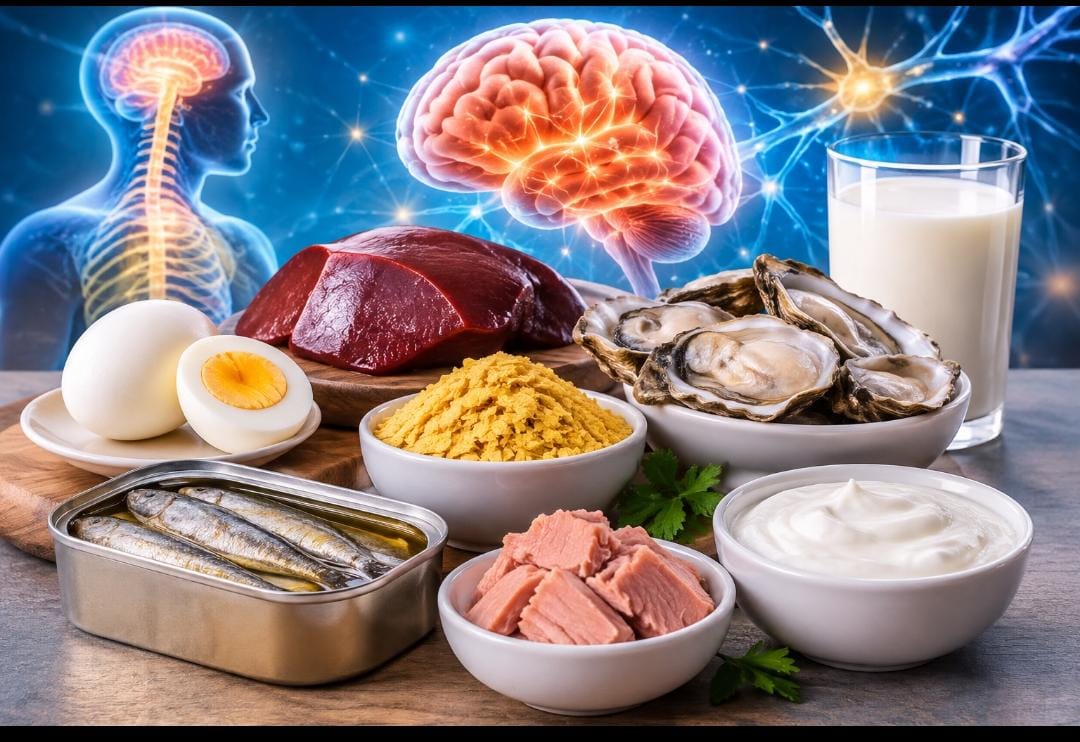
But these foods provide even greater amounts:
1. Beef Liver: An Extremely Concentrated Source
Approximately 85 grams of beef liver provide around 70.7 micrograms of B12, nearly 30 times the daily requirement.
However, beef liver is also rich in vitamin A, so excessive consumption is not recommended, particularly alongside vitamin A supplements or during pregnancy, as high doses of vitamin A may cause birth defects.
2. Oysters: More Than Seven Times the Daily Requirement
An 85-gram serving provides approximately 17 micrograms of B12, along with zinc, selenium, and protein.
3. Fortified Nutritional Yeast: An Important Option for Vegetarians
Two tablespoons of some fortified nutritional yeast products provide approximately 15 micrograms of B12.
But be careful: not all nutritional yeast products contain this vitamin, so it is important to check the nutrition label.
4. Sardines: More Than Just Omega-3
A can weighing approximately 106 grams may provide around 35 micrograms of B12, in addition to protein and omega-3 fatty acids. Eating its soft bones also contributes to calcium intake.
5. Tuna: A Small Serving That Exceeds the Daily Requirement
Approximately 85 grams of tuna provide around 2.5 micrograms of B12, an amount that exceeds the daily requirement for adults.
6. Yogurt: An Easy-to-Incorporate Daily Source
One cup of yogurt provides approximately 1.3 micrograms of B12, or about 54% of the daily requirement, along with calcium and protein.
7. Fortified Plant-Based Milk
One cup of some types of vitamin B12-fortified oat milk may provide approximately 1.2 micrograms, or nearly half the daily requirement.
However, unfortified plant-based milk is not considered a reliable source of this vitamin.
The Surprise Goes Beyond Food Alone
The recommended daily intake of vitamin B12 for most adults is 2.4 micrograms. Although it can be obtained from a variety of food sources, consuming enough does not always guarantee proper absorption.
B12 absorption is a complex process that depends on stomach acid and a protein called intrinsic factor, which is essential for absorbing the vitamin in the intestine.
Certain groups therefore require special attention, including older adults, vegetarians who do not consume fortified foods or supplements, people who have undergone stomach or bariatric surgery, and those with certain gastrointestinal disorders.
Long-term use of some acid-reducing medications, as well as metformin, a medication used to treat diabetes, may also affect vitamin B12 absorption.
The point worth paying attention to:
If you have an actual B12 deficiency, changing your food choices alone may not be enough. Treatment depends on the cause and severity of the deficiency and may require supplements or injections under medical supervision.
Written by Dr. Mona Saeed
Family Medicine Physician & Clinical Nutrition and Weight Management Specialist | Scientific Development Team,
HealthNato
Information reviewed by HealthNato Scientific Team
on November 7, 2026 at 12:30 PM
Related articles
 General Health
The Hidden Battle After Abdominal Surgery: Understanding Postoperative Peritoneal Adhesions
 General Health
The Revolution in New Obesity Medications vs. Bariatric Surgery... Has the Era of the Scalpel Come to an End?
 General Health
7 Simple Habits That Could be Time Bombs in Your Daily Life !
 General Health