The Great Cholesterol Hoax and the Inflammation Time Bomb

Written by Prof. Dr. Fatma Younis
Scientific Development Director at HealthNato | Professor of Hepatology and Gastroenterology
Fact-checked by HealthNato Scientific Team
on July 8, 2026 at 12:00 AM
Key Points
- Relying solely on low-density lipoprotein (LDL) cholesterol levels may not accurately reflect the true risk of cardiovascular disease. Instead, levels of apolipoprotein B (ApoB)—the primary structural protein found on these particles—and the total LDL particle number (LDL-P) serve as significantly more precise indicators for assessing atherosclerotic risk.
- Chronic inflammation can promote oxidation of LDL particles, increasing their ability to penetrate arterial walls and contribute to plaque formation.
- Reducing inflammation through healthy nutrition and lifestyle, alongside appropriate medical treatment, is essential for protecting long-term cardiovascular health.
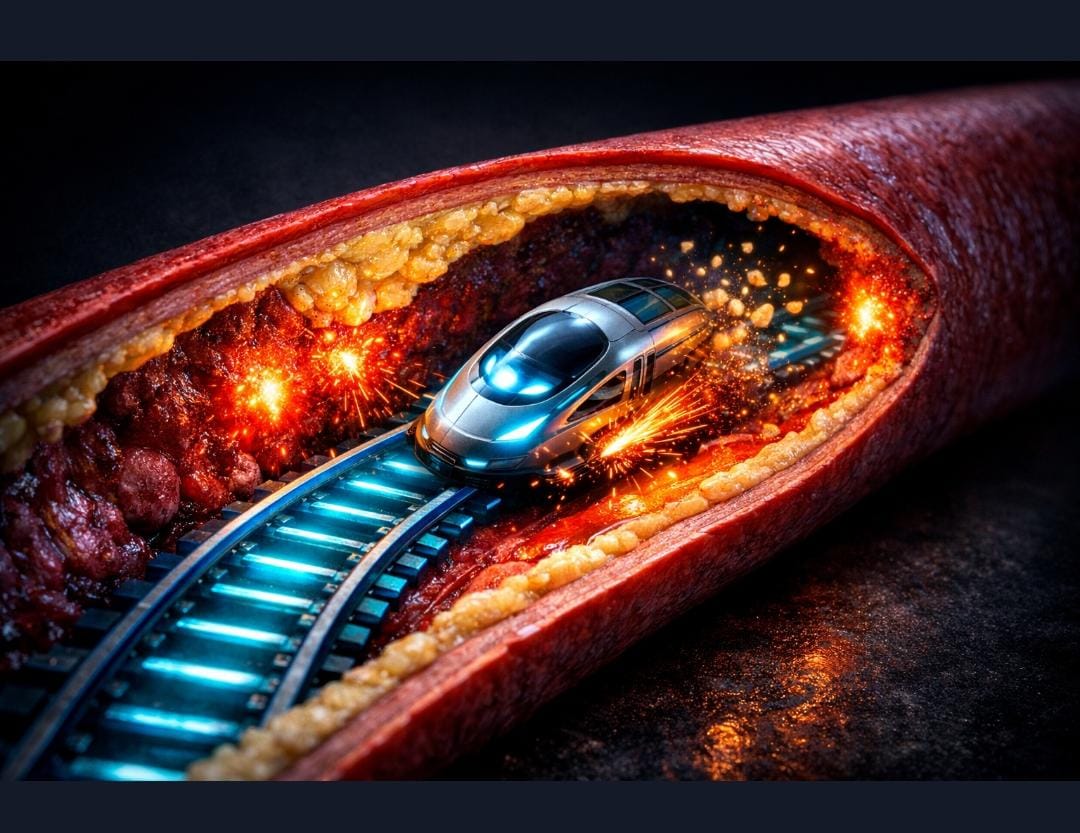
Could your "perfect" lab results be the biggest deception you will ever face? In the corridors of internal medicine and clinical nutrition clinics, the LDL (bad cholesterol) number has been turned into a targeted digital idol. If the number drops, the physician celebrates, and the patient assumes they are in absolute safety. However, the shocking clinical reality revealed by evidence-based medicine (EBM) is that this conventional figure is nothing but a "statistical illusion" that may be masking arteries eroding in silence. Relying solely on the total concentration of cholesterol within LDL particles provides a completely misleading picture. The catastrophe does not lie in the "amount of bad cholesterol" carried inside bloodstream proteins, but rather in the number of the carrier protein particles themselves and their ability to penetrate arterial walls, a capacity that increases drastically in the presence of arterial wall inflammation, which a conventional lipid panel never reveals. The Collapse of the Conventional Hypothesis: What are the Real Biomarkers? Here, the hypothesis of the absolute conventional LDL number collapses, giving way to the true and globally more accurate biomarkers: Apolipoprotein B (ApoB): This acts as the "locomotive" that moves and directs the LDL train within the bloodstream. LDL Particle Number (LDL-P): These represent the interconnected "wagons" of the train that carry the cholesterol, which we consider a mere "passenger." The Patient’s Inflammatory Status: This determines the condition of the "tracks" upon which the train runs. To understand it simply: imagine a high-speed train gliding smoothly on its tracks; here, there is no real danger. The hazard arises only when the train's wheels derail due to inflammation in a certain area. The wagons veer off course, pile up, and crash, causing damage at the accident site and halting all subsequent trains until a complete blockage occurs. These piled-up wagons are the ones capable of infiltrating between endothelial cells, undergoing oxidation, and initiating the process of atherosclerosis. Even if your total cholesterol levels appear normal or low on paper, focusing on superficial numbers rather than the qualitative and inflammatory nature of the particles is a form of medical short-sightedness one that treats the lab sheet while leaving the patient to an unknown fate. This scientific deconstruction shifts our focus directly to the shared territory between the internist and the clinical nutritionist. It becomes clear that the true enemy is not dietary fats alone, but primarily the "inflammatory environment" in which these fats circulate within the body. When a patient excessively consumes hydrogenated oils, refined sugars, and random fats, they do not just elevate cholesterol; they alter the structural geometry of its carrier particles, making them more susceptible to oxidation and driving up systemic inflammation rates. An astute internist no longer prescribes statins blindly just to lower a superficial LDL number, and a professional nutritionist no longer restricts fats indiscriminately. Both now understand that the primary objective is to suppress actual inflammatory biomarkers and improve arterial elasticity. Because cholesterol, without an oxidative, inflammatory environment, is merely a passenger on a train while inflammation is what derails the train and creates the catastrophe..
Written by Prof. Dr. Fatma Younis
Scientific Development Director at HealthNato | Professor of Hepatology and Gastroenterology
Fact-checked by HealthNato Scientific Team
on July 8, 2026 at 12:00 AM
Get new articles in your inbox
One short email a week, no spam.
Your privacy is important to us.
Related Articles
 General Health
The Hidden Battle After Abdominal Surgery: Understanding Postoperative Peritoneal Adhesions
 General Health
The Revolution in New Obesity Medications vs. Bariatric Surgery... Has the Era of the Scalpel Come to an End?
 General Health
7 Simple Habits That Could be Time Bombs in Your Daily Life !
 General Health