Does Knee Osteoarthritis Begin in the Gut ? Dietary Fiber Reveals a New Path to Pain Relief..

Designed and published by HealthNato medical editorial team.
Information reviewed by HealthNato Scientific Team
on October 28, 2026 at 12:30 PM
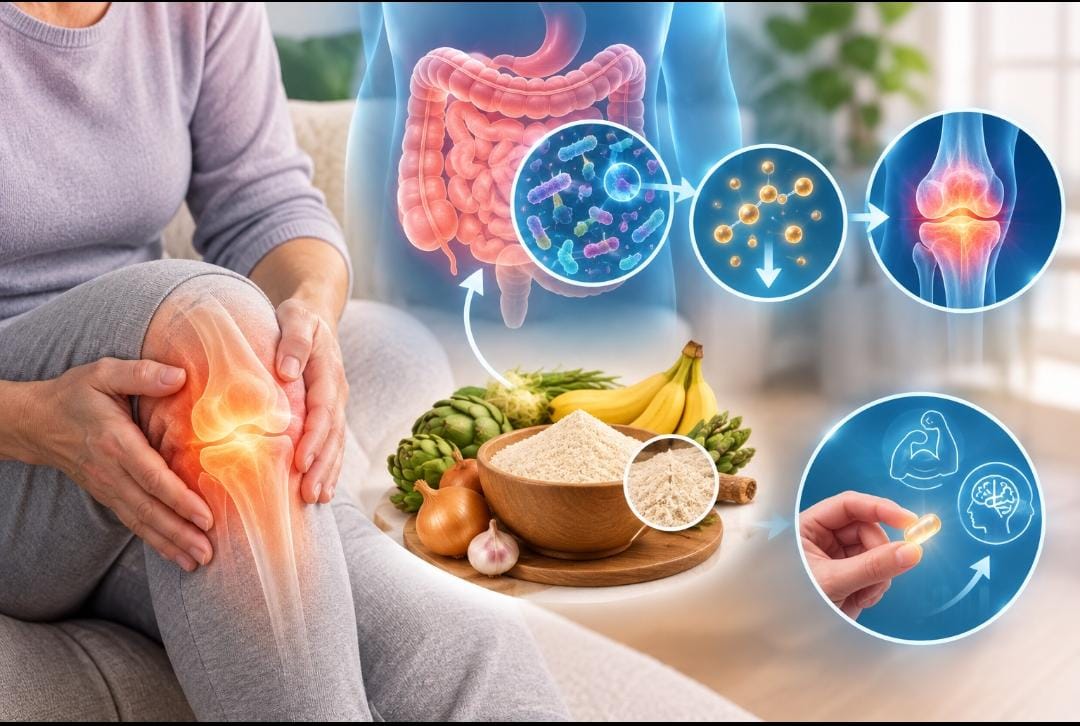
A recent clinical trial raises this possibility after the intake of a specific type of dietary fiber was associated with reduced knee osteoarthritis pain and improvements in the body's sensitivity to pain.
But what exactly happened, and could dietary fiber become part of the treatment?
Knee osteoarthritis is not simply a matter of cartilage wear and tear. The pain a patient experiences does not always depend solely on the extent of visible joint damage. Inflammatory and neurological factors also interact, influencing how the body processes pain signals.
What Is the Link Between the Gut and Knee Pain?
Researchers found that the dietary supplement inulin acts as a prebiotic—a type of substance that helps beneficial gut bacteria grow.
When gut bacteria ferment inulin, they produce compounds, including short-chain fatty acids such as butyrate, which contribute to reducing inflammation and supporting various bodily functions.
A Clinical Trial Investigates the Role of Dietary Fiber
In a study led by researchers at the University of Nottingham in the United Kingdom and published in the journal Nutrients, researchers tested inulin supplementation in people with knee osteoarthritis.
The study included 117 participants, with an average age of approximately 68, and lasted six weeks.
Participants were assigned to groups receiving inulin, therapeutic exercise, a combination of both, or a placebo.
The results were noteworthy.
Knee pain decreased among participants who took inulin, as well as those who performed therapeutic exercises, compared with the placebo group.
Inulin was also associated with improvements in certain measures of pain sensitivity and grip strength—an unexpected finding in a study focused on knee osteoarthritis.
A Second Surprise: A Hormone Linked to the Gut and Muscles
Researchers also observed increased levels of the hormone GLP-1 in the inulin group.
This hormone is well known for its role in regulating blood glucose and appetite. Scientists are also investigating its potential links to pain pathways and muscle health.
However, it is important not to confuse this finding with medications such as Ozempic and Wegovy. Inulin is not a medication that stimulates GLP-1 receptors.
Taken together, the findings suggest a possible interaction between the gut, pain, and muscles—a relationship that requires larger trials to clarify its underlying mechanisms and determine its therapeutic significance.
Is a Spoonful of Fiber Enough to Treat Knee Osteoarthritis?
Not quite. The study used a specific dose of inulin—20 grams per day—and its findings cannot be generalized to every type of fiber or any arbitrary amount.
The study also lasted only six weeks and did not establish that inulin rebuilds cartilage or halts the progression of osteoarthritis.
Inulin may cause gas and bloating, particularly when consumed in large amounts or increased too quickly. Therefore, the dose used in the study should not be considered a recommendation suitable for everyone.
The Bottom Line
This study adds preliminary evidence suggesting that gut microbes may be linked to how the body experiences pain. It also identifies inulin as a potential avenue for further research, rather than an established treatment for knee osteoarthritis.
Until more evidence becomes available, weight management, appropriate therapeutic exercise, and a treatment plan determined by a healthcare professional remain key components of managing osteoarthritis. A dietary supplement that still requires further research to establish its long-term effectiveness and safety should not replace them.
Designed and published by HealthNato medical editorial team.
Information reviewed by HealthNato Scientific Team
on October 28, 2026 at 12:30 PM
Related articles
 General Health
The Hidden Battle After Abdominal Surgery: Understanding Postoperative Peritoneal Adhesions
 General Health
The Revolution in New Obesity Medications vs. Bariatric Surgery... Has the Era of the Scalpel Come to an End?
 General Health
7 Simple Habits That Could be Time Bombs in Your Daily Life !
 General Health