The Latest Medical Guidelines and Recommendations for Cholesterol-Lowering Medications

Written by Prof. Dr. Fatma Younis
Scientific Development Director at HealthNato | Professor of Hepatology and Gastroenterology
Information reviewed by HealthNato Scientific Team
on August 12, 2026 at 12:30 PM
Does having high cholesterol automatically mean you need medication? And can your cholesterol results look “good” while your risk of heart disease remains elevated?
The answer is no longer based on a single number in a lipid panel.
In 2026, new guidelines from the American College of Cardiology (ACC) and the American Heart Association (AHA) were released for the management of dyslipidemia, placing greater emphasis on assessing a person’s overall cardiovascular risk rather than focusing on cholesterol levels alone.
Does Everyone With High Cholesterol Need Medication?
No.
Doctors do not look at cholesterol levels in isolation. They also consider age, blood pressure, smoking, diabetes, kidney function, family history, lipid levels, and other cardiovascular risk factors.
The updated guidelines use a risk assessment tool to estimate a person’s 10-year risk of cardiovascular disease in many adults.
First: What Is LDL-C?
LDL-C is the amount of cholesterol carried within low-density lipoprotein (LDL) particles and is commonly referred to as “bad cholesterol.”
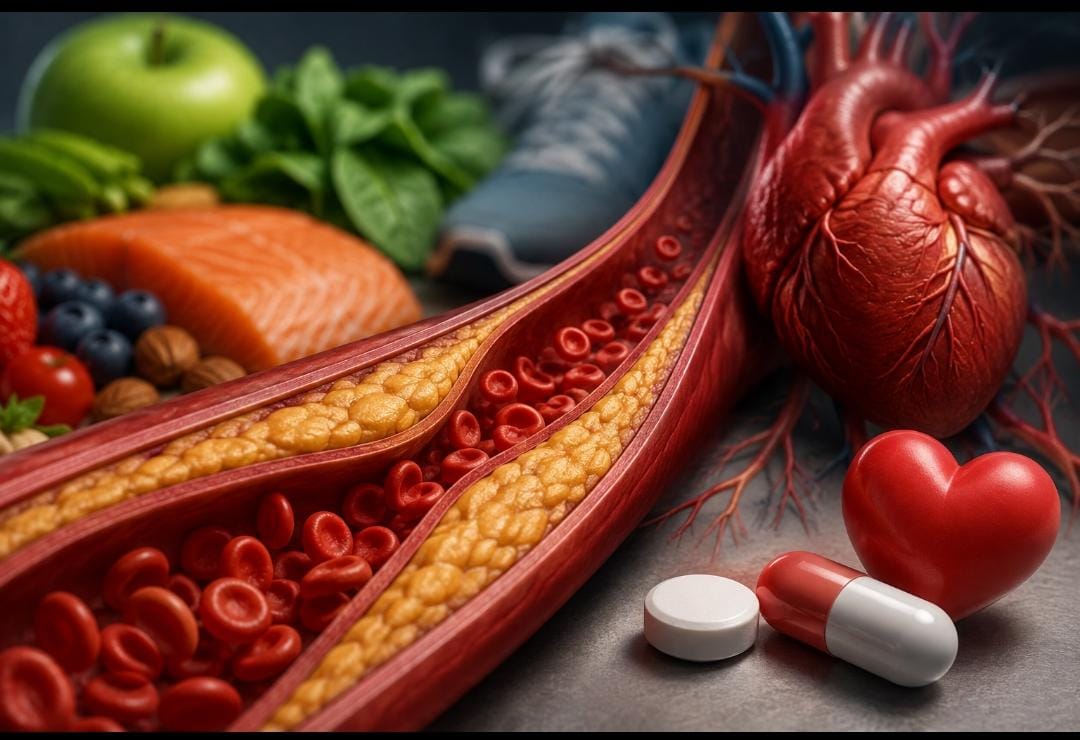
Elevated LDL-C can contribute to cholesterol buildup within artery walls, increasing the risk of atherosclerosis, heart attacks, and strokes.
However, an LDL-C level is not the only factor that determines cardiovascular risk.
When Does Medication Become More Important?
Cholesterol-lowering treatment becomes increasingly important when a person’s cardiovascular risk is high or when certain conditions are present, such as diabetes or chronic kidney disease.
An LDL-C level of 190 mg/dL or higher is considered severe hypercholesterolemia and requires appropriate evaluation and treatment. In this situation, treatment decisions should not rely solely on a 10-year risk calculation.
People who already have established disease in the coronary arteries may need to achieve very low LDL-C levels. In patients classified as having very high cardiovascular risk in secondary prevention, an LDL-C target below 55 mg/dL may be appropriate.
Cholesterol Is Not the Only Number That Matters
One of the important updates is the greater attention given to additional tests that may help physicians assess cardiovascular risk more accurately.
Lp(a): Lipoprotein(a), or Lp(a), is a type of lipoprotein that resembles LDL. Elevated levels are associated with an increased risk of cardiovascular disease. Its level is largely determined by genetics, which is why the guidelines recommend measuring Lp(a) at least once during adulthood.
ApoB: Apolipoprotein B (ApoB) is a protein found on the surface of atherogenic lipoprotein particles such as LDL and VLDL. Measuring ApoB can help estimate the number of these particles in the bloodstream and may provide additional information when the LDL-C level does not fully reflect a person’s cardiovascular risk.
In some people for whom the decision to start medication remains uncertain, a coronary artery calcium (CAC) scan may also help refine cardiovascular risk and support treatment decisions.
Are Statins Still the Main Treatment?
Yes.
Statins remain among the most important medications used to lower LDL-C and reduce the risk of cardiovascular disease.
However, they are not the only option. If the desired reduction in LDL-C is not achieved, or if the patient is at particularly high risk, the physician may add other lipid-lowering medications according to the patient’s individual condition and treatment needs.
What About Diet and Exercise?
They remain fundamental to cardiovascular prevention.
A healthy diet, regular physical activity, maintaining a healthy weight, and avoiding smoking can all help reduce cardiovascular risk.
However, following a healthy lifestyle does not necessarily mean that medication can be avoided when there is a clear medical indication for drug treatment.
The Bottom Line
The latest guidelines do not say that everyone with high cholesterol needs medication. Nor do they suggest that elevated cholesterol should simply be ignored.
The key message is that treatment decisions increasingly depend on a person’s overall cardiovascular risk—not on the LDL-C number alone.
So, don't ask only: “Is my cholesterol high?”
Ask instead: “What is my actual cardiovascular risk, and am I likely to benefit from cholesterol-lowering medication?”
That is where the right medical decision begins.
Written by Prof. Dr. Fatma Younis
Scientific Development Director at HealthNato | Professor of Hepatology and Gastroenterology
Information reviewed by HealthNato Scientific Team
on August 12, 2026 at 12:30 PM
Related articles
 General Health
The Hidden Battle After Abdominal Surgery: Understanding Postoperative Peritoneal Adhesions
 General Health
The Revolution in New Obesity Medications vs. Bariatric Surgery... Has the Era of the Scalpel Come to an End?
 General Health
7 Simple Habits That Could be Time Bombs in Your Daily Life !
 General Health