Does Obesity Start in Your Mouth? A New Study Reveals a Link Between Salivary Bacteria and Weight Gain

Designed and published by HealthNato medical editorial team.
Information reviewed by HealthNato Scientific Team
on October 12, 2026 at 12:30 PM
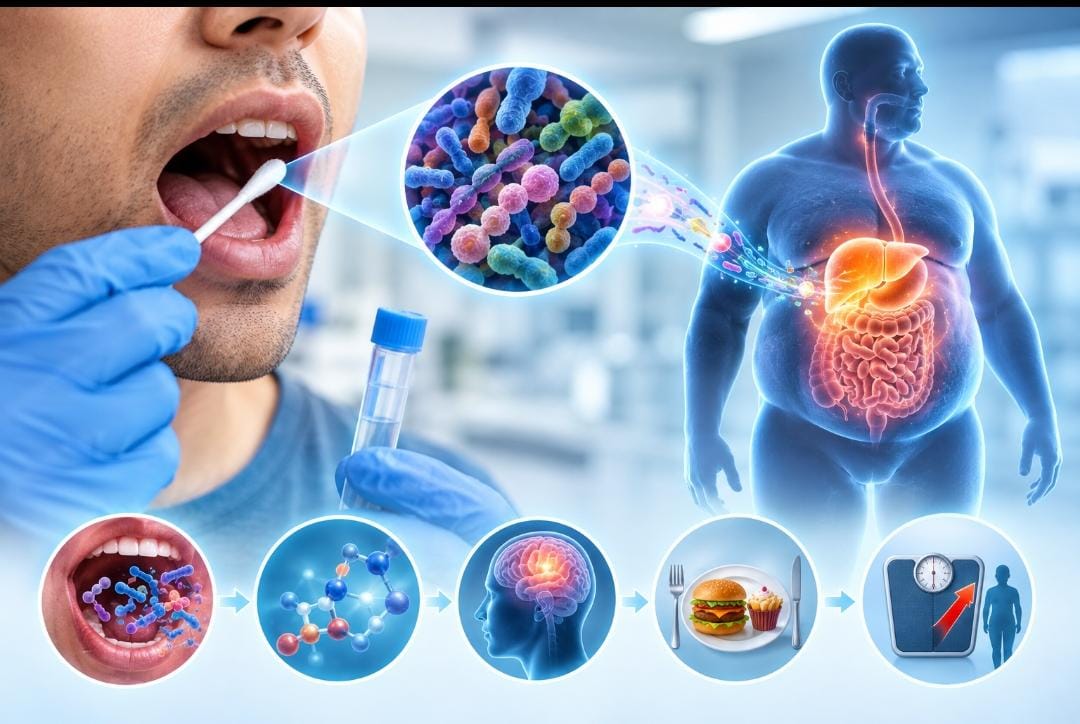
However, a recent study draws attention to a less expected factor: the microbes living inside the mouth, which may carry markers associated with obesity and metabolic disorders.
Published in the journal Cell Reports in collaboration with researchers from New York University Abu Dhabi, the study analyzed samples from 628 Emirati adults and revealed differences in the composition and metabolic activity of oral bacteria between people with obesity and those without it.
Could saliva one day become a tool to help identify obesity risks at an early stage?
Oral Bacteria: More Than Just a Dental Problem
The mouth hosts a diverse microbial community, and its effects are not limited to tooth decay and gum disease.
Among participants with obesity, the researchers found differences in bacterial species and their functions, including an increase in Streptococcus parasanguinis, associated with inflammatory pathways, alongside lactate-producing microbes such as Oribacterium sinus.
They also observed changes in metabolic pathways, including an increase in certain pathways involved in carbohydrate metabolism and a decline in indicators associated with the synthesis of some B vitamins.
However, these findings do not mean that specific bacteria directly cause obesity. The composition of oral microbes may also be influenced by diet, health status, and other factors.
Can Oral Microbes Influence Metabolism?
The study went beyond identifying bacterial species to examine the chemical products of their activity.
The researchers observed differences in several metabolic compounds, including lactate, histidine derivatives, choline, uridine, and uracil, and found associations between these compounds and indicators of obesity and cardiometabolic risk.
These findings raise important questions about how oral microbes interact with the body and whether certain compounds they produce contribute to changes in metabolic processes.
However, there is insufficient evidence that these compounds directly stimulate the brain to increase appetite or make people crave sugary foods. Furthermore, an association with obesity does not prove that these compounds cause it.
Can Saliva Reveal Your Predisposition to Obesity Before It Develops?
This is one of the study's most promising potential future applications.
If further research confirms that microbial and metabolic patterns in saliva are reliably associated with obesity risk, they may eventually help researchers develop biomarkers to support metabolic risk assessment.
However, the current study does not establish that a saliva swab can predict who will develop obesity before it occurs, nor does it show that such a test has become an approved diagnostic tool.
Similarly, developing mouthwashes or treatments targeting obesity-associated microbes remains a research possibility, not a proven method for preventing weight gain or treating obesity.
The Bottom Line
This study adds a new dimension to our understanding of obesity. The picture may involve not only what we eat or how many calories we consume, but also the complex interactions between microbes and the body.
However, oral bacteria do not determine your weight, and saliva is not yet an established test for predicting obesity.
The most important next step is for researchers to determine whether these microbial changes are merely markers associated with obesity or whether they actively contribute to its development before translating the findings into new tests or treatments.
Designed and published by HealthNato medical editorial team.
Information reviewed by HealthNato Scientific Team
on October 12, 2026 at 12:30 PM
Related articles
 General Health
The Hidden Battle After Abdominal Surgery: Understanding Postoperative Peritoneal Adhesions
 General Health
The Revolution in New Obesity Medications vs. Bariatric Surgery... Has the Era of the Scalpel Come to an End?
 General Health
7 Simple Habits That Could be Time Bombs in Your Daily Life !
 General Health