Everyday Foods That May Promote Inflammation Without You Realizing It…

Written by Dr. Nasser El Shishini
Editorial Director | Pharmacist | Clinical Nutrition & Weight Management Specialist | Researcher in Pharmaceutical & Cosmetic Sciences.
Information reviewed by HealthNato Scientific Team
on August 16, 2026 at 12:30 PM
Key points
- The concern is usually not one food, but a long-term dietary pattern dominated by added sugars, ultra-processed foods, unhealthy fats, processed meats, and refined carbohydrates.
- Industrial trans fats deserve particular caution because they are associated with higher LDL-C, lower HDL-C, and increased cardiovascular risk.
- Mediterranean-style and DASH dietary patterns emphasize vegetables, fruits, legumes, whole grains, nuts, fish, and unsaturated fats and are associated with improvements in several health markers, including some markers of inflammation.
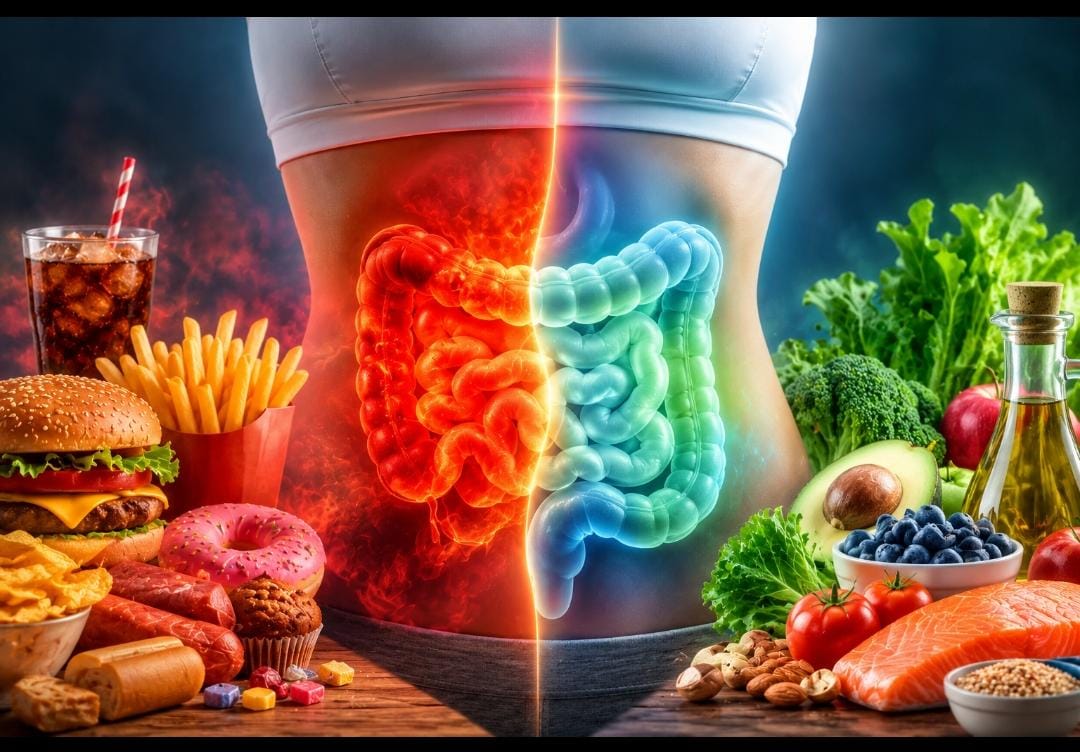
We often hear about inflammation as a factor involved in many chronic diseases, but few people consider that what we put on our plates every day may influence the inflammatory environment within the body.
That said, we need to be precise: no single food can simply be labeled as “inflammatory,” and eating a piece of cake or a fast-food meal occasionally does not mean that your body has suddenly entered a state of inflammation.
The concern arises when the overall diet becomes a long-term pattern heavily reliant on added sugars, ultra-processed foods, unhealthy fats, processed meats, and refined carbohydrates.
So, which foods and dietary habits are worth reconsidering?
1. Added Sugars… Sweetness With a Price
The concern is not the naturally occurring sugar found in a whole piece of fruit, but rather added sugars, which are commonly found in large amounts in sweetened beverages, desserts, baked goods, some breakfast cereals, sauces, and other processed products.
Excessive consumption can contribute to repeated blood glucose elevations and, over time, is associated with weight gain, insulin resistance, and metabolic disturbances—factors that may contribute to a chronic inflammatory environment.
The better choice?
Make whole fruits a primary source of sweetness, and pay attention to the amount of added sugar in the beverages and processed foods you consume every day.
2. Trans Fats… A Type of Fat Your Plate Can Do Without
If there is one type of fat that deserves particular caution, it is industrial trans fat (Trans Fats).
These fats may be found in some processed baked goods, manufactured foods, and fried products. They are associated with higher LDL-C levels, lower HDL-C levels, and an increased risk of cardiovascular disease.
That is why reducing industrial trans fats as much as possible is the best approach.
This does not mean eliminating all dietary fat. The body needs fat, but the type of fat and the foods from which it comes make a significant difference.
3. Processed Meats… The Problem Is Bigger Than a Piece of Meat
Sausages, salami, pepperoni, luncheon meats, hot dogs, and other processed meats are not nutritionally equivalent to fresh, minimally processed meat.
Processing, along with the amounts of saturated fat, sodium, and other components found in some of these products, makes frequent consumption a dietary habit worth reconsidering.
As for fresh red meat, it should not automatically be placed in the category of “inflammatory foods.” The overall dietary pattern, quantity consumed, and method of preparation also matter.
4. Refined Carbohydrates… When the Fiber Disappears
White bread, some baked goods and desserts, white rice, certain types of pasta, and foods made primarily from refined flour contain less fiber than their whole-grain counterparts.
When consumed in excess, they can lead to faster rises in blood glucose, particularly when they are part of a diet high in added sugars and low in fiber.
This is why dietary patterns heavily reliant on refined carbohydrates may be associated with a less favorable metabolic environment.
The solution is not to eliminate carbohydrates.
Instead, choose better sources such as oats, whole grains, legumes, and brown rice, while increasing your intake of vegetables and dietary fiber.
5. Ultra-Processed Foods… The Bigger Picture
Here, the story may be more complicated than a single ingredient.
Ultra-processed foods often combine added sugars, salt, fats, and high calorie density, and they can be easy to overconsume because of their taste and, in many cases, their lower satiety compared with many minimally processed foods.
Therefore, regularly relying on ready-made meals, fast food, commercially produced baked goods, sweetened beverages, and packaged snacks may matter more than searching for a single “villainous” ingredient.
So… What Should You Eat?
If your goal is to follow a dietary pattern that better supports overall health, don't focus entirely on a list of foods to avoid.
Instead, build your diet around:
A variety of vegetables and fruits.
Legumes such as lentils and beans.
Whole grains.
Nuts and seeds.
Fish, particularly oily fish.
Olive oil and other sources of unsaturated fats.
Minimally processed sources of protein.
Evidence suggests that dietary patterns such as the Mediterranean diet and the DASH diet are associated with improvements in multiple health markers, including some markers of inflammation.
Don't Search for a Single “Anti-Inflammatory Food”
This may be the most important message of all.
Chronic inflammation is not a switch that a single meal can turn on or off.
It is influenced by a complex interaction of factors, including diet, body weight, physical activity, sleep, smoking, stress, chronic diseases, and other aspects of health.
So instead of asking:
“Which food causes inflammation?”
Try asking:
“What does my overall diet look like—and what happens if I repeat this pattern every day for years?”
The Bottom Line
You don't need to be afraid of an occasional piece of cake, fast-food meal, or serving of red meat.
But if added sugars, ultra-processed foods, processed meats, refined carbohydrates, and trans fats have become a major part of your daily diet, it may be time to reconsider your overall eating pattern.
Because health is not built—or destroyed—by a single meal…
And chronic inflammation is rarely about one food. It may be shaped by what we repeatedly put on our plates, day after day.
Written by Dr. Nasser El Shishini
Editorial Director | Pharmacist | Clinical Nutrition & Weight Management Specialist | Researcher in Pharmaceutical & Cosmetic Sciences.
Information reviewed by HealthNato Scientific Team
on August 16, 2026 at 12:30 PM
Related articles
 Clinical Nutrition
The Hidden Battle After Abdominal Surgery: Understanding Postoperative Peritoneal Adhesions
 Natural Supplements
Beware of Ashwagandha: The Famous Herb Could Turn into a Deadly Toxin for Liver Cells!
 nutrition
Is Your Medication Not Working? Beware... Your Meal Might Be the Reason
 nutrition