An Electronic Implant That Eliminates Excess Sugar Without Insulin… Are We Approaching a New Revolution in Diabetes and Obesity Treatment ?

Written by Dr. Saeed Attia
Scientific Development Team at HealthNato | Pharmacist | Pharmacology & Supplements Specialist
Information reviewed by HealthNato Scientific Team
on November 19, 2026 at 12:30 PM
This is no longer just science fiction. Researchers at the Swiss Federal Institute of Technology in Zurich (ETH Zurich) have developed an experimental electronic implant that could open an entirely different path toward treating type 2 diabetes and obesity.
How Does the Implant Eliminate Sugar Without Insulin?
The study was published in Science in October 2026. It is based on a small device implanted under the skin that contains a chemical catalyst made of graphite coated with gold and platinum particles.
The concept works in an intelligent way:
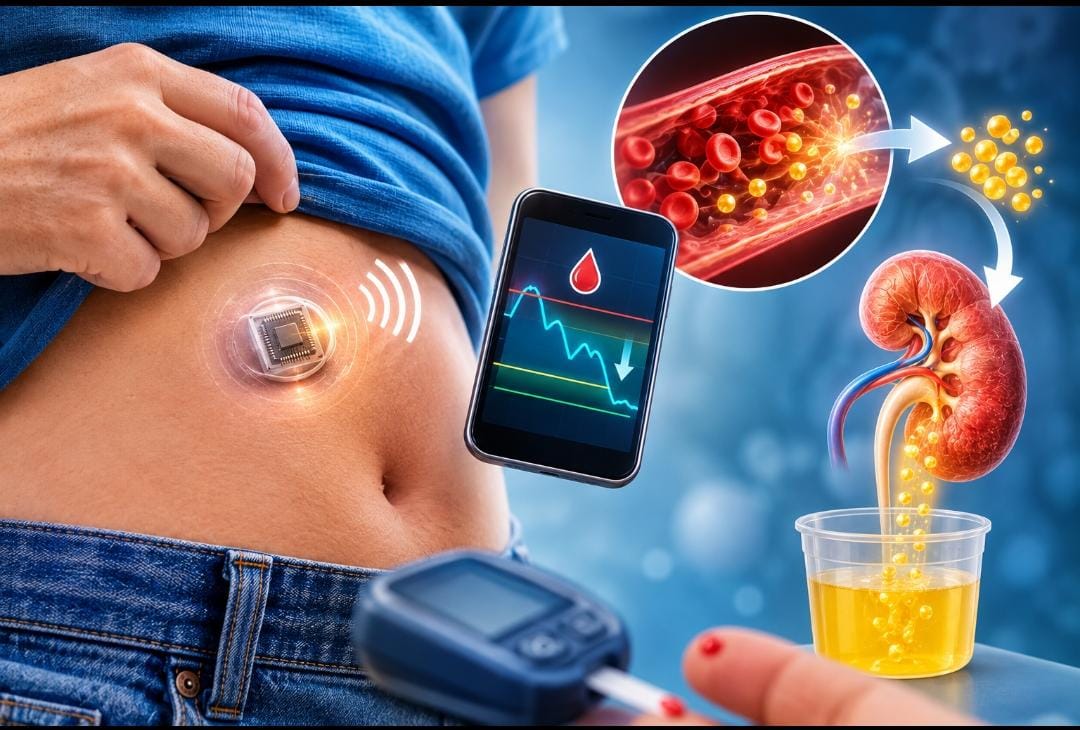
1- A continuous glucose sensor monitors blood sugar levels.
2- When glucose levels rise, the sensor sends a signal through a smartphone to activate the implant.
3- The implant uses electrical energy to convert excess glucose into a substance called gluconate.
4- The kidneys eliminate this substance from the body through urine.
5- Once glucose levels return to the target range, the device automatically switches off.
The fundamental difference is that insulin helps transport glucose from the blood into cells, whereas this technology attempts to convert some of the excess glucose into a substance that the body can eliminate rather than use or store in the first place.
10% Weight Loss in Just 6 Weeks
The researchers tested the device in mice with diabetes and obesity, and the results were remarkable:
- The device helped regulate blood glucose levels. - The treated mice lost approximately 10% of their body weight over six weeks. - Triglyceride levels in the blood decreased. - No clear signs of tissue damage caused by heat or the electrical current used were observed.
The researchers suggest that eliminating part of the excess glucose may have encouraged the body to rely more heavily on stored fat for energy.
However, these findings do not mean that the device will produce the same weight-loss results in humans, nor do they establish it as an obesity treatment at this stage.
Could This Bring an End to Insulin Injections and Diabetes Medications?
Although the technology is exciting, it is still in the preclinical testing stage and has not yet been tested in humans.
There are important scientific challenges that must be overcome, particularly the kidneys' ability to eliminate the resulting amounts of gluconate without accumulation that could affect the body's acid balance or sodium and potassium levels.
Furthermore, the human body processes much larger amounts of carbohydrates than mice do, raising questions about the size of the device and its ability to function efficiently inside the human body.
The researchers plan to move on to testing in larger animals, such as pigs and sheep, before considering human trials.
Are We Looking at a New Future for Diabetes Treatment?
The real significance of this innovation is that it introduces a different therapeutic approach:
Using electronics and chemical reactions to eliminate excess glucose directly. Perhaps the future of diabetes treatment will not involve just another pill or injection, but rather a small electronic device that monitors blood sugar and intervenes when the body needs it.
This approach could eventually become an important addition to the treatment of type 2 diabetes and obesity, provided it proves effective and safe in humans.
Until then, however, this remains a promising scientific experiment, not an available treatment. Do not stop taking insulin or diabetes medications, or change your treatment plan, until human trials are completed and the technology's safety has been established.
Written by Dr. Saeed Attia
Scientific Development Team at HealthNato | Pharmacist | Pharmacology & Supplements Specialist
Information reviewed by HealthNato Scientific Team
on November 19, 2026 at 12:30 PM
Related articles
 Pharmaceuticals
The Invisible War Inside Your Gut : How Antibiotics Reshape the “Microbiome”
 Pharmaceuticals
The Silent Killer in Your Kitchen: When Can Potassium Salt and Potassium Supplements Put Your Heart at Risk?
 Pharmaceuticals
When Does a Dietary Supplement Become a Drug Dose? The Truth About the 600,000-IU Vitamin D Injection
 Pharmaceuticals