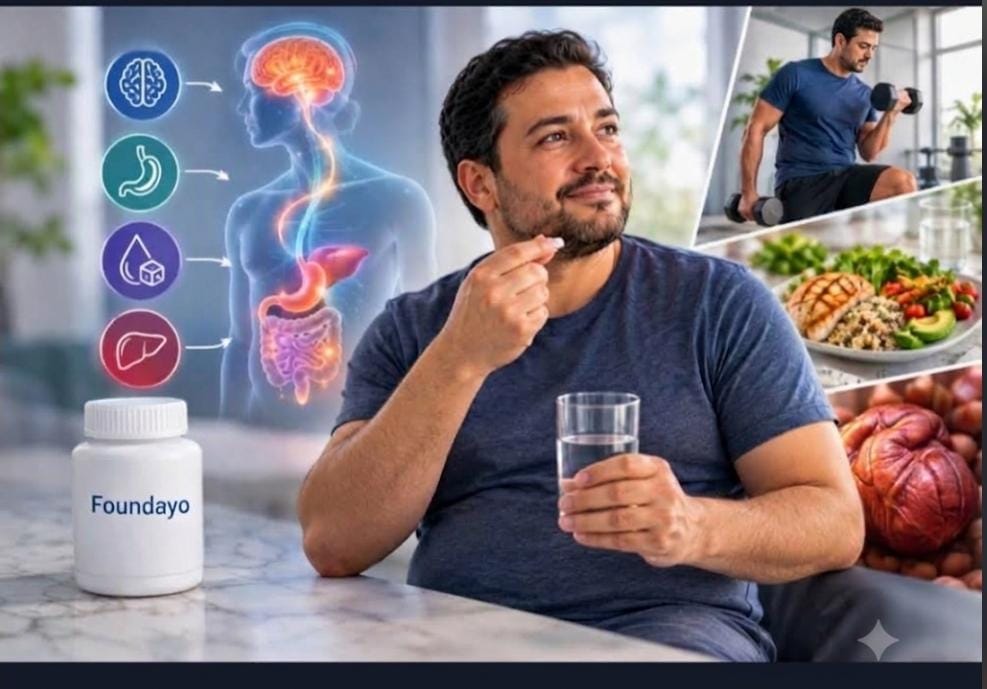
Foundayo.. The GLP-1 Pill Entering the Weight-Loss Race Through a New Door

Written by Dr. Saeed Attia
Scientific Development Team at HealthNato | Pharmacist | Pharmacology & Supplements Specialist
Fact-checked by HealthNato Scientific Team
on September 19, 2026 at 12:30 PM
No weekly injection.. One pill once a day: How does (Orforglipron) work on appetite and body weight? And why has this new drug attracted so much attention?
For several years, GLP-1 medications have been associated in people's minds with weekly injections, weight loss, and appetite reduction.
But now, a new player has entered the field under the brand name: Foundayo.
A new medication containing the active ingredient Orforglipron, an oral drug that acts on GLP-1 receptors. It received approval from the U.S. Food and Drug Administration (FDA) in April 2026 to help reduce body weight and maintain long-term weight loss in adults with obesity or those who are overweight with a weight-related health condition, alongside a reduced-calorie diet and increased physical activity.
And the most important part: It is a pill.. not an injection.
What makes Foundayo different?
The basic idea is not that the drug has invented an entirely new pathway for weight loss.
Rather, it takes the well-known GLP-1 pathway and delivers it in a different form that may be more convenient for some patients:
One pill once a day.
It can be taken at any time of day, with or without food, and without any special restrictions on drinking water at the time of administration.
And this simplicity may be one of its most important strengths in the weight-loss drug race.
How does it work?
Foundayo contains Orforglipron, which is an activator of GLP-1 receptors. Simply put, the drug acts through several pathways involved in appetite regulation and metabolism.
It reduces appetite, increases feelings of fullness, delays gastric emptying, and helps reduce body weight.
The GLP-1 pathway also plays a role in blood glucose regulation by enhancing insulin secretion in a glucose-dependent manner and affecting glucagon. Studies of Orforglipron have also shown results in improving blood glucose control in people with type 2 diabetes.
In other words, it becomes involved in regulating a group of signals that control food intake and metabolism.
The dose..
The approved starting dose is 0.8 mg once daily.
The dose can then be gradually increased after at least 30 days at each stage, depending on the individual's response and tolerability, until reaching a maximum dose of 17.2 mg once daily.
The gradual dose escalation is not merely optional, because its purpose is to give the gastrointestinal system time to adapt and reduce side effects.
Side effects..
The most common side effects are related to the gastrointestinal system, including:
Nausea, constipation, diarrhea, vomiting, dyspepsia, abdominal pain, and bloating.
Other symptoms may also occur, such as fatigue, acid reflux, flatulence, and hair loss.
Less commonly, there are important warnings concerning pancreatitis, dehydration and its potential consequences for the kidneys, gallbladder disease, in addition to other risks that require medical evaluation.
The doctor should also be informed before undergoing anesthesia or certain medical procedures because the medication delays gastric emptying.
So.. has the era of GLP-1 injections come to an end?
No, but perhaps a new era of competition has begun:
GLP-1 injections on one side.. and GLP-1 pills on the other.
Although injections achieve greater weight reduction than the newer oral medications..
the importance of having oral options lies in creating a balance between efficacy, tolerability, ease of use, and the ability to remain on treatment.
And this may be the real story behind Foundayo:
It is not simply another new drug that works on GLP-1 .. but the beginning of a phase in which obesity treatment becomes less dependent on injections and offers a more diverse range of pharmacological options.
Written by Dr. Saeed Attia
Scientific Development Team at HealthNato | Pharmacist | Pharmacology & Supplements Specialist
Fact-checked by HealthNato Scientific Team
on September 19, 2026 at 12:30 PM
Get new articles in your inbox
One short email a week, no spam.
Your privacy is important to us.
Related Articles
 Pharmaceuticals
The Invisible War Inside Your Gut : How Antibiotics Reshape the “Microbiome”
 Pharmaceuticals
The Silent Killer in Your Kitchen: When Can Potassium Salt and Potassium Supplements Put Your Heart at Risk?
 Pharmaceuticals
When Does a Dietary Supplement Become a Drug Dose? The Truth About the 600,000-IU Vitamin D Injection
 Pharmaceuticals