Vitamin C Is Not Just a Vitamin for Colds.. Can High-Dose Intravenous Vitamin C Help Treat Some Blood Cancers?

Written by Dr. Saeed Attia
Scientific Development Team at HealthNato | Pharmacist | Pharmacology & Supplements Specialist
Fact-checked by HealthNato Scientific Team
on September 28, 2026 at 12:30 PM
When we hear the name Vitamin C, we often think of oranges, dietary supplements, or the common cold.
But researchers have been studying a completely different idea for years:
Can high doses of Vitamin C given intravenously directly affect cancer cells?
The idea may sound strange, but it is not merely a theory.
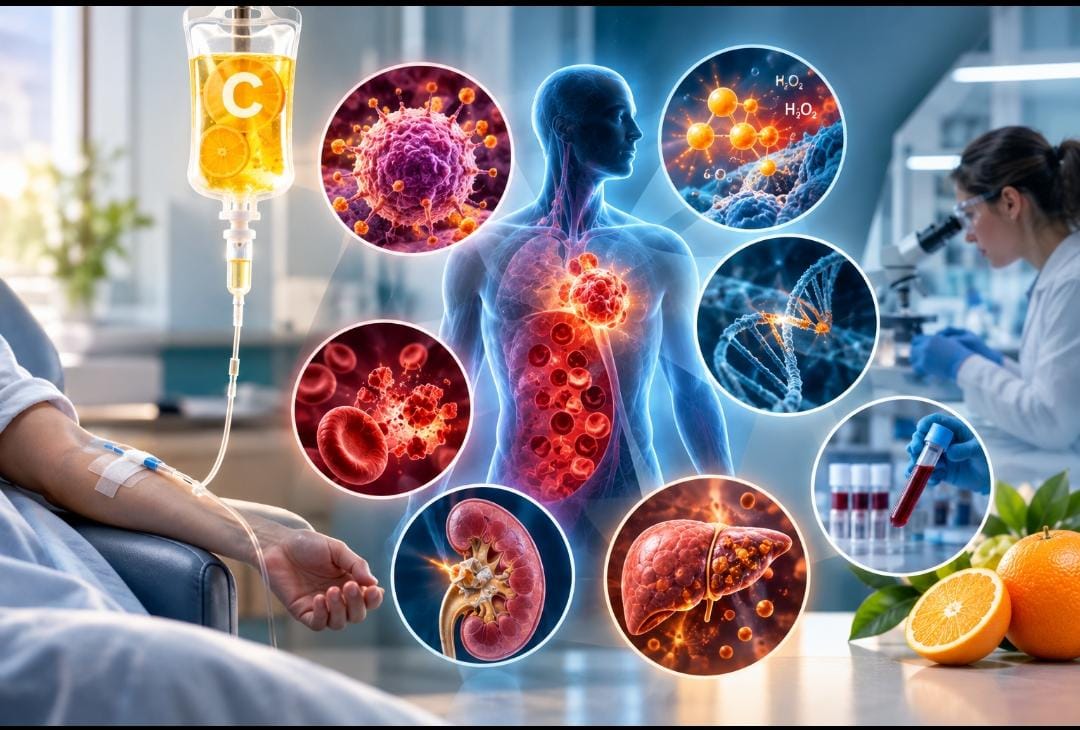
Laboratory studies have shown that high pharmacological doses of Vitamin C can generate oxidizing substances that may damage some cancer cells, while research findings in some blood cancers have also been of interest.
However, so far, intravenous Vitamin C is not an approved cancer treatment, and it cannot be considered a substitute for the treatment prescribed by an oncologist.
Why Don’t Oral Supplements Have the Same Effect?
When Vitamin C is taken orally, the digestive system has a limited capacity to absorb it, and it cannot reach the very high blood concentrations that can be achieved through intravenous administration.
For this reason, research investigating its anticancer effects focuses on very high intravenous doses administered under medical supervision.
How Can It Affect Cancer Cells?
There are several mechanisms currently being studied. One of the most important is that high concentrations of Vitamin C can lead to the formation of hydrogen peroxide and other oxidizing substances.
Some cancer cells may be more sensitive to this oxidative stress than normal cells, which may lead to damage to important cellular components, including genetic material, and consequently to the death of some cancer cells.
However, this does not apply to all types of cancer, because the type of tumor and the characteristics of its cells are highly important.
Vitamin C and Chemotherapy
High-dose intravenous Vitamin C is not considered a substitute for chemotherapy, targeted therapies, or bone marrow transplantation when these treatments are required.
When it is studied alongside cancer treatment, it is being investigated as a potential experimental addition within research protocols, rather than as a standard treatment for every cancer patient.
There are indeed ongoing trials investigating its combination with therapeutic drugs in some blood cancers.
Does It Reduce the Side Effects of Chemotherapy?
Some studies have suggested improvements in quality of life or reductions in certain symptoms and side effects among patients who received intravenous Vitamin C, but the results are not consistent, and these findings cannot be turned into a general rule that Vitamin C prevents chemotherapy-related toxicity.
Therefore, patients should not add it to their treatment on their own.
Why Does It Require Close Medical Monitoring?
Because the dose here is not an ordinary dietary supplement dose.
Before using high-dose intravenous administration, the physician needs to assess certain factors, because there are risks associated with elevated Vitamin C levels in the blood, including:
- Kidney stones and kidney damage: An increased risk of excess Vitamin C being converted into oxalate, which can be deposited in the urine and increase the risk of kidney stone formation and damage to kidney tissue.
- Hemolysis: It may cause destruction of red blood cells in patients with favism (G6PD deficiency) when high doses are administered.
- Iron toxicity: It enhances iron absorption to a significant extent, which may cause harmful iron deposition in the liver and heart in patients with iron overload.
- Interference with laboratory tests: Very high levels can interfere with laboratory test results and may produce inaccurate readings for blood glucose and some urine tests, potentially leading to inaccurate results.
The Real Story of Vitamin C and Cancer
Scientists have discovered that the same substance can behave very differently when it reaches the body at very high pharmacological concentrations, and that some cancer cells may be more sensitive to this effect.
Therefore, high-dose intravenous Vitamin C represents a promising area of research in some types of cancer, including some blood cancers, but it is not yet a proven treatment or a substitute for established cancer therapies.
Written by Dr. Saeed Attia
Scientific Development Team at HealthNato | Pharmacist | Pharmacology & Supplements Specialist
Fact-checked by HealthNato Scientific Team
on September 28, 2026 at 12:30 PM
Get new articles in your inbox
One short email a week, no spam.
Your privacy is important to us.
Related Articles
 Pharmaceuticals
The Invisible War Inside Your Gut : How Antibiotics Reshape the “Microbiome”
 Pharmaceuticals
The Silent Killer in Your Kitchen: When Can Potassium Salt and Potassium Supplements Put Your Heart at Risk?
 Pharmaceuticals
When Does a Dietary Supplement Become a Drug Dose? The Truth About the 600,000-IU Vitamin D Injection
 Pharmaceuticals