One Injection Instead of Lifelong Medication: A Genetic Revolution Is on the Horizon, but What Are the Risks and the Cost ?

Written by Dr. Saeed Attia
Scientific Development Team at HealthNato | Pharmacist | Pharmacology & Supplements Specialist
Information reviewed by HealthNato Scientific Team
on November 8, 2026 at 12:30 PM
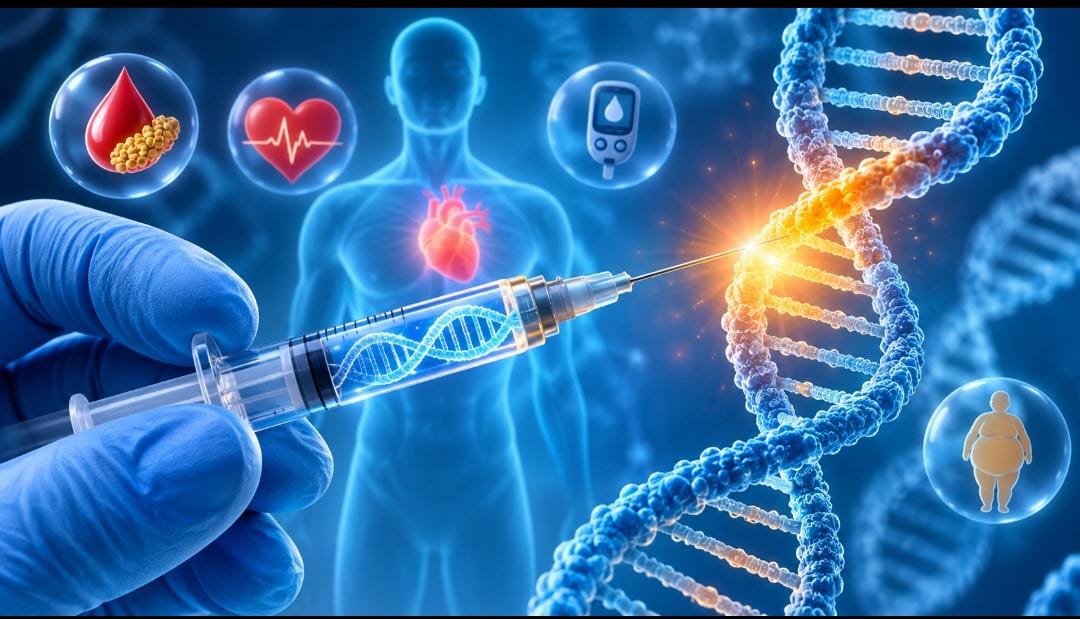
The idea is no longer confined to science fiction. Advances in gene therapy and gene editing are opening the door to interventions that can alter the activity of specific genes in the body, potentially producing long-lasting effects after just one dose.
But the paradox is that the greatest advantage of this technology may also be a source of concern:
What if the treatment’s effects persist, but a problem emerges later that doctors cannot stop or reverse?
From Treating Disease to Reprogramming Genes
Traditional medications generally work as long as they remain in the body at a sufficient concentration. That is why people with high cholesterol or diabetes need to continue treatment to maintain the results.
Gene-based therapies, however, take a different approach. They can deliver genetic instructions to cells, silence a gene that contributes to disease, or modify a specific section of DNA.
The goal is to make the cells themselves produce the therapeutic effect or stop a harmful activity, rather than relying on repeated doses of medication.
This technology has already achieved important results in treating certain serious genetic disorders, such as spinal muscular atrophy and sickle cell disease.
Scientists are now looking to expand its applications to more widespread conditions, including high cholesterol, heart disease, obesity, and diabetes.
Why Could a Single Dose Be Riskier Than Daily Medication?
This is where the fundamental difference emerges.
If a conventional medication causes side effects, a doctor can reduce the dose, switch to another drug, or stop the treatment.
But if gene therapy produces a long-lasting change in cellular activity, reversing that change may not be so straightforward.
In other words, treatment could shift from an intervention that can be controlled to a biological change that lasts for years and may be difficult to reverse.
Some therapies also use modified viruses to deliver genetic instructions into cells. The immune system may recognize these vectors and produce antibodies against them, making it difficult or even impossible to administer the same treatment again in certain cases.
Most importantly, describing a treatment as a “single dose” does not necessarily mean its effects will last a lifetime. The duration of its effects may vary depending on the technology, the targeted cells, and the nature of the disease.
Why Is Treating a Rare Disease Different From Treating High Cholesterol?
The risks may be relatively acceptable when dealing with a serious, rare genetic disease for which no effective treatment options are available, particularly when the condition threatens the patient's life or causes severe disability.
But the equation changes when considering gene-based interventions for high cholesterol or diabetes—conditions for which effective medications already exist and can be adjusted or discontinued when necessary.
If millions of people receive permanent genetic treatments, even a rare complication could become a significant public health concern.
Clinical trials involving relatively small numbers of participants may also fail to detect rare side effects or complications that emerge years after treatment.
Five Questions to Ask Before Allowing Treatment to Change Our Genes
In an analytical article published in JAMA Internal Medicine, two researchers from the Frankel Cardiovascular Center at the University of Michigan proposed a framework for assessing the suitability of long-lasting genetic interventions, based on several key considerations:
- Disease severity: Is the condition serious enough to justify an intervention that may be difficult to reverse?
- Available alternatives: Are there effective medications that offer greater flexibility and control?
- Duration of effect: Can the duration of the treatment's effects be ensured to be appropriate for the condition?
- Treatment delivery risks: Are the risks associated with the technology used to deliver the treatment acceptable compared with its expected benefits?
- Long-term monitoring: Can patients be monitored for years to detect delayed complications before they develop into a widespread problem?
The Cost of Treatment
Even if these technologies prove effective and safe, cost will remain a major challenge.
Some gene therapies currently available cost more than $1 million per patient. While such prices may be justifiable for rare and serious genetic disorders, they raise significant questions if these treatments are extended to diseases affecting millions of people.
High costs could make these therapies accessible only to a limited group, rather than allowing everyone to benefit from what could otherwise become a medical revolution.
Are We Really Approaching the End of Daily Medication?
The idea of using a single genetic intervention to control common conditions such as high cholesterol and heart disease is still in the research and development stage. These advances do not mean that patients can currently stop taking their usual medications.
But the scientific direction is clear: the goal is no longer simply to develop a more effective drug, but to find a way to make the body itself produce a therapeutic effect over an extended period.
The real challenge will not be proving that scientists can alter gene activity, but ensuring that they can do so safely, understanding what may happen years later, and finding ways to manage any unwanted effects.
In medicine, not every problem can be solved with a treatment that lasts a long time. Sometimes, the ability to stop or adjust a treatment is just as important as its effectiveness.
Written by Dr. Saeed Attia
Scientific Development Team at HealthNato | Pharmacist | Pharmacology & Supplements Specialist
Information reviewed by HealthNato Scientific Team
on November 8, 2026 at 12:30 PM
Related articles
 Pharmaceuticals
The Invisible War Inside Your Gut : How Antibiotics Reshape the “Microbiome”
 Pharmaceuticals
The Silent Killer in Your Kitchen: When Can Potassium Salt and Potassium Supplements Put Your Heart at Risk?
 Pharmaceuticals
When Does a Dietary Supplement Become a Drug Dose? The Truth About the 600,000-IU Vitamin D Injection
 Pharmaceuticals