When Does a Dietary Supplement Become a Drug Dose? The Truth About the 600,000-IU Vitamin D Injection

Written by Dr. Saeed Attia
Scientific Development Team at HealthNato | Pharmacist | Pharmacology & Supplements Specialist
Fact-checked by HealthNato Scientific Team
on August 23, 2026 at 5:38 PM
Key Points
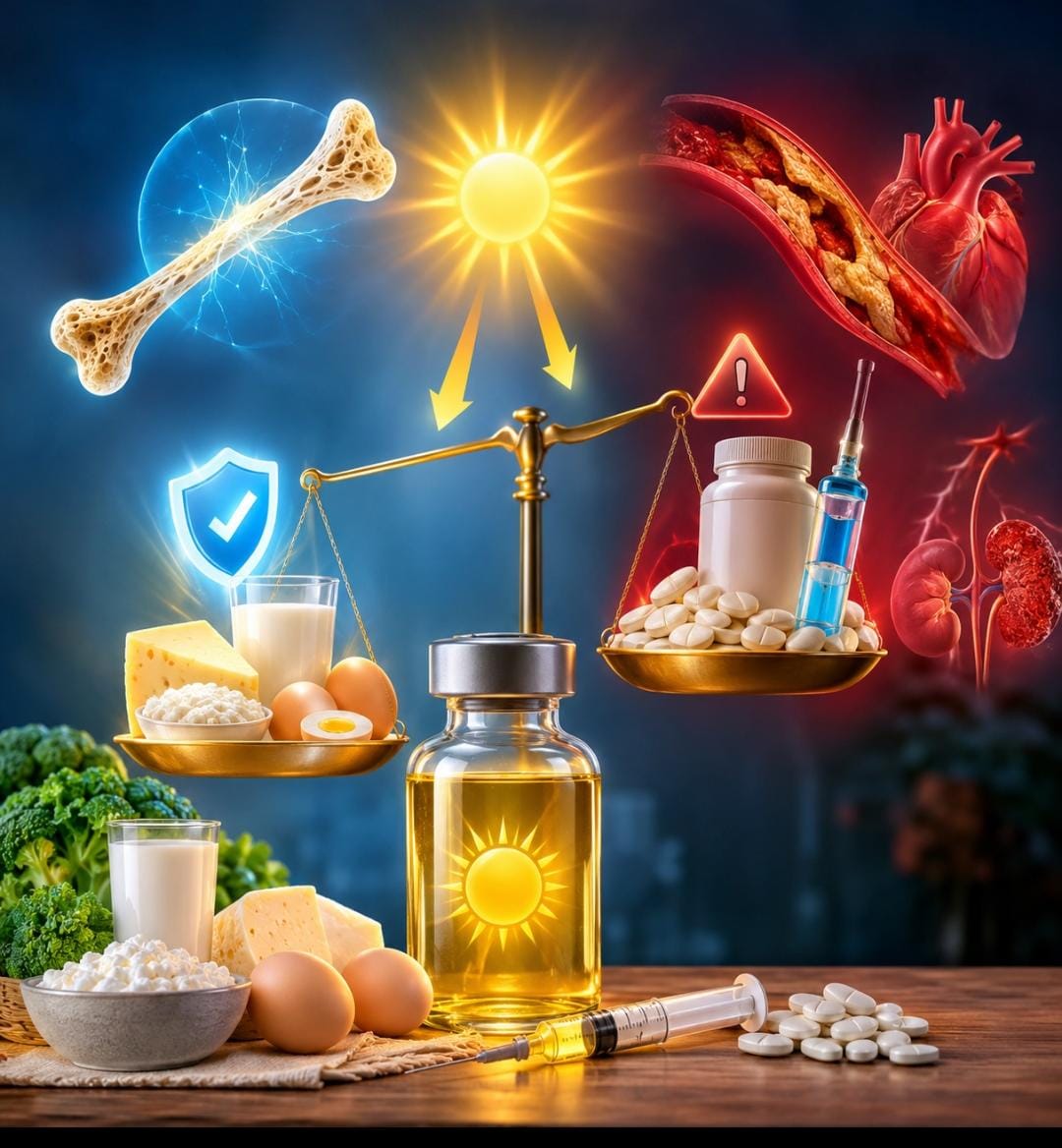
- A 600,000-IU Vitamin D injection is a large pharmacological dose and should not be treated like an ordinary vitamin supplement or used simply to treat fatigue.
- Vitamin D toxicity is primarily related to excessive calcium absorption and hypercalcemia, which can cause nausea, thirst, frequent urination, kidney problems, and soft-tissue calcification.
- Extra caution is needed when high-dose Vitamin D is combined with calcium supplements, while naturally calcium-rich foods such as milk and cheese are not automatically forbidden.
“Feeling tired? Take this Vitamin D injection—it will give your body a boost.”
This advice may sound simple, but it hides an important problem.
Vitamin D is not a general stimulant, and high-dose medicinal formulations are not ordinary supplements that can be used randomly.
One of the best-known examples in our region is the Vitamin D3 injection containing 600,000 IU.
This is a very large dose compared with normal daily requirements. Although it may be used medically in specific circumstances, it should not be repeated simply because someone feels tired or wants to “boost immunity.”
So where does the problem lie?
And what happens when high-dose Vitamin D is combined with calcium supplements or unnecessary excessive calcium intake?
First… Vitamin D Is Not Simply a “Vitamin”
Vitamin D is a fat-soluble substance that has hormone-like actions in the body.
It plays an essential role in regulating calcium and phosphorus metabolism and supporting bone health.
When the body receives excessive amounts of Vitamin D, intestinal calcium absorption can increase. This may lead to abnormally high calcium levels in the blood and, in some cases, increased calcium excretion in the urine.
And this is where the real problem begins.
Vitamin D toxicity is not defined only by looking at the number of international units taken. The clinically important issue is the effect of excessive Vitamin D on calcium balance and the complications that may follow.
600,000 IU… Is It Automatically a Toxic Dose?
Not necessarily.
The fact that an injection contains 600,000 IU does not mean that every person who receives it will immediately develop Vitamin D toxicity.
Such high doses may be used in selected treatment protocols under appropriate medical supervision.
The real mistake is treating the injection as a general “booster” that can be repeated without diagnosis, a defined treatment plan, or follow-up.
For healthy adults, the tolerable upper intake level for ongoing daily Vitamin D consumption is generally considered to be 4,000 IU per day from all sources.
However, this should not be confused with medically prescribed treatment for confirmed deficiency. Physicians may use doses above routine intake limits for a defined therapeutic purpose, duration, and monitoring plan.
The Real Problem… When Calcium Rises Too High
Excessive Vitamin D can lead to hypercalcemia, meaning abnormally high levels of calcium in the blood.
Possible symptoms include:
- Nausea and vomiting.
- Loss of appetite.
- Excessive thirst.
- Frequent urination.
- Dehydration.
- Muscle weakness.
- Neurological symptoms or confusion.
- Kidney stones.
In severe cases, excessive calcium levels can contribute to kidney injury and abnormal heart rhythms. Calcium may also accumulate in soft tissues, potentially causing serious complications.
This is why a large Vitamin D dose should not be viewed simply as “taking vitamins.”
When High-Dose Vitamin D Is Combined with Calcium
This point deserves particular attention.
Vitamin D increases the absorption of calcium from the gastrointestinal tract.
Therefore, combining high-dose Vitamin D with calcium supplements without a clear medical need may increase the risk of excessive calcium exposure in susceptible individuals.
Research has suggested that calcium supplementation, particularly in certain contexts, may contribute to kidney stone risk in some people. The overall risk can depend on the amount consumed, the source of calcium, hydration, kidney function, and individual medical factors.
But this does not mean:
“Calcium + Vitamin D = kidney stones for everyone.”
The situation is much more complicated.
Risk can be influenced by:
- The Vitamin D dose.
- The duration and frequency of treatment.
- Calcium obtained from supplements.
- Calcium obtained from food.
- Kidney function.
- Previous kidney stones.
- Other medical conditions and medications.
What About Milk, Cheese, and Eggs?
There is no need to exaggerate the fear.
Milk, cheese, eggs, and other foods containing calcium are not automatically forbidden simply because someone is taking Vitamin D.
Dietary calcium is an important part of normal nutrition and is needed for healthy bones, muscles, and nerve function.
The concern is more likely to arise when unnecessary supplementation begins to accumulate.
For example:
A high-dose Vitamin D injection + calcium supplements + repeated Vitamin D doses without monitoring + additional unnecessary supplements.
In this situation, it may be important for the treating clinician to understand the person's total intake from medications, supplements, and diet.
More is not always better.
Dietary calcium and calcium supplements should also not be treated as identical. Their dose, timing, pattern of intake, and potential effects may differ.
Do I Need a Vitamin D Test Before Taking Any Dose?
Not every healthy person needs routine Vitamin D testing.
However, assessment becomes more important when Vitamin D deficiency is suspected, when a person has relevant risk factors, or when high or repeated therapeutic doses are being considered.
Depending on the clinical situation, a healthcare professional may also consider evaluating calcium levels, kidney function, and other laboratory markers.
What About the 600,000-IU Injection?
If a physician prescribes a 600,000-IU Vitamin D injection as part of a specific treatment plan, that is very different from taking it independently.
The concern increases when the injection is used:
- Simply because of fatigue.
- Without appropriate clinical assessment.
- Repeatedly without a defined treatment schedule.
- Together with calcium supplements without a clear need.
- Alongside other Vitamin D products.
At that point, a potentially appropriate treatment for a confirmed medical problem can become unnecessary exposure to a large pharmacological dose.
Warning Signs Worth Paying Attention To
Someone using high doses of Vitamin D should not ignore symptoms such as:
- Excessive thirst.
- Frequent urination.
- Nausea or vomiting.
- Significant weakness.
- Loss of appetite.
- Dehydration.
- Confusion or unusual neurological symptoms.
- Symptoms that may suggest kidney stones.
Medical evaluation is particularly important if these symptoms occur in someone using high-dose Vitamin D, calcium supplements, or if the person has underlying kidney disease.
The Bottom Line
Vitamin D is essential—but more is not necessarily better.
A 600,000-IU Vitamin D injection is not a general energy booster and should not be repeated simply because someone feels tired or wants to improve immunity.
The major danger of excessive Vitamin D is disruption of calcium balance. In severe cases, this can lead to hypercalcemia, kidney stones, kidney injury, and calcification of soft tissues.
Extra caution is warranted when high doses of Vitamin D are combined with calcium supplements, particularly in people who may already be at greater risk of elevated calcium levels or kidney stones.
As for milk, cheese, and other naturally calcium-rich foods, they are not forbidden simply because someone is taking Vitamin D.
The goal is not to eliminate calcium from the diet.
The goal is to meet the body's needs without turning unnecessary supplementation into excessive pharmacological exposure.
Written by Dr. Saeed Attia
Scientific Development Team at HealthNato | Pharmacist | Pharmacology & Supplements Specialist
Fact-checked by HealthNato Scientific Team
on August 23, 2026 at 5:38 PM
Get new articles in your inbox
One short email a week, no spam.
Your privacy is important to us.
Related Articles
 Pharmaceuticals
The Invisible War Inside Your Gut : How Antibiotics Reshape the “Microbiome”
 Pharmaceuticals
The Silent Killer in Your Kitchen: When Can Potassium Salt and Potassium Supplements Put Your Heart at Risk?
 Pharmaceuticals
One Injection Could Change the “Cholesterol Gene”.. Has the Era of Once-Only Lipid Treatment Begun?
 Pharmaceuticals