Movement Is Medicine: How Can Exercise Help Reduce Back Pain?

Written by Coach. Asiya Darwish
Fitness & Exercise Program Design Specialist
Information reviewed by HealthNato Scientific Team
on October 22, 2026 at 12:30 PM
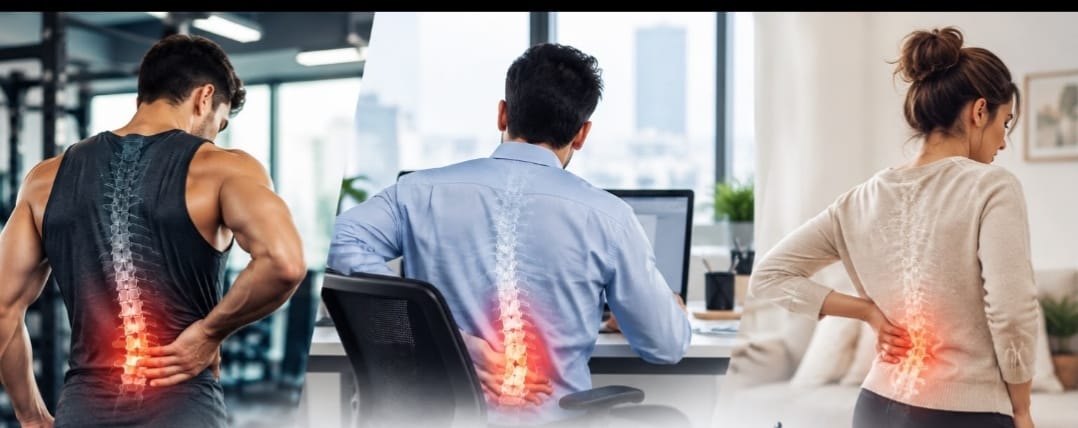
In athletes, pain may be associated with excessive training loads or inadequate recovery, while prolonged sitting may increase stiffness and discomfort among office workers. In women, several factors may contribute, including pregnancy, physical changes, and daily stress.
Back pain does not necessarily indicate a herniated disc or an injury to the vertebrae. Diagnosis depends on the nature of the symptoms and an appropriate clinical assessment.
First: How Can Movement Help Reduce Back Pain?
Regular movement and appropriate exercise may help relieve pain, improve muscle strength, and enhance the ability to perform daily activities. In most cases of back pain without warning signs, it is preferable to remain as active as possible rather than staying in bed for prolonged periods.
For office workers who sit for hours, it is advisable to change positions regularly, take short walking breaks, and adjust the chair and screen to maintain a comfortable working position. Varying positions is more important than trying to maintain one supposedly perfect posture throughout the day.
Second: Back Pain in Women
Pregnancy may be accompanied by lower back or pelvic pain due to physical changes, altered load distribution, and changes in balance. Appropriate exercises during pregnancy may help many women, depending on their health status and medical advice.
After childbirth, a gradual return to physical activity is recommended, taking recovery into account. Training the core and pelvic floor muscles may also be beneficial when appropriate. Carrying children and repeatedly bending over may increase physical strain in some women.
However, not all back pain should be attributed to pregnancy or weak abdominal muscles. Severe or persistent pain may require medical evaluation.
Third: Core Muscles: More Than Just Abdominal Muscles
A common misconception is that strengthening the abdominal muscles alone is enough to protect the back. In reality, the core muscles work together to control movement, stabilize the body, and transfer force between the upper and lower body.
This system includes:
- Front abdominal muscles: Help flex the trunk and control movement. - Deep abdominal muscles: Contribute to trunk control and muscular coordination. - Oblique abdominal muscles: Help with rotation and resisting sideways bending. - Back muscles: Help control the position of the spine. - Gluteal and hip muscles: Contribute to walking, standing, and climbing stairs. - The diaphragm and pelvic floor muscles: Help regulate intra-abdominal pressure and coordinate movement.
Therefore, core strengthening should not be limited to traditional abdominal exercises. A varied, progressive exercise program suited to the individual's fitness level and needs is preferable.
Fourth: Can the Plank Help Reduce Back Pain?
The plank is an exercise that develops core stability and muscular endurance. It may be a useful component of an exercise program for some people with lower back pain, but it is not a guaranteed treatment for every case.
How to Perform a Plank Correctly
1. Position your elbows directly beneath your shoulders in the traditional forearm plank. 2. Keep your head, trunk, and pelvis aligned. 3. Avoid letting your lower back sag or raising your hips excessively. 4. Engage your abdominal and gluteal muscles appropriately while breathing normally. 5. Start with a short hold that allows you to maintain proper technique, then gradually increase the difficulty.
If the traditional version is too challenging, you can try a knee plank or an incline plank. A side plank may also be included according to your ability. Stop the exercise if it noticeably increases your pain.
Fifth: Gentle Movements That May Help Relieve Stiffness
The following movements may be worth trying if they feel comfortable and do not worsen your symptoms.
1. Child's Pose: Start on your hands and knees, then gently move your hips toward your heels while extending your arms forward. Hold for 15–30 seconds if comfortable.
2. Cat-Cow: From the same position, slowly move your back between a gentle arch and a comfortable rounded position. Repeat 6–10 times.
3. Pelvic Tilts: Lie on your back with your knees bent and feet flat on the floor. Gently tilt your pelvis to bring your lower back closer to the floor, then return to a neutral position. Begin with 8–12 repetitions, depending on your ability.
These movements are not suitable for everyone. Stop if your pain worsens or radiates into your leg. Some people, including women at certain stages of pregnancy, may need modified exercises recommended by a qualified professional.
When Should You Consult a Doctor?
Seek medical evaluation if your back pain persists, recurs, interferes with sleep, walking, or work, or is accompanied by a fever or other unusual symptoms.
Loss of bladder or bowel control, new difficulty urinating, loss of sensation around the genital area, or severe or progressive weakness in the legs requires immediate emergency medical assessment.
The Takeaway
Your back deserves attention.
Regular movement and exercises targeting the core and hips may help reduce back pain and improve your ability to perform daily activities. However, no single exercise is suitable for everyone. Choose activities that fit your condition, increase activity gradually, and seek medical evaluation if pain persists or warning signs appear.
My message to every athlete, office worker, and woman: Do not wait until pain becomes an obstacle in your life. Stay active, train your core with awareness, and respect your body's signals. True strength is not about enduring pain, but about building a body that can move efficiently.
Written by Coach. Asiya Darwish
Fitness & Exercise Program Design Specialist
Information reviewed by HealthNato Scientific Team
on October 22, 2026 at 12:30 PM
Related articles
 Fitness & Wellness
Exercise Is Not Just About Losing Weight… It’s About Living Better
 Fitness & Wellness
Why Do You Start with Enthusiasm, Then Stop? 10 Science-Based Steps to Turn Exercise into a Sustainable Lifestyle
 Fitness & Wellness
Your First Steps at the Gym: How to Start Training Safely and Effectively
 Fitness & Wellness