Does Protein Affect Testosterone Levels ?
Designed and published by HealthNato medical editorial team.
Information reviewed by HealthNato Scientific Team
on November 4, 2026 at 12:30 PM
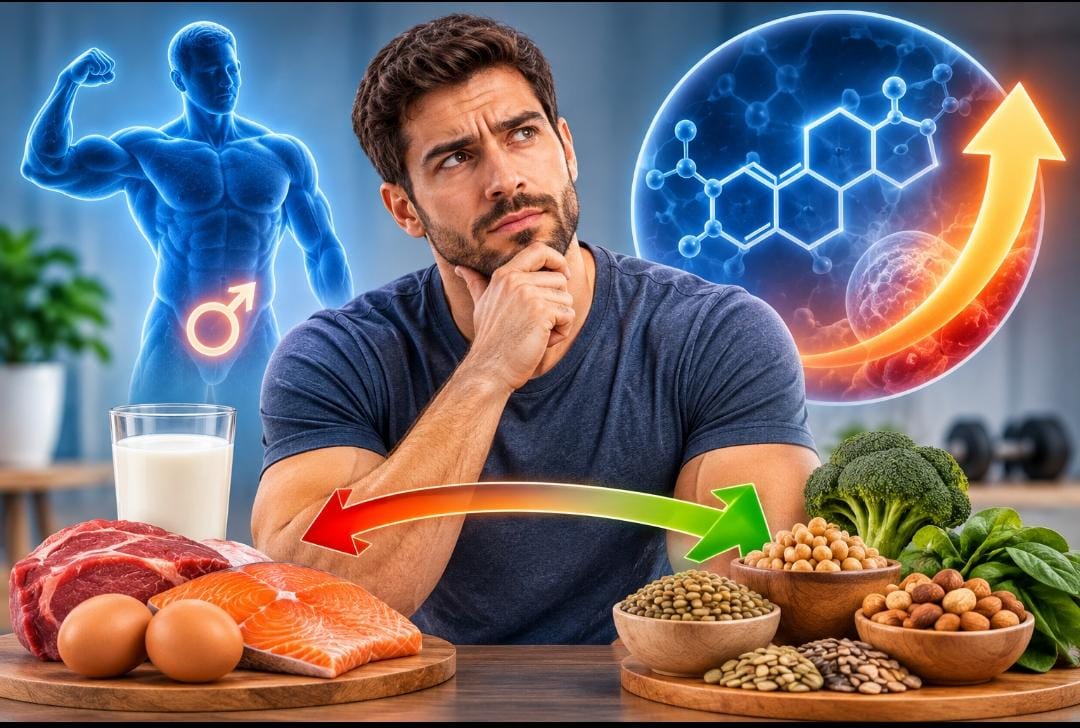
That is the question raised by a recent Finnish study, which found a notable difference between men who relied more heavily on animal protein and those who obtained a larger share of their protein intake from plant-based sources.
What makes the findings particularly interesting is that the issue may not be about the amount of protein alone, but also its source.
The Numbers Reveal an Unexpected Pattern
Researchers from the University of Eastern Finland analyzed data from 2,546 men aged 42 to 60, recording their dietary habits over four days and measuring their blood testosterone levels.
When comparing participants, the researchers found that men who consumed greater amounts of animal protein had lower total testosterone levels than those who consumed less.
By contrast, higher plant protein intake was associated with higher testosterone levels, with a notable difference between the groups with the highest and lowest levels of consumption.
Not All Animal Protein Sources Are the Same
A closer look at the findings revealed an important distinction:
Protein derived from dairy products was associated with lower total testosterone levels, while meat protein was associated with lower levels of another protein known as SHBG, which binds to sex hormones and transports them through the bloodstream.
This distinction matters because total testosterone alone does not reflect how much of the hormone is available to body tissues. SHBG also influences the proportion of free testosterone.
Plant proteins, particularly those from non-grain sources such as legumes, nuts, seeds, and some vegetables, were associated with higher testosterone levels.
Should Men Cut Back on Meat and Dairy?
Not so fast. The study was observational, meaning it identified an association between protein consumption patterns and hormone levels, but did not establish that meat or dairy directly lowers testosterone, or that switching to plant protein would necessarily raise it.
In addition, recording dietary intake over just four days is not sufficient on its own to establish long-term effects, and the influence of other factors related to diet and lifestyle cannot be ruled out.
What Should We Pay Attention To?
Testosterone is more than just a hormone responsible for sexual desire. It helps maintain muscle mass and bone density, contributes to red blood cell production, and plays a role in sexual function and overall health.
However, testosterone levels are influenced by multiple factors, including age, body weight, physical activity, health status, and sleep—not just the type of protein consumed.
Therefore, this study should not be viewed as a call to eliminate meat or dairy, but rather as a new contribution to the discussion about dietary quality and the importance of diversifying protein sources.
The Bottom Line
The study raises the possibility that dietary protein sources may be associated with hormonal balance in men. Higher animal protein intake was associated with lower testosterone levels, while higher plant protein intake was associated with higher levels.
However, it does not conclusively prove that meat and dairy lower testosterone or that legumes and nuts can therapeutically raise it.
The key message is not to give up animal protein, but to avoid relying on it exclusively and to give plant-based sources a greater place in a balanced diet.
Designed and published by HealthNato medical editorial team.
Information reviewed by HealthNato Scientific Team
on November 4, 2026 at 12:30 PM
Related articles
 Clinical Nutrition
The Hidden Battle After Abdominal Surgery: Understanding Postoperative Peritoneal Adhesions
 Natural Supplements
Beware of Ashwagandha: The Famous Herb Could Turn into a Deadly Toxin for Liver Cells!
 Nutrition & Diet
Everyday Foods That May Promote Inflammation Without You Realizing It…
 nutrition