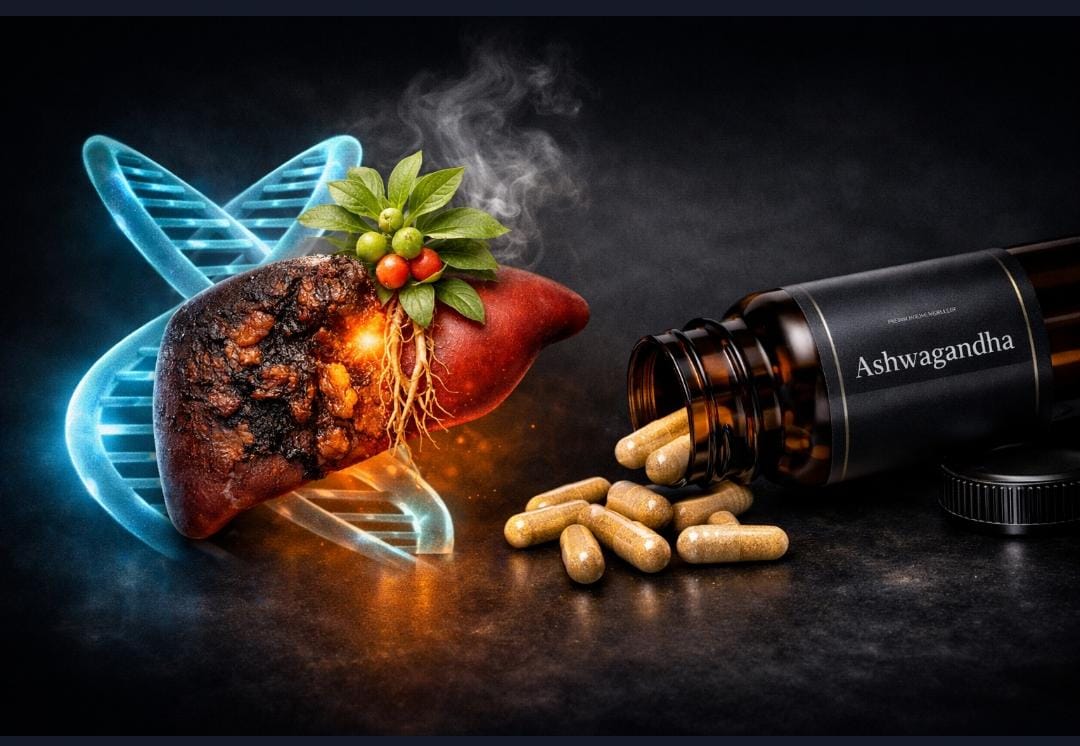
Beware of Ashwagandha: The Famous Herb Could Turn into a Deadly Toxin for Liver Cells!

Written by Dr. Nasser El Shishini
Editorial Director | Pharmacist | Clinical Nutrition & Weight Management Specialist | Researcher in Pharmaceutical & Cosmetic Sciences.
Fact-checked by HealthNato Scientific Team
on July 7, 2026 at 3:00 AM
Key Points
- Ashwagandha has become a bestselling 'natural' stress-relief supplement, but regulators in the US, Japan, India, and Europe have logged a rising number of acute liver-injury cases linked to commercial doses.
- Affected patients — often young and previously healthy — typically developed jaundice, severe itching, and dark urine within one to three months of starting the herb.
- Lab testing (via the RUCAM score) suggests the herb's compounds can block bile flow and damage liver cells, with toxicity varying by a person's genetics and metabolism.
- Mild cases resolved after stopping the herb; severe cases required ICU care and plasmapheresis. The takeaway: 'natural' does not automatically mean 'safe.'
In recent years, Ashwagandha has spread like wildfire, dominating dietary supplement sales as a magic solution for relieving stress and the pressures of daily life. However, as pharmacology and toxicology specialists, we must ask the unspoken question: Is everything "natural" necessarily safe? Modern medical data has begun to sound the alarm. Regulatory bodies and drug monitoring networks worldwide (in the US, Japan, India, and Europe) have recorded an increasing number of cases suffering from acute, sudden liver injury due to consuming this herb in its commercial doses. In this report, we uncover the medical facts behind this plant. How Does Ashwagandha Injury the Liver? (The Recurring Hospital Scenario) Upon reviewing the medical records of patients who suffered from Ashwagandha toxicity, physicians found a recurring and shocking pattern. The issue is not limited to the elderly; it has affected young individuals in their twenties and thirties who were in perfect health before taking the herb for a duration ranging between just one to three months. The common symptoms observed in most cases included: Severe yellowing of the eyes and skin (medically known as jaundice). Intense and persistent skin itching, resulting from the retention of bile salts under the skin. Changes in excretory color: where the urine becomes darkly discolored (highly hyperchromic) and the stool becomes pale. Behind Closed Doors: What Does the Herb Do Inside Liver Cells? When laboratory tests were performed on these patients, the markers were completely out of control, recording massive elevations in liver enzymes and bilirubin levels. Based on the global RUCAM score (the approved assessment tool to determine herb-induced liver injury), it was revealed that the active compounds in Ashwagandha caused the following: Cholestasis (Bile Retention): The herb interferes with liver cells and prevents them from draining bile juice, leading to its accumulation inside the liver and the onset of cellular degradation. The Battle of Genes and Metabolism: The toxic effect of the herb can vary from one individual to another based on genetic predisposition and how liver cells metabolize the compounds. This explains why one person suffers from hepatotoxicity while another remains unaffected by the exact same dose. Emergency Rescue Protocol: In mild cases, immediate discontinuation of the herb was sufficient for the liver to return to normal within months. However, in acute cases, doctors were forced to admit patients to intensive care units (ICU) and subject them to an advanced procedure called Plasmapheresis to mechanically cleanse the blood of toxins and jaundice, saving their lives from impending liver failure. HealthNato’s Advice: The golden rule that we must deeply understand and collectively spread is: "Natural does not always mean safe." Medicinal plants contain highly complex chemical compounds. Dealing with their highly concentrated extracts in large doses without precise calculation places a massive burden on the liver, which is the primary organ responsible for filtering toxins in the body. If you are currently taking Ashwagandha, or have taken it recently, and begin to feel unexplained lethargy, skin itching, or notice a change in the color of your eyes, stop taking it immediately and consult a specialized physician.
Written by Dr. Nasser El Shishini
Editorial Director | Pharmacist | Clinical Nutrition & Weight Management Specialist | Researcher in Pharmaceutical & Cosmetic Sciences.
Fact-checked by HealthNato Scientific Team
on July 7, 2026 at 3:00 AM
Get new articles in your inbox
One short email a week, no spam.
Your privacy is important to us.
Related Articles
 Clinical Nutrition
The Hidden Battle After Abdominal Surgery: Understanding Postoperative Peritoneal Adhesions
 Nutrition & Diet
Everyday Foods That May Promote Inflammation Without You Realizing It…
 nutrition
Is Your Medication Not Working? Beware... Your Meal Might Be the Reason
 nutrition