Brown Bread Is Not Always the Best Choice: How to Choose the Right Bread for People with Diabetes

Designed and published by HealthNato medical editorial team.
Information reviewed by HealthNato Scientific Team
on October 24, 2026 at 12:30 PM
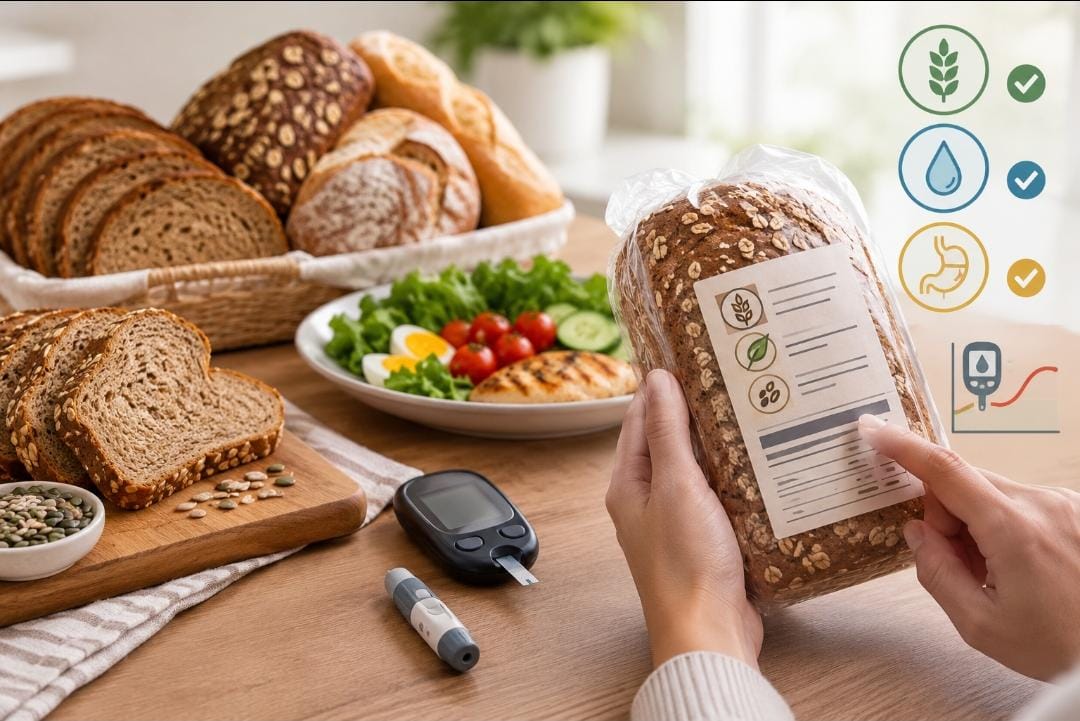
For people with diabetes, choosing the right bread depends not on its color, but on the type of flour used, how it is processed, its fiber content, and the amount consumed.
Why Is Bread Color Not Enough to Judge Its Quality?
Some types of bread may acquire a darker color from added ingredients such as molasses, roasted barley, or coloring agents, without being made entirely from whole grains.
Similarly, bread made from whole-wheat flour may be ground very finely, making its starch easier to digest than that in grains that retain more of their original structure.
Therefore, describing bread as “brown” or “multigrain” is not enough to determine its nutritional value or its effect on blood glucose.
How Can You Choose Better Bread for Blood Glucose Management?
Several factors can help you make a better choice when buying bread:
1. Read the Ingredient List
Look for whole-wheat flour or whole grains as the primary ingredient rather than relying on the bread's color or marketing claims on the packaging. Adding seeds to the surface of bread does not turn the refined flour inside the loaf into whole-grain flour.
2. Pay Attention to Fiber Content
Fiber helps slow digestion and carbohydrate absorption in some meals, while also supporting digestive health. However, a high fiber content alone does not guarantee a lower blood glucose response.
3. Do Not Be Misled by the Term “Multigrain”
Bread may contain several types of grains, but these may be refined rather than whole grains.
Therefore, the presence of multiple grain varieties does not automatically mean that the product is rich in fiber or better for blood glucose management.
4. Check the Carbohydrate Content per Serving
Even whole-grain bread contains carbohydrates that can raise blood glucose. For this reason, portion size is just as important as the type of bread itself.
Does Brown Bread Always Lower Blood Glucose?
Not necessarily. The Glycemic Index (GI) indicates how quickly blood glucose rises after consuming a specific amount of carbohydrates from a particular food, compared with a reference food.
However, the GI is influenced by several factors, including the degree of grain milling, the bread-making process, and the bread's composition. Blood glucose responses also vary from one person to another.
A study involving people with type 2 diabetes found that the particle size of grains in whole-grain bread can affect the blood glucose response after consumption.
This means that whole-grain bread does not produce the same effects in every form.
It is also important to distinguish between the Glycemic Index and the Glycemic Load (GL), which takes into account the amount of carbohydrates actually consumed. A large portion of a food with a lower GI may still significantly affect blood glucose because of its carbohydrate content.
What Should You Eat with Bread?
The effect of a meal depends not only on the bread itself, but also on the meal's composition and portion size.
Bread can be eaten with a source of protein, such as eggs or cheese appropriate to your nutritional needs, alongside vegetables that provide fiber and other nutrients.
Combining different food groups may help modify the post-meal blood glucose response, but it does not eliminate the effect of the total carbohydrate content.
For people with diabetes who monitor their carbohydrate intake, portion sizes should be determined according to their individualized nutrition plan and prescribed treatment.
The Takeaway
The best bread for people with diabetes is not necessarily the darkest or most expensive option. It is bread with identifiable ingredients, whole grains and fiber, and a carbohydrate content that fits the individual's needs.
Do not judge bread by its color alone. Read the ingredients, pay attention to your portion size, and monitor your blood glucose response according to your healthcare team's guidance.
Designed and published by HealthNato medical editorial team.
Information reviewed by HealthNato Scientific Team
on October 24, 2026 at 12:30 PM
Related articles
 Clinical Nutrition
The Hidden Battle After Abdominal Surgery: Understanding Postoperative Peritoneal Adhesions
 Natural Supplements
Beware of Ashwagandha: The Famous Herb Could Turn into a Deadly Toxin for Liver Cells!
 Nutrition & Diet
Everyday Foods That May Promote Inflammation Without You Realizing It…
 nutrition