A New Injection Targets Fat Cells and Triggers Their Death… Is the End of Weight Regain in Sight?

Written by Dr. Nasser El Shishini
Editorial Director | Pharmacist | Clinical Nutrition & Weight Management Specialist | Researcher in Pharmaceutical & Cosmetic Sciences.
Information reviewed by HealthNato Scientific Team
on October 21, 2026 at 12:30 PM
After a long journey of weight loss, the most frustrating surprise may be seeing the kilograms one has worked so hard to shed return.
As interest in obesity medications such as Ozempic and Mounjaro continues to grow, scientific research is turning toward a different question:
Can fat cells themselves be targeted rather than simply focusing on weight reduction?
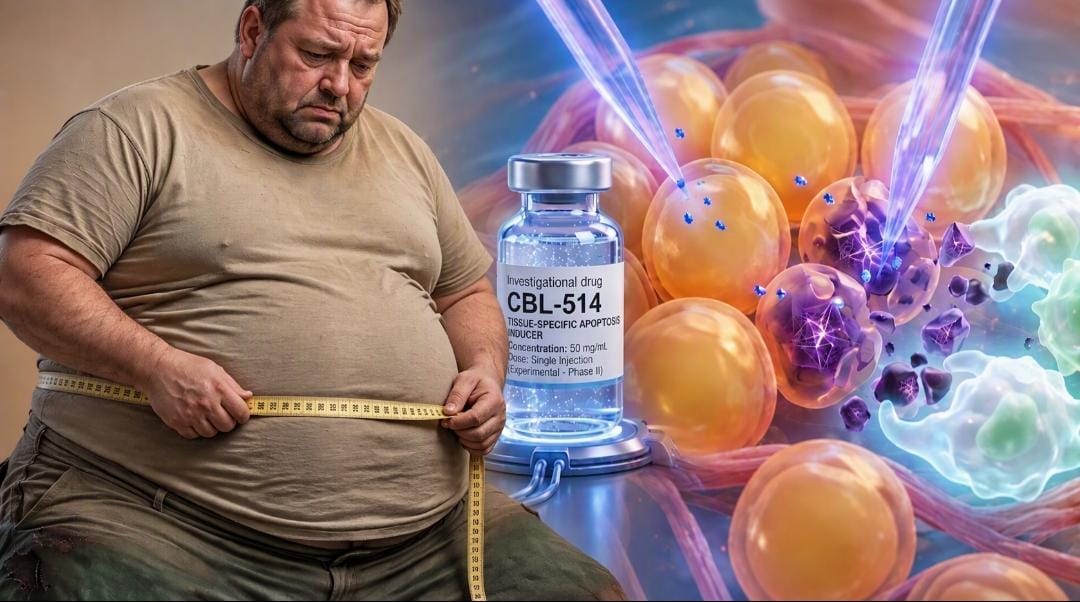
This is where CBL-514 comes in. It is an experimental compound injected under the skin that works through a mechanism intended to reduce the number of fat cells in the treated area.
But could it truly change the way we approach fat reduction and weight regain?
How Does CBL-514 Drive Fat Cells to Die?
The concept relies on a biological process known as apoptosis, or programmed cell death, a regulated mechanism through which the body eliminates certain cells.
Unlike obesity medications that primarily help reduce weight by influencing appetite and food intake, CBL-514 directly targets fat cells to trigger their death in a controlled manner, after which the body gradually clears away the cellular debris.
The distinction is important: reducing the size of fat cells is not the same as reducing their number.
However, eliminating some fat cells in a specific area does not mean that new fat cells cannot form or that the remaining cells cannot enlarge in the future.
Results from Human Trials
In a randomized Phase II trial published in 2025 in the Aesthetic Surgery Journal, involving 76 participants, the treatment achieved a significant reduction in subcutaneous fat volume in the abdominal area compared with placebo.
Eight weeks after the final treatment session, 69.6% of participants who received CBL-514 achieved a reduction of at least 150 mL in abdominal subcutaneous fat volume, compared with no participants in the control group achieving this level of reduction at the same follow-up point.
Can the New Compound Prevent Weight Regain After Obesity Medication?
After discontinuing certain obesity medications, some of the lost weight may return due to a combination of factors, including changes in appetite and the biological signals that regulate body weight.
Researchers are investigating whether reducing the number of fat cells could help limit this regain.
A study conducted in animals with obesity found that combining tirzepatide (Mounjaro) with CBL-514 was associated with greater weight loss and less weight regain after tirzepatide discontinuation, compared with using tirzepatide alone.
However, these findings remain preclinical and do not establish that the same effects will occur in humans.
It is also important not to confuse reducing subcutaneous fat in a specific area with treating obesity as a disease that affects the entire body, or to assume that eliminating some fat cells prevents fat from being stored in other areas.
Conclusion
Are We Looking at a New Treatment for Obesity?
So far, published human evidence has focused on CBL-514’s ability to reduce localized subcutaneous fat, while its potential role in limiting weight regain still requires dedicated human studies and longer follow-up.
Questions that remain unanswered include how long the results last, the safety of repeated treatment, and its long-term effects on fat distribution and metabolism.
Written by Dr. Nasser El Shishini
Editorial Director | Pharmacist | Clinical Nutrition & Weight Management Specialist | Researcher in Pharmaceutical & Cosmetic Sciences.
Information reviewed by HealthNato Scientific Team
on October 21, 2026 at 12:30 PM
Related articles
 Clinical Nutrition
The Hidden Battle After Abdominal Surgery: Understanding Postoperative Peritoneal Adhesions
 Natural Supplements
Beware of Ashwagandha: The Famous Herb Could Turn into a Deadly Toxin for Liver Cells!
 Nutrition & Diet
Everyday Foods That May Promote Inflammation Without You Realizing It…
 nutrition