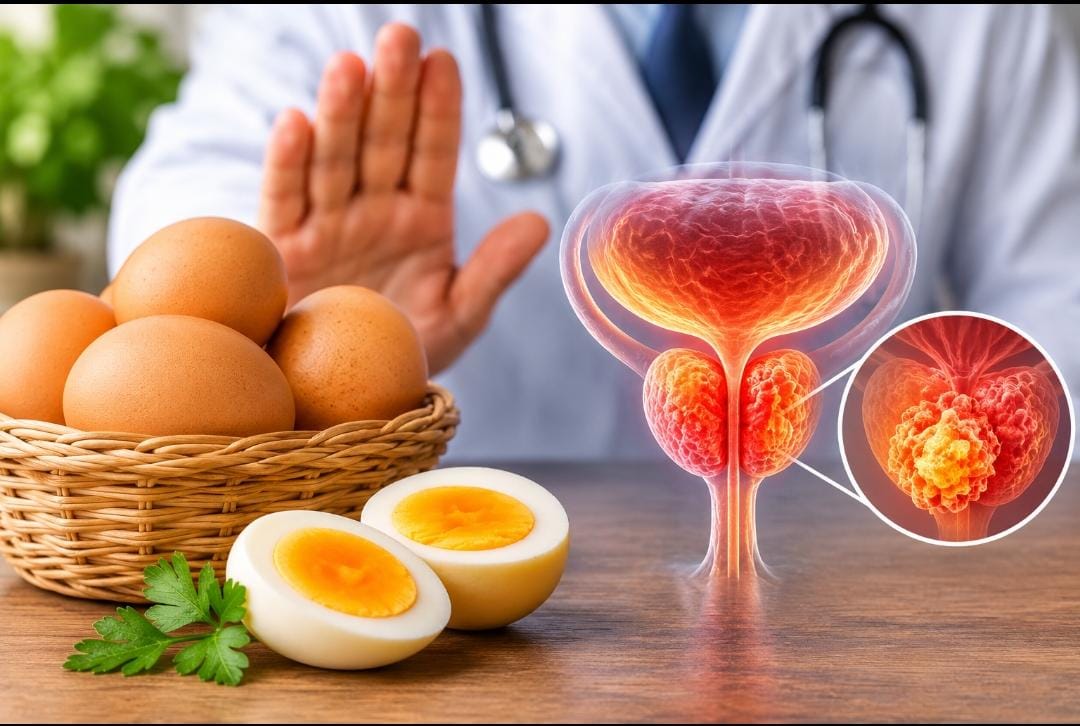
Does Eating Eggs Threaten Prostate Health? A Study Raises Concerns, but the Truth Is More Complex
Designed and published by HealthNato medical editorial team.
Information reviewed by HealthNato Scientific Team
on November 10, 2026 at 12:30 PM
A scientific study has raised a possible link between a nutrient found in eggs and some other animal-based foods and an increased risk of fatal prostate cancer.
However, a closer look at the findings reveals that the story is not as straightforward as it may seem.
The 70% Figure: What Did Researchers Discover?
In a study published in 2012 in the American Journal of Clinical Nutrition, researchers followed 47,896 men for 22 years and recorded 695 cases of fatal prostate cancer, either due to the disease spreading to distant organs or death from the disease itself.
The study found that men with higher choline intakes—an essential nutrient found in eggs—had a 70% higher risk of developing this form of the disease compared with those who consumed the lowest amounts.
However, this figure represents a relative increase in risk. It does not mean that 70% of men who consume choline will necessarily develop cancer.
Are Eggs the Culprit?
This is where the key distinction lies: the study did not examine eggs alone. Instead, it investigated the total amount of choline men obtained from their diets.
Choline is an essential nutrient that the body needs to build cell membranes and support brain and nervous system function.
It is not found exclusively in eggs; it is also present in meat, fish, dairy products, and other foods.
Therefore, the study's findings cannot be considered evidence that eating eggs specifically causes prostate cancer, or that avoiding them prevents the disease.
Other Studies Do Not Support the Same Conclusion
The scientific evidence is not consistent. A meta-analysis published in 2012, which combined findings from previous studies, found no clear association between egg consumption and either the development of prostate cancer or death from the disease.
Moreover, an observational study cannot establish a cause-and-effect relationship on its own. Other factors may influence the findings, including overall dietary patterns, body weight, smoking, and lifestyle habits.
Should You Stop Eating Eggs?
There is insufficient scientific evidence to establish a fixed weekly egg limit as a safe threshold for protecting prostate health. Nor is there evidence to justify eliminating eggs entirely from the diet because of this study.
The better approach is to consider the overall dietary pattern, avoid relying too heavily on a single protein source, and diversify food choices by including fish, legumes, poultry, and other options, while limiting processed meat and maintaining a healthy weight and regular physical activity.
The key message: Eggs have not been proven to cause prostate cancer. The available research warrants further investigation, but it does not justify turning the findings of a single study into a list of dietary restrictions.
Designed and published by HealthNato medical editorial team.
Information reviewed by HealthNato Scientific Team
on November 10, 2026 at 12:30 PM
Related articles
 Clinical Nutrition
The Hidden Battle After Abdominal Surgery: Understanding Postoperative Peritoneal Adhesions
 Natural Supplements
Beware of Ashwagandha: The Famous Herb Could Turn into a Deadly Toxin for Liver Cells!
 Nutrition & Diet
Everyday Foods That May Promote Inflammation Without You Realizing It…
 nutrition