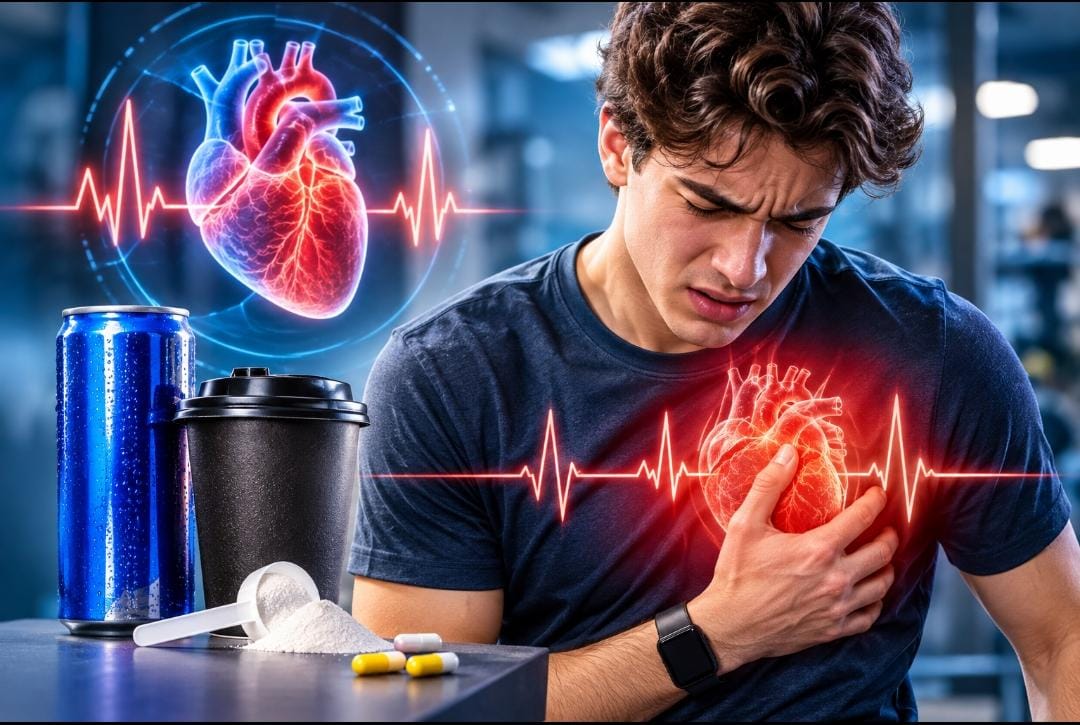
Energy Drinks and Caffeine… Do They Cause Heart Problems in Young People? A Study Reveals Alarming Figures.
Designed and published by HealthNato medical editorial team.
Information reviewed by HealthNato Scientific Team
on November 21, 2026 at 12:30 PM
Concern has grown following an analysis presented during the American Heart Association's 2026 Scientific Sessions, which revealed a notable association between products containing caffeine and other stimulants and reports of serious cardiac events, with young people accounting for a substantial proportion of these cases.
What Did the Study Reveal?
Researchers analyzed 28,345 reports of potential adverse health effects recorded in the U.S. Food and Drug Administration (FDA) database between 2017 and 2025.
Of these reports, 854 were associated with energy drinks or dietary supplements containing caffeine or other stimulants.
When compared with reports involving products that did not contain these ingredients, several striking differences emerged:
- Cardiac arrest was reported at a rate approximately 11 times higher. - Heart attacks appeared at a rate 4.5 times higher. - Ventricular arrhythmias and heart palpitations appeared at a rate approximately 4 times higher. - Rapid heart rate appeared at a rate approximately 3 times higher. - Chest pain appeared at a rate 2.71 times higher. - Fainting appeared at a rate nearly twice as high.
Perhaps most strikingly, approximately 45% of the reports involving these products and cardiac events concerned individuals aged 18–34.
Why Might Caffeine and Stimulants Affect the Heart?
Caffeine is a stimulant that affects the nervous system. It works primarily by blocking adenosine receptors, increasing alertness and reducing the sensation of fatigue.
However, high doses may lead to:
- A temporary increase in heart rate in some individuals. - Elevated blood pressure. - Increased awareness of heartbeats or palpitations. - Effects on the heart's electrical activity, particularly in people who are more susceptible to rhythm disturbances.
The problem does not necessarily stop with caffeine alone. Some energy drinks and sports supplements contain other stimulant ingredients, such as guarana, synephrine, and yohimbine. Combining these substances may intensify their stimulating effects on the heart and circulatory system.
Why Is This Particularly Concerning for Young People?
Young people often do not expect to be at risk of serious heart problems, and some may consume large quantities of these products to boost energy and concentration or enhance athletic performance.
Several factors may increase concern:
1- Multiple sources of caffeine: Coffee, energy drinks, and pre-workout supplements can add up to substantial caffeine intake without the consumer realizing it.
2- Consuming large doses within a short period: This may intensify the stimulant effects suddenly.
3- Combining stimulants with intense exercise: This may increase the physiological demands placed on the heart.
4- Undetected cardiac susceptibility: Some rhythm disorders or inherited conditions may remain unnoticed until certain triggers occur.
5- Mixing with alcohol or other substances: This may make the health effects more complex and potentially dangerous.
Is Coffee Also Dangerous for the Heart?
It is not scientifically accurate to place coffee and energy drinks in the same category.
According to the American Heart Association's scientific statement published in 2026, consuming up to 400 milligrams of caffeine per day is generally considered safe for most healthy adults. Moderate coffee consumption may also be associated with certain cardiovascular benefits.
However, this limit is not a target that everyone should aim to reach, and it may not be appropriate for every individual. Sensitivity to caffeine varies according to genetics, health status, and medications.
Furthermore, some energy drinks and concentrated energy products may contain high amounts of caffeine in a small volume and may combine several stimulant ingredients.
Therefore, a regular cup of coffee cannot be considered equivalent to a concentrated dose of an energy drink or a pre-workout supplement.
How Can You Protect Your Heart When Consuming Caffeine?
- Calculate your total caffeine intake from all sources, not just coffee. - Avoid consuming several stimulant-containing products within a short period. - Read the labels of energy drinks and sports supplements carefully. - Avoid high-caffeine products before intense exercise. - Reduce caffeine intake if you experience palpitations, sleep disturbances, or elevated blood pressure.
If you have a heart rhythm disorder, uncontrolled high blood pressure, or a known heart condition, it is best to determine an appropriate caffeine intake with your doctor.
Important warning: Chest pain, fainting, or severe palpitations accompanied by dizziness or shortness of breath require urgent medical evaluation. They should not be assumed to be merely a temporary effect of caffeine.
The recent study raises an important warning about energy drinks, stimulants, and caffeine-containing supplements. However, it does not prove that caffeine alone caused the reported cardiac events, nor does it establish the actual level of risk among consumers.
The most important message for young people is this: Feeling energized does not necessarily mean that your heart can tolerate every dose of stimulants. Improving concentration or performance is not worth risking your heart health.
Designed and published by HealthNato medical editorial team.
Information reviewed by HealthNato Scientific Team
on November 21, 2026 at 12:30 PM
Related articles
 Clinical Nutrition
The Hidden Battle After Abdominal Surgery: Understanding Postoperative Peritoneal Adhesions
 Natural Supplements
Beware of Ashwagandha: The Famous Herb Could Turn into a Deadly Toxin for Liver Cells!
 Nutrition & Diet
Everyday Foods That May Promote Inflammation Without You Realizing It…
 nutrition