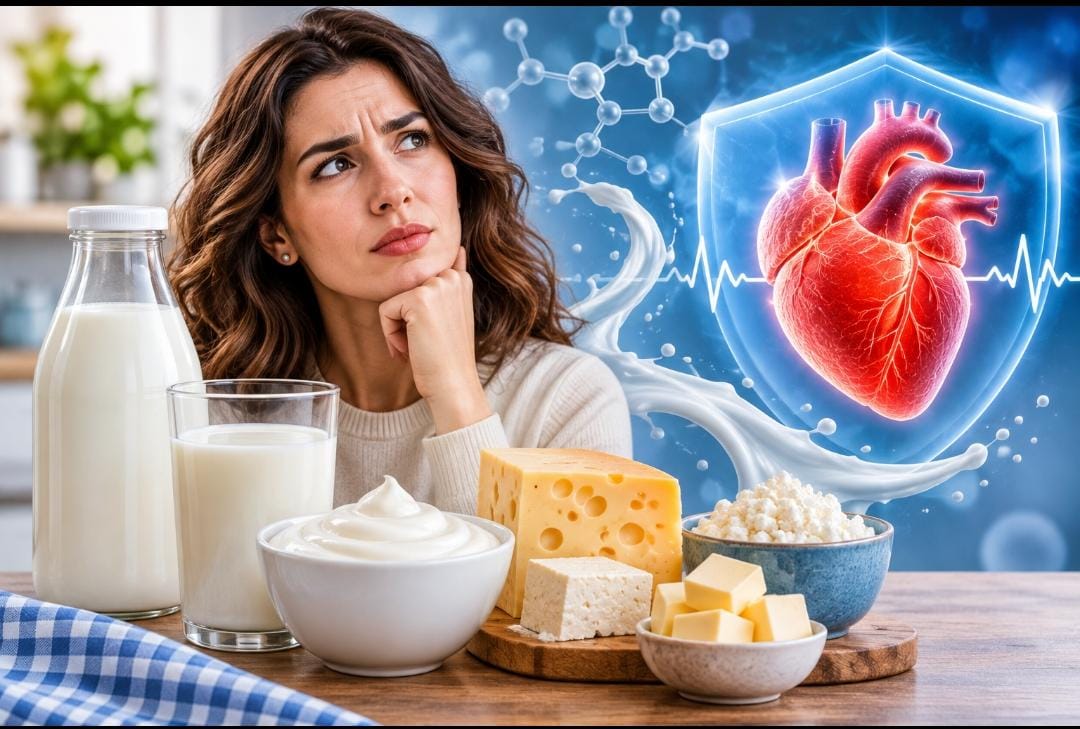
Have We Been Unfair to Full-Fat Milk for Years? A New Study Reopens the Debate on Dairy Fat..

Written by Dr. Amira Eltawil
Scientific Development Team at HealthNato | Pharmacist | Clinical Nutritionist
Information reviewed by HealthNato Scientific Team
on November 18, 2026 at 12:30 PM
Three Cups a Day… and the Results Were Not What Researchers Expected
In a study published in 2026 in The Journal of Nutrition, researchers divided 74 people with overweight or obesity into different dietary groups. One group consumed three daily servings of full-fat dairy products for 12 weeks.
The results were striking:
- No significant increase in body weight or body fat was observed compared with the group consuming low amounts of dairy.
- The group showed no harmful rise in cholesterol or blood lipid levels.
- No clear signs of worsening insulin sensitivity were observed.
- Improvements in blood pressure were recorded, alongside increased intake of protein, calcium, and vitamin D.
In other words, adding three servings of full-fat dairy products did not produce the negative outcomes we might expect simply by looking at their saturated fat content.
But keep in mind: the study lasted only 12 weeks and included 74 participants. Therefore, it does not prove that consuming full-fat dairy protects against heart disease or prevents diabetes in the long term.
The Secret Lies in the "Molecular Structure of Dairy"… Why Don't Fats Behave the Same Way in Whole Foods?
This is where an important scientific concept comes into play, known as the Dairy Matrix.
Milk is not simply water and saturated fat. It also contains proteins such as casein and whey, minerals, vitamins, and fat components that interact within a complex food structure.
This structure may influence how fats are digested and absorbed, as well as how the body responds to them.
Therefore, we cannot assume that the effect of saturated fat in milk or cheese will be identical to that of the same amount of fat from another food source.
However, this hypothesis does not mean that dairy fats have lost their ability to raise LDL cholesterol. Rather, it helps explain why the health effects of whole foods may differ from what we would expect based solely on one of their individual components.
Has Full-Fat Milk Become Better Than Low-Fat Milk?
There are important differences between dairy products:
- Full-fat milk: Contains more saturated fat than low-fat milk and may raise LDL cholesterol in some people.
- Yogurt: Particularly plain, unsweetened yogurt, provides protein and calcium, and the body's response to it may differ from its response to milk.
- Cheese: Its nutritional composition and production process make it different from milk, and studies do not always show the same effects on cardiovascular health indicators.
- Butter and cream: Both are rich in saturated fat. Results from studies on milk and yogurt should not be considered evidence that consuming large amounts of butter and cream is safe.
The most important point is that replacing saturated fats with unsaturated fats from olive oil, nuts, and fish is associated with clearer benefits for heart health.
What Should We Make of Cholesterol and Heart Disease?
Despite the renewed debate, cardiovascular recommendations continue to emphasize the importance of limiting saturated fat, particularly among people with elevated LDL cholesterol or an increased risk of heart disease.
The American College of Cardiology's 2026 statement explains that the evidence concerning full-fat dairy is not consistent across all products, and does not support recommending full-fat dairy over low-fat dairy and unsaturated plant oils for the purpose of protecting heart health.
The Bottom Line…
Don't Judge Food by Its Fat Content Alone
The new study does not give full-fat dairy products a blanket clean bill of health. However, it reminds us that evaluating food is more complex than classifying every food containing saturated fat as harmful.
Yogurt or natural cheese may be part of a healthy diet, but that does not mean full-fat milk is suitable for everyone, or that butter and cream have become healthy choices without limits.
The most important lesson: Don't reduce a food's health value to the fat content listed on its label. Its composition, type, quantity, and what you replace it with all make a difference.
Written by Dr. Amira Eltawil
Scientific Development Team at HealthNato | Pharmacist | Clinical Nutritionist
Information reviewed by HealthNato Scientific Team
on November 18, 2026 at 12:30 PM
Related articles
 Clinical Nutrition
The Hidden Battle After Abdominal Surgery: Understanding Postoperative Peritoneal Adhesions
 Natural Supplements
Beware of Ashwagandha: The Famous Herb Could Turn into a Deadly Toxin for Liver Cells!
 Nutrition & Diet
Everyday Foods That May Promote Inflammation Without You Realizing It…
 nutrition