Do Gut Bacteria Influence Obesity and Insulin Resistance? What Does the Science Say?

Written by Dr. Amira Eltawil
Scientific Development Team at HealthNato | Pharmacist | Clinical Nutritionist
Information reviewed by HealthNato Scientific Team
on October 18, 2026 at 12:30 PM
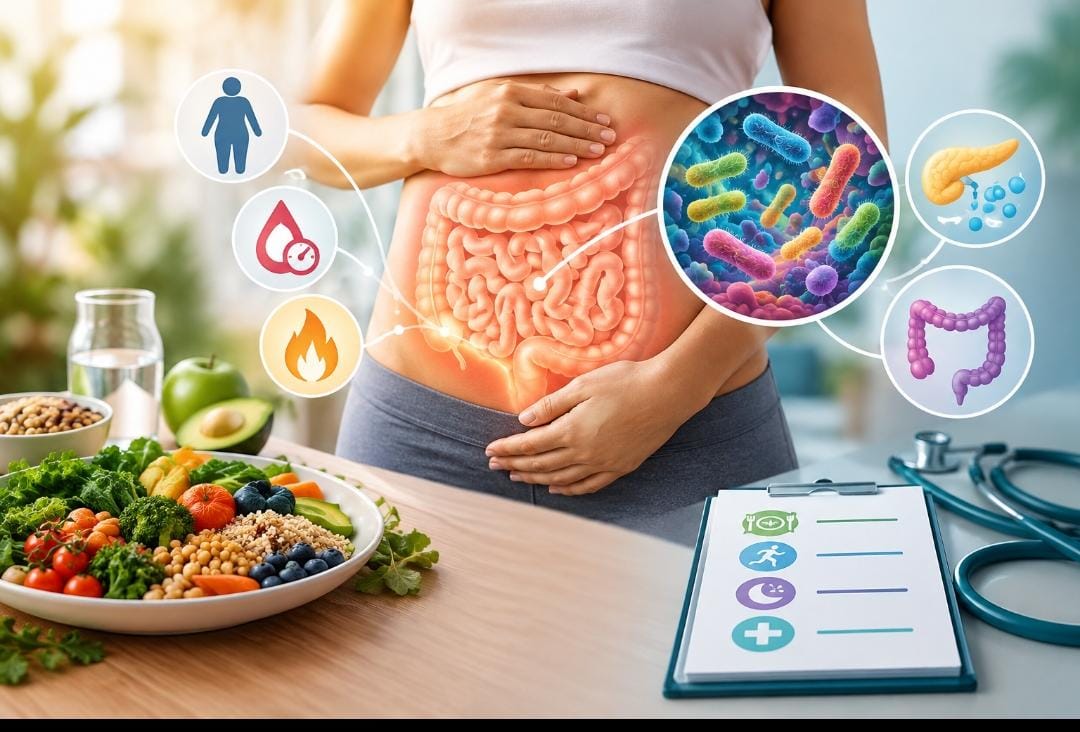
But to what extent can this community help us understand obesity and insulin resistance? And could it help tailor nutritional therapy to each individual?
From Food Digestion to Metabolic Regulation
Certain gut bacteria can ferment dietary fiber in the colon, producing short-chain fatty acids such as butyrate, acetate, and propionate. These compounds help support the intestinal barrier and influence certain immune and metabolic pathways.
These interactions vary according to dietary composition, microbiome composition, health status, and medication use. Therefore, the body’s response to food depends not only on its nutritional components but also on how the body interacts with the microorganisms living within it.
Do Gut Bacteria Influence Insulin Resistance?
Studies have identified associations between changes in the microbiome and obesity, type 2 diabetes, and insulin resistance. Researchers are investigating several potential mechanisms, including changes in microbial metabolites, disruption of the intestinal barrier, low-grade inflammation, and alterations in bile acid processing and circulation.
A review published in 2026 in FASEB BioAdvances discussed these relationships, focusing on microbial metabolites, inflammation, and blood glucose regulation, as well as the challenges that hinder the translation of research findings into effective treatments in humans.
However, association does not establish causation. Differences in the microbiome observed in people with obesity do not necessarily mean that these differences directly cause obesity, as the microbiome itself may be influenced by diet, medications, lifestyle, and the disease process.
Obesity and insulin resistance are also multifactorial conditions and cannot be reduced to a bacterial imbalance.
Personalized Nutrition: Does Everyone Need a Different Diet?
Personalized nutrition aims to tailor dietary recommendations according to an individual's medical history, eating habits, laboratory results, physical activity, metabolic markers, and potentially microbiome data.
A systematic review published in 2026 in Food & Function, which included 24 randomized controlled trials, found promising results from personalized nutrition interventions in improving diet quality and certain health markers, including glycated hemoglobin, triglycerides, and insulin sensitivity. However, most studies did not demonstrate a clear and consistent advantage in weight loss compared with conventional approaches.
Not all these interventions relied on microbiome testing. For example, if a person's blood glucose rises after a particular meal, this does not automatically mean they need a microbiome analysis. Assessing the meal's composition, physical activity, medical history, medications, and appropriate laboratory tests may be more useful.
Personalized nutrition therefore requires longer and higher-quality studies to determine who benefits most and what additional value microbial data can provide.
Probiotics and Microbiome Testing: What Benefits Are Established?
Probiotic products do not all have the same efficacy. Their potential effects depend on the strain, dosage, duration of use, and condition being targeted.
Probiotics differ from prebiotics, which are substances utilized by certain microorganisms; synbiotics, which combine probiotics and prebiotics; and postbiotics, which include preparations of non-living microorganisms or their components that have defined biological effects.
Fecal microbiota transplantation, although used in specific medical conditions, remains investigational for treating obesity or insulin resistance and is not a routine weight-loss intervention.
A more practical first step may be to improve dietary quality and diversify fiber sources, including vegetables, fruits, legumes, and whole grains. People with gastrointestinal disorders may need to adjust the type and amount of fiber according to their diagnosis and symptoms.
Current evidence also does not support the routine use of most commercial microbiome tests to diagnose obesity or insulin resistance or to select supplements. The microbiome naturally varies between individuals, and test results can be influenced by diet, medications, and sample collection and analysis methods. Identifying a particular bacterium does not establish that it causes disease or that modifying its levels will improve health.
Clinical decisions should therefore continue to rely on clinical assessment, medical and dietary history, appropriate investigations, and monitoring the actual response to interventions over time.
Conclusion: A Promising Field That Has Yet to Reach Widespread Clinical Application
Research into the gut microbiome is expanding our understanding of the relationship between diet and the human body. In the future, it may help explain some individual differences in dietary responses and support the development of more precise interventions for metabolic diseases.
However, this does not diminish the importance of established therapeutic foundations, including improving dietary quality, adjusting energy intake to individual needs, engaging in physical activity, maintaining good sleep habits, and adhering to medical treatment when necessary.
The real challenge is to determine when microbial changes play a causal role and how this knowledge can be used to improve patient outcomes safely and sustainably.
The future of personalized nutrition does not depend on introducing another commercial test, but on integrating biological information that has demonstrated clinical value with sound clinical assessment and robust scientific evidence.
Written by Dr. Amira Eltawil
Scientific Development Team at HealthNato | Pharmacist | Clinical Nutritionist
Information reviewed by HealthNato Scientific Team
on October 18, 2026 at 12:30 PM
Related articles
 Clinical Nutrition
The Hidden Battle After Abdominal Surgery: Understanding Postoperative Peritoneal Adhesions
 Natural Supplements
Beware of Ashwagandha: The Famous Herb Could Turn into a Deadly Toxin for Liver Cells!
 Nutrition & Diet
Everyday Foods That May Promote Inflammation Without You Realizing It…
 nutrition