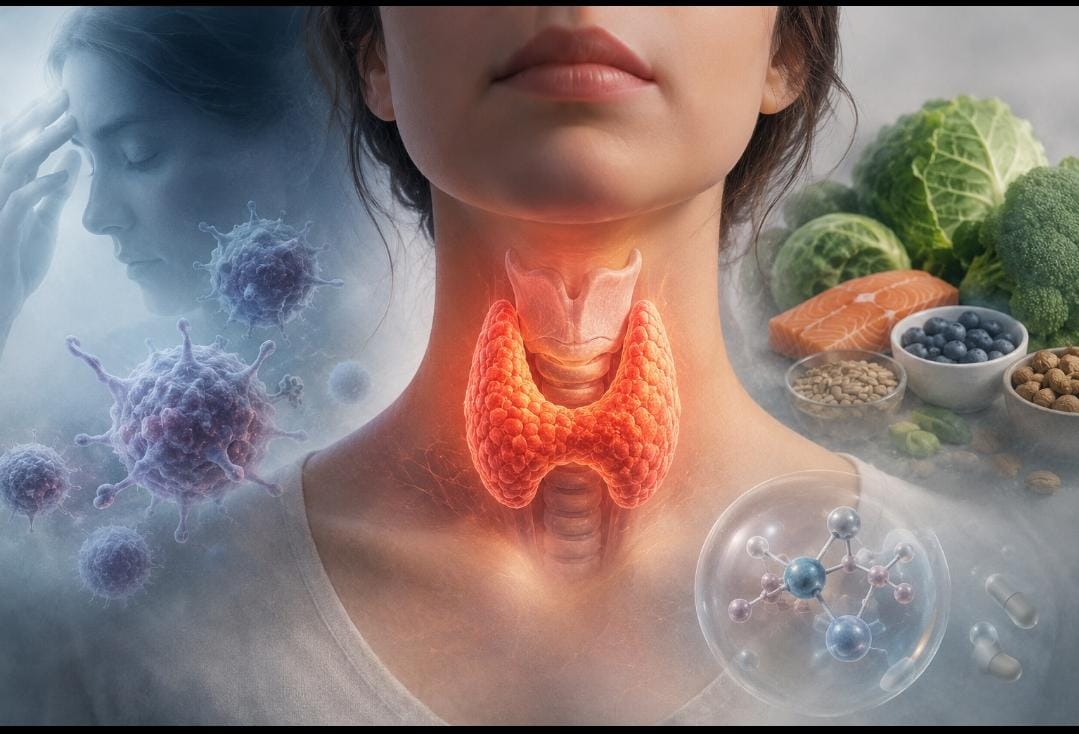
A Journey Inside the Thyroid Gland with Hashimoto’s Disease… From Immune Dysfunction to the Role of Nutrition

Written by Dr. Amira Eltawil
Scientific Development Team at HealthNato | Pharmacist | Clinical Nutritionist
Fact-checked by HealthNato Scientific Team
on September 4, 2026 at 12:30 PM
A Small Test… That Could Change the Interpretation of an Entire Case
Imagine someone coming to you carrying their test results and saying:
“The doctor told me that my TSH is high… does that mean my thyroid is active?”
The question may seem simple, but it reveals one of the most common points of confusion when talking about the thyroid gland.
A high TSH (Thyroid-Stimulating Hormone) does not usually mean that the thyroid gland has become more active. Rather, in many cases, it means that the brain is trying to stimulate the thyroid gland to produce more of its hormones.
And this is where the story of Hashimoto’s thyroiditis (Hashimoto’s thyroid inflammation) begins.
When the Immune System Attacks the Thyroid Gland
Hashimoto’s is not simply an “underactive thyroid.” It is an autoimmune disease, meaning that the immune system mistakenly attacks the tissues of the thyroid gland.
As inflammation continues and the thyroid tissue becomes affected, its ability to produce sufficient amounts of its hormones may decrease.
The person may experience symptoms such as:
- Fatigue - Feeling cold - Constipation - Dry skin - Hair loss - Menstrual irregularities - Weight gain or difficulty losing weight
However, the presence of these symptoms alone is not sufficient to diagnose Hashimoto’s, and TSH should not be interpreted in isolation.
Does Every High TSH Level Mean Obvious Hypothyroidism?
Not necessarily. In the case of Subclinical Hypothyroidism, symptoms may be mild or absent, and the decision to treat does not depend on the TSH level alone.
Rather, the degree of elevation, symptoms, age, pregnancy or plans for pregnancy, the presence of antibodies, medical history, and the person’s overall health are all taken into consideration.
Therefore, we should ask:
What is the TSH level? What is the FT4 level? Are antibodies present? And what is the patient’s overall health status?
Weight Gain Is Not Always Caused by the Thyroid
Hypothyroidism may contribute to weight gain, but not every extra kilogram is caused by Hashimoto’s.
Part of the weight gain may be related to fluid retention and certain metabolic changes. Also, correcting thyroid hormone levels does not automatically mean that the weight problem will disappear completely.
Therefore, managing weight requires an integrated plan that includes:
- Appropriate medical treatment. - A balanced diet. - Appropriate physical activity. - Monitoring body weight and muscle mass. - Assessing sleep, stress, and daily habits.
Nutrition and Hashimoto’s… What Does the Science Say?
With the spread of health information on social media, a person with Hashimoto’s is often exposed to a long list of restrictions and supplements:
“Avoid gluten.” “Take high doses of iodine.” “Selenium treats Hashimoto’s.” “Stay away from broccoli and cabbage.”
But the truth is more balanced than that.
Iodine: Essential, but More Is Not a Treatment
Iodine is an essential element for the production of thyroid hormones, but this does not mean that every person with Hashimoto’s needs iodine supplements.
Excessive iodine intake may lead to thyroid dysfunction in some people. Therefore, iodine supplements should not be used without confirmed deficiency or a clear medical recommendation.
A deficiency needs to be corrected, but excess is not a treatment.
Selenium: Promising Results
Selenium plays an important role in antioxidant systems and in thyroid hormone metabolism.
Some studies have suggested that selenium supplementation may help reduce certain antibodies, particularly TPOAb, in some people with Hashimoto’s.
However, an important point must be kept in mind:
Improvement in a laboratory marker does not mean that the disease has been treated.
A reduction in antibody levels does not necessarily mean that the thyroid gland has regained its ability to produce hormones, nor does it mean that hormone replacement therapy can be discontinued.
Therefore, not every person with Hashimoto’s needs selenium. The presence or absence of deficiency, the dose, and the duration of use are all important factors in determining its potential benefit.
Should Gluten Be Avoided?
A common recommendation is:
“Avoid gluten if you have Hashimoto’s.”
There is an association between Hashimoto’s and Celiac disease, or coeliac disease, and therefore some people may need to be evaluated for celiac disease, particularly when gastrointestinal symptoms or other indicators are present.
However, in the absence of celiac disease, there is not enough evidence that eliminating gluten will improve thyroid function in everyone.
Therefore, a gluten-free diet is necessary when confirmed celiac disease is present, and not simply because a person has been diagnosed with Hashimoto’s alone.
Are Broccoli and Cabbage Forbidden?
Cruciferous vegetables such as broccoli, cauliflower, cabbage, and arugula contain compounds known as Goitrogens, which have been associated with effects on thyroid function, particularly under certain conditions.
However, consuming moderate amounts of these vegetables does not require avoidance in most people with Hashimoto’s disease.
The problem is not a plate of broccoli, but turning nutrition into a long list of restrictions.
A balanced diet is more important than fearing a single dietary component.
Medication and Food… An Important Point
A person may be adhering to treatment, yet their test results may still not be as stable as expected.
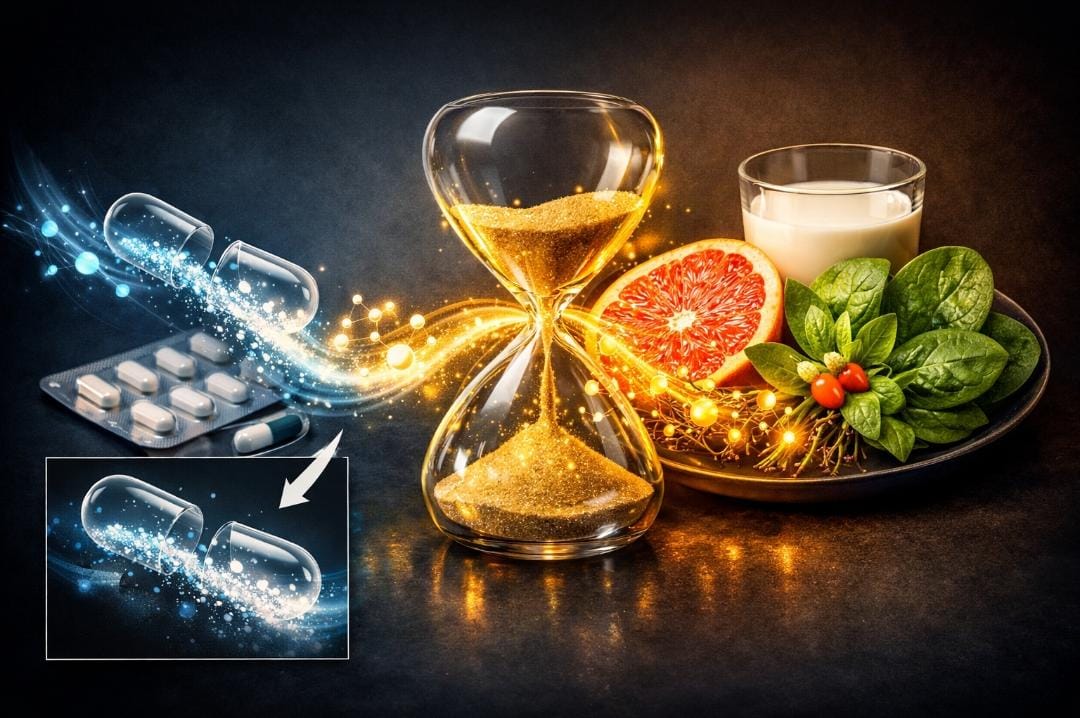
One possible reason is the way Levothyroxine is taken. Levothyroxine is the hormone replacement therapy used to replace thyroid hormone when needed.
The absorption of the medication may be affected by food and certain supplements, particularly:
- Iron - Calcium - Coffee - Some soy products - The timing of food intake
Therefore, it is not enough to tell the patient:
“Take the medication.”
They should also know:
“When should you take it? And how should you separate it from food and supplements?”
This is where the role of a nutrition specialist with a medical background becomes important in understanding the relationship between food, medication, and the patient’s nutritional status.
Myo-inositol and Selenium… Are We Approaching a New Intervention?
Some studies are investigating the combination of Myo-inositol and Selenium in certain people with Hashimoto’s, particularly those with subclinical hypothyroidism.
Promising results have been reported regarding TSH levels and some antibodies, but the evidence remains limited compared with standard treatments and is not yet sufficient to consider this combination a standard treatment for all patients.
Therefore, these supplements should not be used as a substitute for hormone replacement therapy or routinely applied to all people with Hashimoto’s without appropriate medical evaluation.
What Is the Role of the Nutrition Specialist?
The role of a nutrition specialist is not to search for “types of food that treat Hashimoto’s,” but rather to assess the person’s needs as a whole:
- Are they meeting their energy and protein requirements? - Do they have a genuine nutritional deficiency? - Is there weight gain or loss of muscle mass? - Are they experiencing constipation or gastrointestinal disturbances? - Are they taking unnecessary supplements? - Are there interactions between the medication and supplements, or an inappropriate way of taking the medication? - Do they need assessment of iron, vitamin D, or B12 depending on their condition? - Is the diet based on scientific evidence or on information circulating on social media?
Ultimately, there is no single diet that suits everyone with Hashimoto’s.
The best plan is one that takes into account the test results, symptoms, weight, nutritional status, medications, and lifestyle of the individual.
Conclusion… Don’t Read the Test Result Alone
Hashimoto’s is an autoimmune disease that may lead to hypothyroidism, but interpreting the condition does not depend on TSH alone.
It may be:
Elevated TSH + Low FT4 This means overt hypothyroidism.
Or:
Elevated TSH + Normal FT4 This means subclinical hypothyroidism (meaning that symptoms may not be obvious).
As for nutrition, it is not a magical treatment, nor is it an endless list of restrictions.
Iodine is important, but more is not a treatment.
Selenium may be promising, but it is not suitable for everyone.
Gluten is not automatically forbidden.
And broccoli is not an enemy of the thyroid.
The true goal of nutritional therapy is to support the person’s health, correct deficiencies when present, reduce interactions with medication, and help manage weight and lifestyle.
Because what matters is not to treat TSH… but to treat the human being behind the number.
Written by Dr. Amira Eltawil
Scientific Development Team at HealthNato | Pharmacist | Clinical Nutritionist
Fact-checked by HealthNato Scientific Team
on September 4, 2026 at 12:30 PM
Get new articles in your inbox
One short email a week, no spam.
Your privacy is important to us.
Related Articles
 Clinical Nutrition
The Hidden Battle After Abdominal Surgery: Understanding Postoperative Peritoneal Adhesions
 Natural Supplements
Beware of Ashwagandha: The Famous Herb Could Turn into a Deadly Toxin for Liver Cells!
 Nutrition & Diet
Everyday Foods That May Promote Inflammation Without You Realizing It…
 nutrition