The Hidden Battle After Abdominal Surgery: Understanding Postoperative Peritoneal Adhesions

Written by Dr. Nasser El Shishini
Editorial Director | Pharmacist | Clinical Nutrition & Weight Management Specialist | Researcher in Pharmaceutical & Cosmetic Sciences.
Fact-checked by HealthNato Scientific Team
on July 13, 2026 at 1:30 PM
Key Points
- Diet cannot prevent intestinal adhesions from forming or dissolve them once they develop, but an individualized eating plan may help relieve symptoms and improve bowel function in selected patients.
- Patients with recurrent partial bowel obstruction or narrowed bowel segments may temporarily benefit from a low-residue diet, easy-to-digest foods, small frequent meals, and adequate hydration under medical supervision.
- Severe abdominal pain, persistent vomiting, marked abdominal distension, or inability to pass stool or gas may indicate bowel obstruction and require immediate medical evaluation.
After Abdominal Surgery: What Should Patients with Intestinal Adhesions Eat? Can Diet Help Reduce Complications ?
Many patients assume that nutrition stops playing an important role once surgery is over. In reality, however, what ends up on the plate during recovery-and even months or years later for some patients-can significantly influence digestive comfort, particularly in those who develop intestinal adhesions following abdominal surgery.
Before discussing dietary recommendations, one important fact must be made clear:
Diet cannot prevent intestinal adhesions from forming, nor can it dissolve them once they have developed. Adhesions are part of the body's natural healing response after surgery, and to date, no dietary pattern or nutritional supplement has been proven to prevent their formation.
However, an appropriate dietary approach may help relieve symptoms and improve bowel function in selected patients, particularly those who experience recurrent episodes of partial bowel obstruction or difficulty passing intestinal contents.
Why Might Some Patients with Intestinal Adhesions Need a Different Diet?
In some cases, intestinal adhesions can partially narrow segments of the bowel or restrict its normal movement.
When large amounts of undigested food residue or coarse, high-fiber foods pass through these narrowed areas, they may become more difficult to move along, increasing the likelihood of bloating, abdominal cramping, or even episodes of bowel obstruction in susceptible individuals.
For this reason, physicians or registered dietitians may temporarily recommend a Low-Residue Diet for carefully selected patients. The goal of this dietary approach is to reduce the amount of undigested material reaching the intestine, thereby minimizing mechanical stress on narrowed bowel segments.
It is important to emphasize that a low-residue diet is not appropriate for every patient with adhesions and should only be recommended when there is a clear clinical indication.
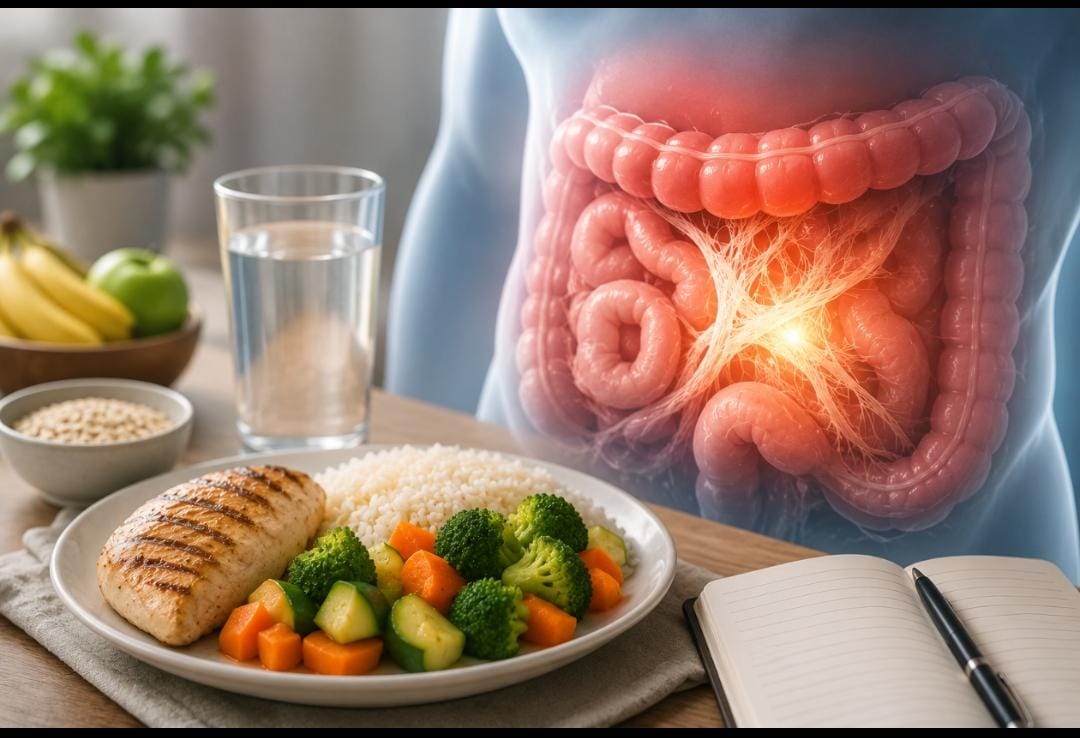
What Can Patients with Intestinal Adhesions Eat ?
Dietary recommendations should always be individualized according to each patient's clinical condition. In general, foods that are easy to digest are often better tolerated, including:
Well-cooked fish and skinless poultry.
- Eggs.
- White rice.
- Regular pasta
- White bread and other refined grain products.
Well-cooked vegetables with peels and tough fibrous portions removed when recommended. As symptoms improve, dietary fiber may gradually be reintroduced under medical or dietetic supervision.
Soft fruits, such as ripe bananas, when appropriate.
Patients are also encouraged to eat small, frequent meals rather than large meals, as smaller portions may place less stress on the digestive tract.
Should Fiber Be Avoided?
One of the most common misconceptions is that all patients with intestinal adhesions should avoid fiber completely.
This is not true.
Dietary fiber remains an essential component of a healthy digestive system. However, patients with significant bowel narrowing or recurrent episodes of bowel obstruction may need to temporarily reduce certain high-residue foods, including:
- Popcorn.
- Nuts.
- Seeds.
- Some raw fibrous vegetables.
- Whole grains in selected cases.
Conversely, patients who do not experience obstructive symptoms may not require these dietary restrictions at all.
For this reason, dietary recommendations should always be individualized rather than applied universally.
Don't Forget Hydration
Adequate hydration is just as important as choosing the right foods.
Drinking sufficient water helps maintain softer intestinal contents, reduces the risk of constipation, and supports normal bowel function.
Although water does not prevent intestinal adhesions from developing, it plays an important role in maintaining healthy intestinal motility, particularly in patients whose bowel movement has slowed.
When Should You Seek Immediate Medical Attention?
If you have a history of intestinal adhesions or previous abdominal surgery, seek urgent medical evaluation if you develop any of the following:
Severe or progressively worsening abdominal pain.
Persistent vomiting.
Marked abdominal distension.
Inability to pass stool or gas.
These symptoms may indicate bowel obstruction, a potentially serious condition that requires prompt medical assessment.
Conclusion
Nutrition is not a treatment for intestinal adhesions, but it can play an important supportive role in managing symptoms for selected patients.
The most appropriate dietary plan should always be based on an individual's clinical condition rather than general advice or anecdotal experiences.
The goal is not to unnecessarily restrict food, but to choose a dietary pattern that allows the intestines to function with the least possible mechanical stress while maintaining adequate nutrition, supporting overall health, and preserving quality of life.
Written by Dr. Nasser El Shishini
Editorial Director | Pharmacist | Clinical Nutrition & Weight Management Specialist | Researcher in Pharmaceutical & Cosmetic Sciences.
Fact-checked by HealthNato Scientific Team
on July 13, 2026 at 1:30 PM
Get new articles in your inbox
One short email a week, no spam.
Your privacy is important to us.
Related Articles
 Natural Supplements
Beware of Ashwagandha: The Famous Herb Could Turn into a Deadly Toxin for Liver Cells!
 Nutrition & Diet
Everyday Foods That May Promote Inflammation Without You Realizing It…
 nutrition
Is Your Medication Not Working? Beware... Your Meal Might Be the Reason
 nutrition