A Spoonful of Olive Oil Before Carbohydrates… A Scientific Discovery Reveals How Food Order Can Change the Body’s Blood Sugar Response

Written by Dr. Nasser El Shishini
Editorial Director | Pharmacist | Clinical Nutrition & Weight Management Specialist | Researcher in Pharmaceutical & Cosmetic Sciences.
Information reviewed by HealthNato Scientific Team
on November 24, 2026 at 12:30 PM
This is a question attracting growing interest among researchers. The issue is not only the type of food or the amount of carbohydrates consumed, but also the timing with which nutrients reach the digestive system.
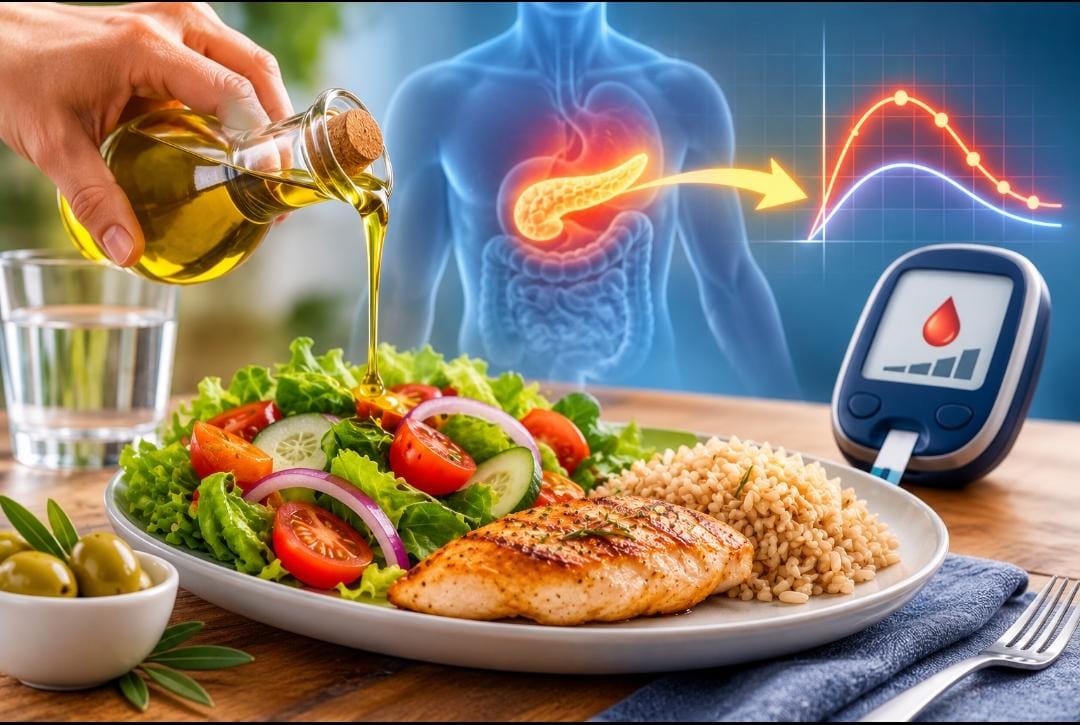
An Interesting Experiment… What Happens When You Consume Olive Oil First?
In a study published in October 2026 in the journal Diabetes, researchers from Kyoto University in Japan investigated the effect of consuming olive oil before glucose on blood sugar levels.
The experiments were conducted in mice following an overnight fast. The animals were divided into groups that received either water or olive oil before glucose, while another group received olive oil after glucose.
The findings were striking: consuming olive oil before glucose reduced the early rise in blood sugar and slowed gastric emptying.
The effect was not limited to healthy mice; it was also observed in animal models of diabetes, even in the presence of severe insulin deficiency.
The Secret Is Not Just in the Oil… It Is in Hormones and Nerves
The researchers uncovered a physiological mechanism more complex than initially expected.
Consuming fat first stimulated the release of several hormones, most notably:
- GLP-1: Helps regulate blood glucose and slows gastric emptying. - GIP: Helps regulate the insulin response after eating. - Glucagon: Although widely known for its role in raising blood sugar, the experiment showed that it participates in interconnected pathways involved in the response that reduced the early rise in blood glucose.
The experiments also demonstrated the involvement of the vagus nerve, an important part of the nervous system responsible for regulating digestive functions.
As a result, consuming fat before glucose triggered a hormonal and neural response that helped slow the movement of stomach contents into the intestines, allowing glucose to enter the bloodstream more gradually during the early phase after glucose consumption.
Does This Apply to Humans? What About People with Diabetes?
The new study was conducted in mice and does not prove that consuming a spoonful of olive oil before meals will produce the same effect in humans or lower HbA1c levels.
However, previous human studies suggest that eating vegetables or protein before carbohydrates may help reduce the early rise in blood glucose after meals.
Nevertheless, the evidence remains limited. Some recent analyses also suggest that the effect of food order may change over time after a meal and does not necessarily mean a reduction in total glucose exposure.
How Can You Benefit from This Idea Without Falling for Quick Fixes?
Rather than drinking olive oil on its own as a treatment for blood sugar, you can follow better-established nutritional principles:
1- Start your meal with vegetables or a fiber-rich salad.
2- Include a source of protein, such as fish, chicken, or eggs.
3- Eat rice, bread, or potatoes as part of a balanced meal and in appropriate portions.
4- Use olive oil in moderation as part of your food, rather than as a "therapeutic drink."
Remember that olive oil is calorie-dense. Adding large amounts does not necessarily improve blood sugar control and may increase your total calorie intake.
Healthy eating does not depend on a magical ingredient or a quick trick, but rather on the quality, balance, and quantity of your meals, and perhaps also on the order in which you eat their components.
Written by Dr. Nasser El Shishini
Editorial Director | Pharmacist | Clinical Nutrition & Weight Management Specialist | Researcher in Pharmaceutical & Cosmetic Sciences.
Information reviewed by HealthNato Scientific Team
on November 24, 2026 at 12:30 PM
Related articles
 Clinical Nutrition
The Hidden Battle After Abdominal Surgery: Understanding Postoperative Peritoneal Adhesions
 Natural Supplements
Beware of Ashwagandha: The Famous Herb Could Turn into a Deadly Toxin for Liver Cells!
 Nutrition & Diet
Everyday Foods That May Promote Inflammation Without You Realizing It…
 nutrition