Is Your Medication Not Working? Beware... Your Meal Might Be the Reason

Written by Dr. Amira Eltawil
Scientific Development Team at HealthNato | Pharmacist | Clinical Nutritionist
Fact-checked by HealthNato Scientific Team
on July 21, 2026 at 3:30 PM
Key Points
- Dairy products and calcium supplements can reduce the absorption of certain antibiotics.
- Grapefruit juice may increase the blood levels of some medications by interfering with their metabolism.
- Following medication instructions and asking your healthcare provider about food–drug interactions helps maximize treatment effectiveness.
Imagine this scenario...
You take your medication exactly as prescribed, never miss a dose, and patiently wait for the improvement your doctor promised. Yet days—or even weeks—pass without any noticeable benefit.
Have you ever wondered whether your meal could be part of the problem?
It may sound surprising, but the truth is that certain foods and beverages can affect how some medications are absorbed or processed by the body. As a result, they may reduce a drug's effectiveness or increase the likelihood of unwanted side effects.
A medication does not work in isolation. Once inside your body, it enters a highly complex biochemical environment, where food can sometimes become an ally to treatment—and at other times, an unexpected obstacle.
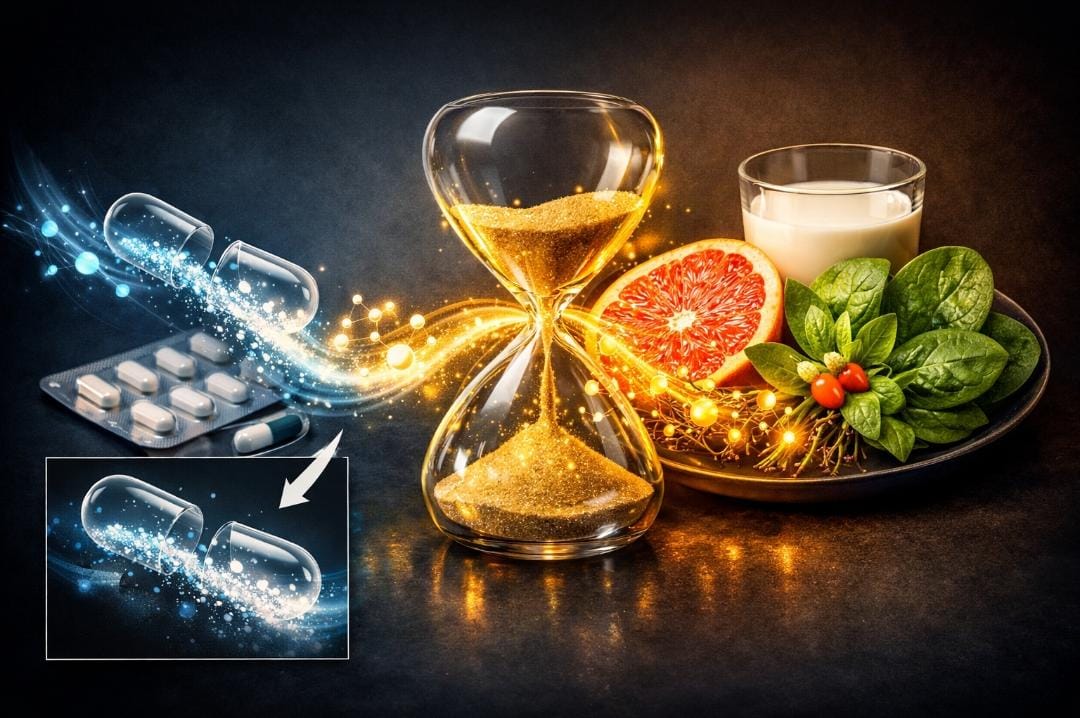
The Absorption Trap: When Food Prevents a Medication from Entering
Imagine your medication as a guest arriving at your home, only to find a guard standing at the door refusing to let it in.
This is exactly what can happen when dairy products or calcium supplements are taken alongside certain antibiotics. Calcium can bind to these medications inside the digestive tract, reducing their absorption and making them less effective.
In many cases, the problem is not the medication itself—it is simply when you take it in relation to your meals.
When Food Interferes with the Liver
The liver plays a central role in drug metabolism, the process by which the body activates, modifies, or eliminates most medications.
However, certain foods can interfere with this process.
One of the best-known examples is grapefruit juice, which can inhibit an enzyme responsible for breaking down several medications. This may cause those drugs to accumulate in the bloodstream, increasing the risk of side effects or even toxicity in some individuals.
For this reason, patients taking specific medications are often advised to avoid grapefruit or grapefruit juice, following the recommendations of their physician or pharmacist.
Leafy Greens and Blood Thinners: Not the Battle Many People Imagine
Many patients taking warfarin are warned about eating spinach or broccoli, but the reality is more nuanced.
Vitamin K, naturally found in these vegetables, helps the body produce clotting factors that warfarin is designed to suppress.
Therefore, patients are generally not advised to eliminate these healthy foods from their diet. Instead, maintaining a consistent daily intake of vitamin K-rich foods helps ensure that the medication continues to work as intended.
How to Help Your Medication Work Effectively
The solution is simpler than you might think and begins with a few practical habits:
1. Read the patient information leaflet. It often contains essential instructions such as "Take on an empty stomach," "Take with food," or "Avoid taking with dairy products."
2. Follow the timing recommended by your physician or pharmacist. Some medications should be taken before meals, others after meals or with food, while certain drugs require separation from specific foods or dietary supplements for a defined period.
3. Take most medications with a full glass of water. Water is generally the safest choice, whereas some juices and beverages may interfere with drug absorption or metabolism.
4. Never hesitate to ask. Knowing the correct way to take your medication is not a trivial matter—it is an essential part of successful treatment.
Conclusion
Food and medicine are not two separate paths; they interact continuously within the same biological system.
Understanding these interactions can help maximize the benefits of treatment while reducing the risk of food–drug interactions that may compromise its effectiveness.
And always remember:
Never change the way you take your medication, stop it, or adjust the dose without consulting your physician or pharmacist.
Sometimes, the difference between treatment success and failure... is simply the timing of a meal.
Written by Dr. Amira Eltawil
Scientific Development Team at HealthNato | Pharmacist | Clinical Nutritionist
Fact-checked by HealthNato Scientific Team
on July 21, 2026 at 3:30 PM
Get new articles in your inbox
One short email a week, no spam.
Your privacy is important to us.
Related Articles
 Clinical Nutrition
The Hidden Battle After Abdominal Surgery: Understanding Postoperative Peritoneal Adhesions
 Natural Supplements
Beware of Ashwagandha: The Famous Herb Could Turn into a Deadly Toxin for Liver Cells!
 Nutrition & Diet
Everyday Foods That May Promote Inflammation Without You Realizing It…
 nutrition