A Shocking Truth: Are Today's Vegetables Less Nutritious Than in the Past?

Written by Dr. Nasser El Shishini
Editorial Director | Pharmacist | Clinical Nutrition & Weight Management Specialist | Researcher in Pharmaceutical & Cosmetic Sciences.
Information reviewed by HealthNato Scientific Team
on October 13, 2026 at 12:30 PM
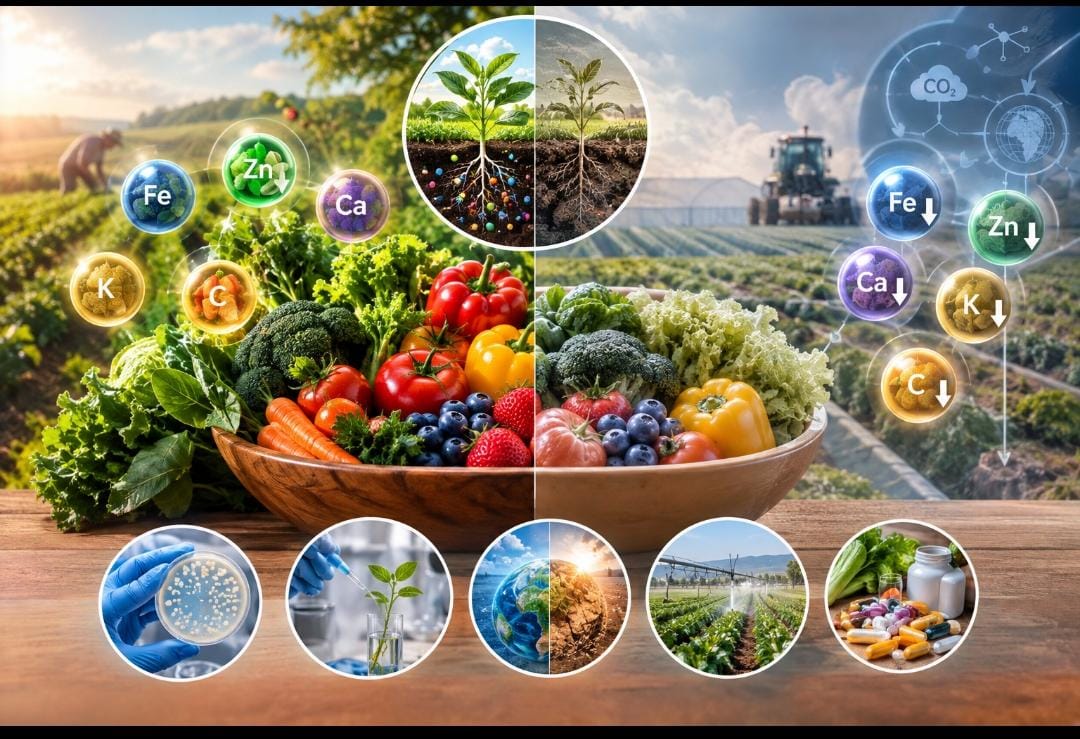
Studies have indeed documented declines in certain nutrients in specific crops, while more recent research has revealed the effects of rising carbon dioxide levels on the nutritional composition of crops.
However, there is no evidence to prove that all fruits and vegetables have lost half their nutritional value or that modern food has become devoid of nutrients.
Scientific Evidence
In a study published in 2004, researchers compared nutritional composition data for 43 vegetable and horticultural crops in the United States between 1950 and 1999.
The results showed statistically significant declines in the average values of six nutrients, including protein, calcium, phosphorus, iron, riboflavin, and vitamin C, while no reliable changes were observed in seven other nutrients.
The average declines ranged from approximately 6% for protein to 38% for riboflavin.
However, these figures do not mean that every crop lost the same percentage or that all nutrients declined, because this assessment and its findings are affected by changes in crop varieties, growing regions, maturity levels, and sampling and analytical methods.
Why Might Nutrient Density in Crops Change?
Several factors can affect the amount of nutrients present in a particular crop.
1. Selecting Higher-Yield Crop Varieties
Agricultural breeding programs focus on traits such as increased yield, disease resistance, and tolerance to environmental conditions.
Some of these modifications may be accompanied by lower concentrations of certain minerals, particularly when carbohydrates or plant biomass increase faster than mineral accumulation.
This is known as the Nutrient Dilution Effect. However, it does not occur to the same extent in all crop varieties or nutrients.
2. Rising Carbon Dioxide Levels
The effects of rising atmospheric carbon dioxide are not limited to plant growth and productivity; they may also alter the concentrations of certain nutrients in the parts of plants we eat.
Meta-analyses of agricultural research have shown that elevated carbon dioxide may be associated with lower concentrations of protein and certain minerals, including iron, zinc, and magnesium, in specific crops. However, the effects vary.
3. Soil Fertility and Agricultural Practices
Soil fertility, the availability of minerals and water, fertilizer use, and land management practices all influence plant growth and nutritional composition.
However, mineral depletion in soil is not the only or primary cause of the problem.
Weight-Loss Medications: Do They Make the Problem Worse?
Some weight-loss medications reduce appetite, causing people to consume smaller amounts of food.
This makes the quality of food choices and adequate nutrient intake more important.
For this reason, some people using these medications may need nutritional assessment and medical follow-up, depending on their individual circumstances, rather than relying on supplements indiscriminately.
Is the Solution in Dietary Supplements or Better Agriculture?
Supplements may be necessary when a confirmed deficiency or a specific medical need exists, but they are not a substitute for a varied diet. Nor is there a need to take them simply because modern crops may differ in their nutritional composition.
At the agricultural level, sustainable practices, proper soil and water management, and the development of crop varieties that combine high yields with nutritional value can help support crop quality over the long term.
Researching the effects of climate change and rising carbon dioxide levels on food composition has also become important for maintaining food security, because producing sufficient quantities of food does not, by itself, guarantee that all nutritional needs will be met.
The Bottom Line
Yes, studies indicate that some crops have undergone changes in the concentrations of specific nutrients. However, there is no justification for claiming that all fruits and vegetables have lost half their nutritional value or that consuming them has inherently become inadequate.
Fruits and vegetables remain essential components of a healthy diet. The best approach is to eat a variety of them alongside protein sources, whole grains, and legumes, while paying attention to the overall quality of the diet.
Written by Dr. Nasser El Shishini
Editorial Director | Pharmacist | Clinical Nutrition & Weight Management Specialist | Researcher in Pharmaceutical & Cosmetic Sciences.
Information reviewed by HealthNato Scientific Team
on October 13, 2026 at 12:30 PM
Related articles
 Clinical Nutrition
The Hidden Battle After Abdominal Surgery: Understanding Postoperative Peritoneal Adhesions
 Natural Supplements
Beware of Ashwagandha: The Famous Herb Could Turn into a Deadly Toxin for Liver Cells!
 Nutrition & Diet
Everyday Foods That May Promote Inflammation Without You Realizing It…
 nutrition