A Common Sugar Substitute That Threatens Heart and Blood Vessel Health..

Written by Dr. Nasser El Shishini
Editorial Director | Pharmacist | Clinical Nutrition & Weight Management Specialist | Researcher in Pharmaceutical & Cosmetic Sciences.
Fact-checked by HealthNato Scientific Team
on September 16, 2026 at 12:30 PM
(Xylitol) Under the Microscope
From refreshing chewing gum and mint lozenges to sugar-free foods.. What have recent studies revealed about the effect of xylitol on platelets and the risk of blood clots?
If you are looking for a safe sugar substitute, you have probably come across the name Xylitol.
It is a sugar alcohol and is used as a low-calorie alternative to sugar in a wide range of products, such as chewing gum, candy, some baked goods and beverages. It is also used in some oral care products, such as toothpaste and mouthwash.
For years, xylitol has been viewed differently from traditional sugar, particularly because of its lower effect on blood glucose and its use in dental care products.
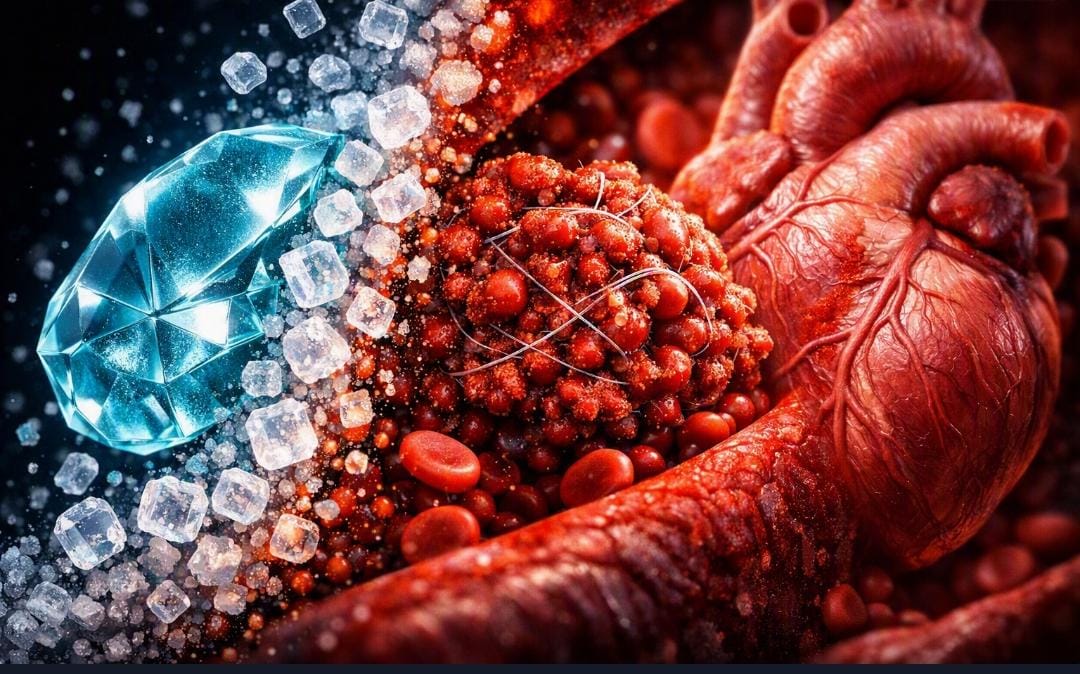
However, a study published in the European Heart Journal has opened a new discussion about its potential effects on the heart and blood vessels.
What Did the Study Find?
Researchers analyzed xylitol levels in blood samples from more than three thousand (3,000) people and then followed the participants to monitor the occurrence of major cardiovascular events over the following three years.
They found that people who had higher levels of xylitol in their blood were more likely to experience major cardiovascular events, such as heart attacks and strokes.
The Relationship with Platelets..
The most interesting part of the study was that the researchers also conducted experiments on platelets, whole blood, and animal models, and found that xylitol could increase the response of platelets to aggregation, suggesting a potential increase in the tendency to form blood clots.
The researchers then moved on to a small human trial.
Ten healthy volunteers consumed a drink containing 30 grams of xylitol. Afterwards, blood xylitol levels increased significantly, and several markers of platelet activity increased in all participants.
And here, the picture became more significant:
There is an association between higher blood xylitol levels and the risk of cardiovascular events, along with experimental evidence suggesting an effect on platelet activity and blood clotting.
However, we still need larger and longer-term studies to determine how important these findings are in everyday life and whether long-term xylitol consumption actually increases the risk of heart attacks and strokes.
Should You Get Rid of Everything That Contains Xylitol?
The study does not mean that the presence of xylitol in any product makes it dangerous, and the amount of xylitol and how the product is used are also very important.
More importantly, dietary use differs from the use of xylitol in oral care products.
Xylitol in toothpaste or mouthwash is not consumed in the same way as when it is present in larger amounts in foods or beverages.
Therefore, researchers and experts emphasize that the study's findings do not mean that you need to get rid of toothpaste containing xylitol.
Conclusion
There is not enough evidence at present to say that xylitol should be completely eliminated from the diet.
However, the current findings deserve attention and caution, particularly given the widespread use of sugar alcohols in sugar-free products and the need for further studies evaluating their long-term cardiovascular safety. They represent an important scientific signal that deserves further investigation, rather than a definitive judgment.
While we await further evidence, it may be useful not to view sugar-free products as automatically healthy simply because they do not contain traditional sugar.
Written by Dr. Nasser El Shishini
Editorial Director | Pharmacist | Clinical Nutrition & Weight Management Specialist | Researcher in Pharmaceutical & Cosmetic Sciences.
Fact-checked by HealthNato Scientific Team
on September 16, 2026 at 12:30 PM
Get new articles in your inbox
One short email a week, no spam.
Your privacy is important to us.
Related Articles
 Clinical Nutrition
The Hidden Battle After Abdominal Surgery: Understanding Postoperative Peritoneal Adhesions
 Natural Supplements
Beware of Ashwagandha: The Famous Herb Could Turn into a Deadly Toxin for Liver Cells!
 Nutrition & Diet
Everyday Foods That May Promote Inflammation Without You Realizing It…
 nutrition